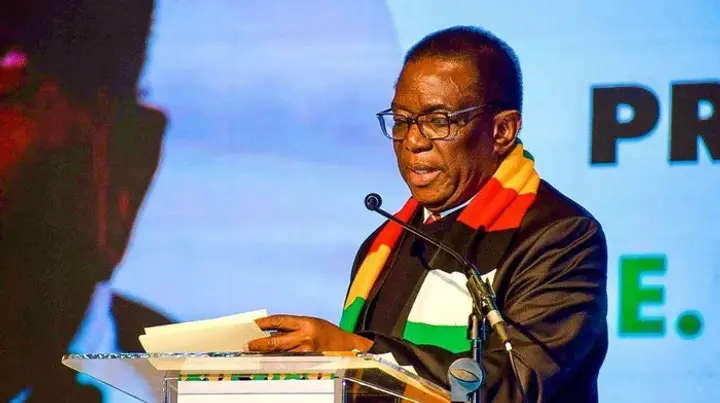
Zimbabwe's parliament has approved constitutional reforms that could keep President Emmerson Mnangagwa in power until 2030, marking a major shift in the country's political landscape and setting up a crucial vote in the Senate.
According to a Reuters report, lawmakers voted in favor of amendments that would extend presidential terms from five years to seven years and postpone elections currently scheduled for 2028.
The reforms would grant Mnangagwa, 83, an additional two years in office beyond the end of his current term. The proposals also include a significant change to Zimbabwe's electoral system by allowing future presidents to be chosen by parliament rather than through direct popular vote.
Supporters within the ruling ZANU-PF party argue the changes would improve political stability, reduce the costs associated with frequent elections, and allow governments to pursue longer-term development plans. However, critics see the move as another attempt to weaken democratic safeguards and prolong the rule of the country's political elite.
Mnangagwa, widely known by his longtime political nickname "The Crocodile," came to power in 2017 following the military-backed removal of former President Robert Mugabe. Mugabe had ruled Zimbabwe for nearly four decades before his departure.
Since taking office, Mnangagwa initially promised economic reforms and a break from past governance practices, though opposition groups and rights organizations have continued to criticize restrictions on political freedoms and crackdowns on dissent. More background on Zimbabwe's political trajectory can be found through the Associated Press coverage.
The latest constitutional push has generated unusual resistance, including criticism from some veterans of Zimbabwe's liberation struggle who once supported Mnangagwa. Opponents argue that extending presidential tenure risks undermining democratic accountability and weakening public participation in national leadership decisions.
The debate also reflects a wider continental trend. Several African leaders have extended their time in office through constitutional amendments or by removing term limits. According to analysis cited by the Africa Center for Strategic Studies, while many African countries continue to uphold constitutional term limits, others have altered or bypassed them, often sparking political controversy.
The proposed reforms must still be approved by Zimbabwe's Senate before they can be enacted. Given the ruling party's dominance in the upper chamber, observers expect the legislation to advance, potentially reshaping Zimbabwe's political system ahead of the next decade.
POLITICAL ANALYSIS
Zimbabwe MPs Back Plan to Extend Mnangagwa Rule to 2030

Jun 18, 2026
Jun 18, 2026
3 min read
Published
Updated:
Zimbabwe's parliament has approved constitutional reforms that could keep President Emmerson Mnangagwa in power until 2030, marking a major shift in the country's political landscape and setting up a crucial vote in the Senate.
According to a Reuters report, lawmakers voted in favor of amendments that would extend presidential terms from five years to seven years and postpone elections currently scheduled for 2028.
The reforms would grant Mnangagwa, 83, an additional two years in office beyond the end of his current term. The proposals also include a significant change to Zimbabwe's electoral system by allowing future presidents to be chosen by parliament rather than through direct popular vote.
ADVERTISEMENT
Supporters within the ruling ZANU-PF party argue the changes would improve political stability, reduce the costs associated with frequent elections, and allow governments to pursue longer-term development plans. However, critics see the move as another attempt to weaken democratic safeguards and prolong the rule of the country's political elite.
Mnangagwa, widely known by his longtime political nickname "The Crocodile," came to power in 2017 following the military-backed removal of former President Robert Mugabe. Mugabe had ruled Zimbabwe for nearly four decades before his departure.
ADVERTISEMENT
Since taking office, Mnangagwa initially promised economic reforms and a break from past governance practices, though opposition groups and rights organizations have continued to criticize restrictions on political freedoms and crackdowns on dissent. More background on Zimbabwe's political trajectory can be found through the Associated Press coverage.
The latest constitutional push has generated unusual resistance, including criticism from some veterans of Zimbabwe's liberation struggle who once supported Mnangagwa. Opponents argue that extending presidential tenure risks undermining democratic accountability and weakening public participation in national leadership decisions.
The debate also reflects a wider continental trend. Several African leaders have extended their time in office through constitutional amendments or by removing term limits. According to analysis cited by the Africa Center for Strategic Studies, while many African countries continue to uphold constitutional term limits, others have altered or bypassed them, often sparking political controversy.
TRENDING NOW


POPULAR TODAY


ADVERTISEMENT
The proposed reforms must still be approved by Zimbabwe's Senate before they can be enacted. Given the ruling party's dominance in the upper chamber, observers expect the legislation to advance, potentially reshaping Zimbabwe's political system ahead of the next decade.
ADVERTISEMENT
RELATED ARTICLE