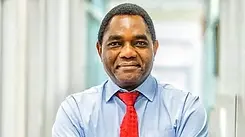
President Félix Tshisekedi has backed a plan to move the Democratic Republic of the Congo away from mainly manual, occasional financial inspections and toward continuous digital monitoring of public money.
The Inspector General of Finance, Christophe Bitasimwa Bahii, presented the Inspection générale des finances’ 2026–2028 strategic plan to Tshisekedi during a meeting at the Cité de l’Union Africaine in Kinshasa on Thursday, July 23.
According to the IGF and the Congolese Press Agency, Bitasimwa said the proposed system would provide broader and more permanent oversight of financial flows created across the country.
The President expressed his support for the strategy and promised to be involved in its implementation, the IGF said.
The announcement is an important political endorsement of a plan that the institution has been developing for several months. It does not mean that all government financial systems are already connected or that suspicious transactions are currently being detected automatically.
No new funding decision, procurement contract or complete implementation calendar was announced after the presidential meeting.
What the IGF wants to change
The IGF audits and investigates the management of public finances. Its work covers the State, provinces, public companies and other entities handling public resources.
Traditional inspections can require teams to travel to an institution, request documents and examine transactions during a limited period. That method can uncover wrongdoing, but it may detect problems only after money has already been spent or revenue has been lost.
The new strategy is built around what the IGF calls systemic control.
TECH TRENDS
Tshisekedi Backs Digital Monitoring of DRC Public Money

Jul 24, 2026
Jul 28, 2026
7 min read

Published
Updated:
President Félix Tshisekedi has backed a plan to move the Democratic Republic of the Congo away from mainly manual, occasional financial inspections and toward continuous digital monitoring of public money.
The Inspector General of Finance, Christophe Bitasimwa Bahii, presented the Inspection générale des finances’ 2026–2028 strategic plan to Tshisekedi during a meeting at the Cité de l’Union Africaine in Kinshasa on Thursday, July 23.
According to the IGF and the Congolese Press Agency, Bitasimwa said the proposed system would provide broader and more permanent oversight of financial flows created across the country.
The President expressed his support for the strategy and promised to be involved in its implementation, the IGF said.
The announcement is an important political endorsement of a plan that the institution has been developing for several months. It does not mean that all government financial systems are already connected or that suspicious transactions are currently being detected automatically.
No new funding decision, procurement contract or complete implementation calendar was announced after the presidential meeting.
What the IGF wants to change
The IGF audits and investigates the management of public finances. Its work covers the State, provinces, public companies and other entities handling public resources.
Traditional inspections can require teams to travel to an institution, request documents and examine transactions during a limited period. That method can uncover wrongdoing, but it may detect problems only after money has already been spent or revenue has been lost.
ADVERTISEMENT
The new strategy is built around what the IGF calls systemic control.
Instead of examining only individual transactions, inspectors would use connected information systems to understand how money moves through the wider public-finance system. Data from different platforms could then be compared to identify unusual patterns, inconsistencies and areas with a higher risk of fraud or mismanagement.
In practical terms, the transition is intended to move oversight:
from occasional checks to more continuous monitoring;
from paper-heavy procedures to digital information;
from depending mainly on records supplied by the institution under inspection to collecting and comparing data from several systems;
from discovering losses after they occur to identifying risks earlier; and
from treating every transaction equally to directing inspectors toward higher-risk operations.
The IGF says this approach will strengthen existing controls rather than create an entirely separate form of inspection.
How digital monitoring could work
The plan calls for greater use of data analysis and the gradual interconnection of public financial platforms.
Budget, tax, customs, payroll and expenditure data could be analysed more quickly when the necessary systems are compatible and the IGF has lawful access to reliable information.
For example, digital tools could help flag a payment that does not match an approved budget line, repeated payments to the same beneficiary, unexplained differences between revenue declarations and deposits, or an unusual change in the spending pattern of a public entity.
A digital alert would not by itself prove corruption. It would identify a transaction or pattern requiring examination by inspectors, auditors or another competent authority.
ADVERTISEMENT
The IGF has also discussed using artificial intelligence, machine learning and business-intelligence tools to support risk analysis. Their value will depend on the quality of the underlying data, the rules used to flag transactions and the ability of human investigators to verify the results.
The six priorities in the 2026–2028 plan
The official IGF outline identifies six major areas:
Digital transformation of the IGF;
Systemic control of public revenue and expenditure;
Protection of State assets and natural resources;
Better governance of public companies and decentralised territorial entities;
Performance audits of public spending; and
Stronger institutional effectiveness within the IGF.
Together, these priorities aim to turn the IGF into what Bitasimwa described as an intelligence and intervention body serving the transformation of public governance.
The strategy is broader than buying software. It also requires trained personnel, secure infrastructure, clear access to information and cooperation from the institutions being monitored.
Why continuous oversight so important for Congolese citizens
Public money pays for salaries, roads, schools, hospitals, electricity, water and other essential services.
When irregular spending is found only months or years later, the State may struggle to recover the money. Projects may already be delayed, services weakened and evidence more difficult to trace.
Earlier detection could allow authorities to suspend questionable operations, preserve records and investigate before losses become larger.


POPULAR TODAY


ADVERTISEMENT
Connected systems could also make it more difficult to hide the same transaction across several institutions or submit inconsistent figures to different government departments.
However, digitalisation alone will not stop corruption.
A warning system has little value if alerts are ignored, inspectors cannot access complete data, corrective measures are not enforced or investigation results remain permanently hidden from the public.
The real measure of success will be whether the reform protects revenue, prevents waste and improves the services financed by public money.
The plan is estimated at $39 million
Earlier information published by the IGF placed the total cost of the three-year transformation at approximately $39 million.
The institution said about $22 million in financing had been identified, leaving approximately $17 million still to be mobilised.
The strategy envisages a gradual transition through pilot projects, new digital infrastructure, staff development and connections with public financial-management platforms. The stated objective is to reach maturity in systemic control by 2028 without stopping the IGF’s existing inspection work.
These figures provide useful context, but Tshisekedi’s July 23 endorsement was not a new disbursement of the money. The IGF will still need to show how the remaining financing is secured, what technology is acquired and which institutions become connected first.
ADVERTISEMENT
RELATED ARTICLE