top of page
  • insta – 2
  • insta
  • insta – 1

Africa

China in Africa

African Trade & Investment

Economy & Business

Heading 2

Heading 2

Heading 2

Explore the historical timeline of how China became Africa’s top partner through decades of strategic diplomacy, trade, and infrastructure investment.

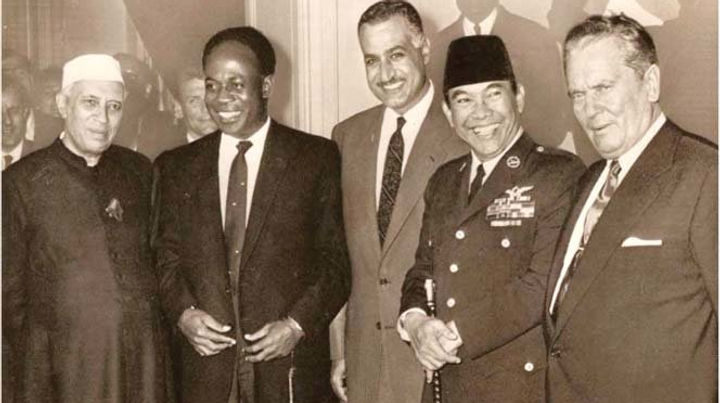
Some of the leaders who attended the Bandung Conference 1955 in Bandung, Indonesia, including former Ghana president and independence hero, Kwame Nkrumah, then Indonesian Prime Minister Ali Sastroamidjojo, who was tasked to chair the conference, and the first President of Indonesia, President Sukarno, who delivered the opening address to the 29 participating countries.
[Image courtesy of ResearchGate / Public domain archive from the 1955 Bandung Conference.]

Explore the historical timeline of how China became Africa’s top partner through decades of strategic diplomacy, trade, and infrastructure investment.

2025-06-10

Over the last six decades, China has risen from a distant observer to Africa’s most influential economic and diplomatic partner. From ideological solidarity during the anti-colonial struggles to today’s trillion-dollar infrastructure projects, Beijing’s engagement with Africa reflects a deliberate, long-term geopolitical and economic strategy. 


In this article, Xtrafrica traces the historical evolution of China-Africa relations, outlining how China steadily became the continent’s top partner through a blend of diplomacy, trade, infrastructure investment, and soft power.


1. 1950s–1960s: Foundations of Solidarity and Anti-Colonial Alliance


  • 1955: The Bandung Conference in Indonesia marked China's first coordinated diplomatic engagement with African leaders, promoting Afro-Asian solidarity against Western imperialism.

  • 1960s: As many African nations gained independence, China supported liberation movements in countries such as Zimbabwe, Angola, and Mozambique. It provided military training and aid to nationalist movements, projecting itself as a fellow victim of colonialism.

  • 1963–1964: Premier Zhou Enlai toured ten African nations, promoting friendship, mutual respect, and non-interference—principles that would become core to China’s Africa policy.


2. 1970s: Diplomatic Recognition and the “One China” Principle


  • 1971: African support played a decisive role in restoring China’s seat at the United Nations. Of the 76 votes in favor, 26 were from African nations, an early indication of Africa's diplomatic importance to Beijing.

  • Throughout the 1970s, China established diplomatic relations with more African countries by promoting the “One China” policy and offering aid in return for recognition over Taiwan.


3. 1980s: Economic Reforms and Quiet Engagement


  • Post-Mao China turned inward with Deng Xiaoping’s reforms, but low-key engagement with Africa continued. China focused on technical cooperation, agricultural assistance, and sending medical teams.

  • Trade remained modest, but China’s infrastructure diplomacy laid roots, such as the construction of textile factories and roads in countries like Tanzania and Zambia.


4. 1990s: Laying the Framework for Economic Partnership


  • The end of the Cold War reshaped global dynamics. As Western interest in Africa waned due to internal conflicts and economic crises, China saw an opportunity.

  • 1996: President Jiang Zemin visited several African countries and proposed a new framework for cooperation, laying the groundwork for institutionalized China-Africa relations.

  • 1999: China’s "Go Out" policy encouraged state-owned enterprises (SOEs) to invest abroad, including in resource-rich African nations.


5. 2000s: Institutionalizing Relations – The FOCAC Era


  • 2000: China launched the Forum on China–Africa Cooperation (FOCAC) in Beijing, providing a formal platform for policy coordination, trade expansion, and cultural exchange.

  • China increased aid, canceled debts, and invested heavily in infrastructure, while African leaders welcomed China’s “no strings attached” approach to development assistance.

  • 2006: China-Africa trade reached $55 billion, up from just $10 billion in 2000.

  • Major projects included roads, stadiums, airports, and the iconic African Union headquarters in Addis Ababa, built and funded by China.


6. 2010s: Strategic Expansion Through the Belt and Road Initiative (BRI)


  • 2013: The Belt and Road Initiative (BRI) extended to Africa, aligning Chinese financing and construction with African infrastructure needs—ports, railways, highways, and energy.

  • By 2019, 40 African countries had signed BRI cooperation agreements.

  • China became Africa’s largest trading partner, with trade volumes exceeding $200 billion by 2014.

  • Chinese firms gained significant presence in energy, telecoms (e.g., Huawei), and mining, while Beijing expanded soft power through Confucius Institutes and scholarships for African students.


7. 2020s: Pandemic Diplomacy and Diversification of Engagement


  • COVID-19 Response: China provided millions of vaccine doses, medical supplies, and dispatched health teams to over 40 African countries, reinforcing its role as a dependable partner during crises.

  • Beijing began shifting from resource extraction to industrialization support, financing Special Economic Zones (SEZs), digital infrastructure, and green energy.

  • 2021: FOCAC in Dakar launched the "China-Africa Vision 2035," emphasizing agriculture, climate change cooperation, and public health.

  • China’s influence extended beyond economics; its model of state-led development appealed to several African governments seeking alternatives to Western liberal frameworks.


8. 2023–2025: Current Landscape and Future Outlook


  • 2025 (Projected): China remains Africa’s top trade and infrastructure partner. Over 10,000 Chinese firms now operate across the continent, creating jobs and facilitating technology transfer.

  • African exports to China, particularly agricultural and manufactured goods, have risen due to tariff-free access and improved logistics.

  • However, concerns about debt sustainability, labor rights, and environmental standards persist, prompting African countries to negotiate more assertively.

  • At the same time, China is localizing its supply chains, investing in African fintech, e-commerce, and digital education.


Mutual Interests or Neo-Colonial Echoes?


China’s rise as Africa’s top partner is the result of decades of consistent diplomacy, aligned economic interests, and strategic infrastructure investments. Its model appeals to African leaders who seek rapid development without Western conditionalities. However, the relationship is not without challenges or issues of transparency, dependency, and sovereignty must be carefully managed.


What remains clear is that the China-Africa relationship is no longer a peripheral alliance; it is now a cornerstone of 21st-century South-South cooperation. For Africa, the challenge lies in leveraging this partnership to promote sustainable development, economic diversification, and true self-determination.


Credit:

  • Forum on China-Africa Cooperation (FOCAC) Reports

  • World Bank Trade Data

  • UNCTAD Investment Reports

  • African Development Bank (AfDB) Policy Briefs

  • Brookings Institution – China in Africa Series


Africa

You May Also Like

AFA Appoints Launch Africa to Manage $100M Pan-African Mining Fund

PRESS RELEASE

AFA Appoints Launch Africa to Manage $100M Pan-African Mining Fund

New $100M fund aims to keep over 51% of mining project benefits within African communities.

Why “The Rapture” Is Trending: Viral Prophecy & Bible Meaning

Religion & Society

Why “The Rapture” Is Trending: Viral Prophecy & Bible Meaning

The Rapture” is trending after viral TikTok prophecies tied it to Sept 23, 2025.

Visa Free Africa 2025: Best Countries Africans Can Visit With No Visa

Travel Guide

Visa Free Africa 2025: Best Countries Africans Can Visit With No Visa

Discover the top African destinations opening their borders to all African travelers in 2025.

Shelter Afrique & Afreximbank Seal $1B Africa Housing Deal

| Economy

Shelter Afrique & Afreximbank Seal $1B Africa Housing Deal

Shelter Afrique and Afreximbank sign $1B Africa housing finance deal at IATF2025 to boost urban

bottom of page