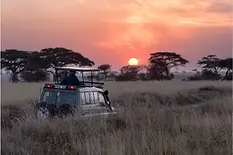
Serengeti and Ngorongoro are neighbours within the same northern Tanzania wildlife system, but they do not deliver the same safari. Serengeti rewards time: several days, changing landscapes and wildlife encounters that unfold over distance. Ngorongoro Crater compresses a remarkable variety of animals and scenery into one demanding but highly productive game-drive day.
If your itinerary can hold both, this is not an either-or decision. If time or budget forces a choice, trip length matters more than fame. Serengeti is usually the stronger standalone safari; Ngorongoro is the more efficient addition to a short northern circuit.
Should you choose Serengeti or Ngorongoro for safari? Choose Serengeti for a multi-day safari, the Great Migration and a wider range of habitats and predators. Choose Ngorongoro for a shorter trip, crater scenery and concentrated wildlife viewing. With five or more safari days, combine them: they complement each other far better than either can substitute for the other.
Where Serengeti and Ngorongoro Are and Why It Matters
Serengeti National Park spreads across a vast savannah landscape west of the Ngorongoro highlands and south of Kenya's Maasai Mara. UNESCO records the park at 1,476,300 hectares and describes it as the core of the wider Serengeti ecosystem. Its central, western, northern and southern areas become more or less useful according to rainfall, grazing and the traveller's priorities.
Ngorongoro is not simply a smaller national park. The Ngorongoro Conservation Area is a multiple-use landscape of highlands, plains, archaeological sites and resident pastoral communities.
Its famous crater is one attraction within that larger area. UNESCO's Ngorongoro listing covers 809,440 hectares and recognises both natural and cultural significance, including Olduvai Gorge and Laetoli.
The two protected areas meet along the northern circuit, so road itineraries commonly pass through Ngorongoro on the way to or from Serengeti. XTRAfrica's Tanzania travel guide explains where that route sits within the country's wider safari geography.
Serengeti Wins for Scale, Migration and Predator Watching
Serengeti's advantage is not merely size. Space changes the way a safari feels. A game drive may move from open short-grass plains to granite kopjes, riverine woodland or a watercourse where predators wait. The park supports resident wildlife throughout the year, while the migratory herds move through different parts of the ecosystem.
AFRICAN CULTURE
Serengeti vs Ngorongoro: Which Tanzania Safari Should You Choose?

Aug 11, 2026
Aug 12, 2026
15 min read

Published
Updated:
Serengeti and Ngorongoro are neighbours within the same northern Tanzania wildlife system, but they do not deliver the same safari. Serengeti rewards time: several days, changing landscapes and wildlife encounters that unfold over distance. Ngorongoro Crater compresses a remarkable variety of animals and scenery into one demanding but highly productive game-drive day.

If your itinerary can hold both, this is not an either-or decision. If time or budget forces a choice, trip length matters more than fame. Serengeti is usually the stronger standalone safari; Ngorongoro is the more efficient addition to a short northern circuit.
Should you choose Serengeti or Ngorongoro for safari? Choose Serengeti for a multi-day safari, the Great Migration and a wider range of habitats and predators. Choose Ngorongoro for a shorter trip, crater scenery and concentrated wildlife viewing. With five or more safari days, combine them: they complement each other far better than either can substitute for the other.
Where Serengeti and Ngorongoro Are and Why It Matters

Serengeti National Park spreads across a vast savannah landscape west of the Ngorongoro highlands and south of Kenya's Maasai Mara. UNESCO records the park at 1,476,300 hectares and describes it as the core of the wider Serengeti ecosystem. Its central, western, northern and southern areas become more or less useful according to rainfall, grazing and the traveller's priorities.
Ngorongoro is not simply a smaller national park. The Ngorongoro Conservation Area is a multiple-use landscape of highlands, plains, archaeological sites and resident pastoral communities.
Its famous crater is one attraction within that larger area. UNESCO's Ngorongoro listing covers 809,440 hectares and recognises both natural and cultural significance, including Olduvai Gorge and Laetoli.
The two protected areas meet along the northern circuit, so road itineraries commonly pass through Ngorongoro on the way to or from Serengeti. XTRAfrica's Tanzania travel guide explains where that route sits within the country's wider safari geography.
Serengeti Wins for Scale, Migration and Predator Watching
Serengeti's advantage is not merely size. Space changes the way a safari feels. A game drive may move from open short-grass plains to granite kopjes, riverine woodland or a watercourse where predators wait. The park supports resident wildlife throughout the year, while the migratory herds move through different parts of the ecosystem.
The Great Migration is the decisive reason to choose Serengeti, but it is also the reason to plan carefully. The herds do not follow a guaranteed calendar. Rain and fresh grazing influence their movement, and dramatic river crossings cannot be booked like performances. XTRAfrica's guide to tracking Tanzania's wildebeest and their predators gives the ecological context without promising an exact location or event.
Serengeti also offers the stronger extended predator safari. Lions, spotted hyenas, cheetahs and leopards use different habitats, and several days allow guides to follow tracks, revisit territories and search beyond a single circuit. UNESCO highlights the park's globally important predator-prey interactions, but no species or hunt should be guaranteed.
The drawback is time. A rushed one-night visit can turn Serengeti into a long transfer with too little wildlife viewing. Central Serengeti is dependable for a first visit because of resident game and year-round camps, yet it can attract many vehicles around big-cat sightings. Migration-focused travellers may need a more distant seasonal sector, increasing driving or flight costs.
Choose Serengeti if the safari itself is the centre of the holiday rather than one stop among many.
ADVERTISEMENT
Ngorongoro Wins for Concentration and a Shorter Itinerary
Ngorongoro Crater offers a different form of abundance. After descending from the forested rim, vehicles enter a comparatively confined floor of grassland, marsh, woodland and Lake Magadi. Large herbivores and predators remain in the crater throughout the year, although individual sightings still depend on movement, weather and luck.
For a traveller with one serious game-drive day, Ngorongoro is usually the safer choice. The compact geography increases the chance of seeing several large-mammal species without driving across a vast region. It is also one of northern Tanzania's better-known places to look for black rhinoceros, but distance, vegetation and animal behaviour can make sightings brief or impossible.
The crater's limitation is the same concentration that makes it efficient. Vehicles share a finite road network, and the most visible animals can attract clusters. The Ngorongoro Conservation Area Authority's photography guidance states that off-road driving is prohibited. A driver cannot leave the track to improve a sighting or escape every busy location.
Ngorongoro becomes richer when travellers look beyond the crater floor. The conservation area includes Olduvai Gorge, Empakaai and Olmoti craters, highland walking opportunities and parts of the southern Serengeti ecosystem. Those additions need extra time, permissions or guides; they should not be squeezed around a crater descent simply to collect more names.
Choose Ngorongoro if you want one high-yield safari day, dramatic geology and a route that still leaves time for Tarangire, Lake Manyara or another part of Tanzania.
Which Is Better for the Great Migration?
Serengeti is the answer for most migration-focused trips. Depending on conditions, large herds may occupy the southern plains, move west, reach northern river country or disperse between recognised seasonal zones. A well-planned Serengeti stay positions travellers near the most likely area and provides multiple viewing days.

Ngorongoro still belongs to the migration story. UNESCO notes that the short-grass plains used for calving straddle the boundary between the Ngorongoro Conservation Area and Serengeti National Park. During the broad January-to-March calving period, the Ndutu area can be central to an itinerary even though it is not the crater floor.
That distinction matters when booking. “Ngorongoro” on an itinerary may mean the crater, a lodge on the rim, the wider conservation area or Ndutu. Ask for the exact camp, gate and daily driving plan. XTRAfrica's best-time guide to Tanzania helps match safari regions with broader seasonal priorities.
Time, Transfers and the Better Route
Ngorongoro is easier to fit into a short road safari from Arusha. Many itineraries overnight around Karatu or on the crater rim, descend the next morning and continue after the game drive. Rim accommodation may reduce the approach to a descent road but is not automatically the best value; the room price, view, gate position and departure plan all matter.
ADVERTISEMENT

Serengeti requires a larger time commitment. Driving from the Ngorongoro highlands into the park is part transfer and part game drive, but travellers should not count every hour in the vehicle as equal wildlife time. Flying reduces road fatigue and can be useful for a short or premium itinerary. Current Coastal Aviation schedules show connections between Serengeti airstrips, Arusha, Kilimanjaro, Zanzibar and Lake Manyara; operating days, stops, baggage rules and arrival airstrips must be reconfirmed before payment.
A practical allocation is:
Two safari nights: choose Ngorongoro plus Tarangire or Lake Manyara; Serengeti is likely to feel rushed.
Three to four safari nights: choose Serengeti alone, or combine one Ngorongoro descent with two Serengeti nights while accepting a fast pace.
Five to seven safari nights: combine both comfortably and consider adding Tarangire.
Migration-specific trip: give Serengeti or Ndutu most of the nights and treat the crater as a complement.
Which One Costs More?
Serengeti usually costs more in total because it deserves more nights and may require a longer road transfer or bush flight. Remote camps, seasonal migration locations and private vehicles can raise the price further. A road-based group safari can reduce the per-person transport cost.
Ngorongoro can be expensive per day. Its charge structure includes conservation entry, a motor-vehicle permit and a crater service fee levied per vehicle trip. Serengeti uses TANAPA's national-park tariff system, with entry categories and additional accommodation or concession charges depending on the itinerary.
Do not rely on an old dollar figure copied by a tour website. The NCAA tariff page warns that charges can change without notice, while the public TANAPA tariff page visible during this review still labels its headline schedule “Financial Year 2023/2024.” Ask the operator for an itemised 2026 quotation and written confirmation of the official tariff applied.

XTRAfrica's Tanzania safari cost guide explains how park fees, vehicle sharing, accommodation level and domestic flights alter the final price. Compare the whole itinerary, not a single nightly rate.
Families, Photography and Accessibility
Ngorongoro often works well for a family that wants maximum variety from one day, but the crater drive can be long and toilet or picnic stops are limited to designated places. Serengeti gives families more freedom to return to camp between drives when the camp location and schedule allow, although reaching the park can demand more travel time.

Photographers should choose Serengeti for changing light, habitat variety and multiple attempts. Ngorongoro supplies an exceptional wide landscape and dense wildlife, but road restrictions and other vehicles limit positioning. Neither destination permits a photographer to pressure a guide into disturbing animals or leaving authorised routes.
Reliable destination-wide accessibility information is insufficient. Before booking, request exact details on vehicle steps, seat transfers, room paths, bathroom access, aircraft boarding and the amount of assistance staff can provide. A “wheelchair-friendly” label without measurements is not enough.
The wider Ngorongoro landscape is also home to Maasai communities. Residents are people and rights-holders, not safari props. NCAA prohibits casual photography of community members along the road and directs authorised photography to designated settings. XTRAfrica's guide to visiting Maasai land respectfully covers consent, local ownership and respectful conduct.
The Verdict: Serengeti, Ngorongoro or Both?
Choose Serengeti if you can give it at least two full wildlife-viewing days and want a safari built around animal behaviour, predators, open landscapes or the migration. It is the stronger single destination for most first-time safari travellers with enough time.


POPULAR TODAY


ADVERTISEMENT
Choose Ngorongoro if your schedule is tight, you value geological drama or you want one concentrated wildlife drive within a broader northern Tanzania trip. It is a powerful short visit, but the crater alone does not replace several days in Serengeti.
Choose both when you have five or more safari days. The road connection is logical, the scenery changes completely, and each corrects the other's weakness: Ngorongoro supplies concentration, while Serengeti supplies space and time.
Before departure, reconfirm fees, road conditions, camp dates and flight details. Read a current official advisory such as the UK FCDO Tanzania guidance and buy insurance appropriate to the full itinerary. Its warning checked on 11 August 2026 concerns a defined area near the Mozambique border, not Serengeti or Ngorongoro, but travellers should read the complete advice because conditions can change.
Frequently Asked Questions
Is Serengeti better than Ngorongoro?
Serengeti is generally better for a standalone, multi-day safari because it offers more habitats, longer wildlife observation and migration possibilities. Ngorongoro is better when time is short and the priority is seeing varied wildlife within one dramatic landscape.
Can you see the Big Five in both places?
Both are associated with the Big Five, but a checklist should not drive expectations. Ngorongoro usually offers the stronger black-rhino prospect, while Serengeti gives more time and habitat for lions, leopards, elephants and buffalo. None is guaranteed.
How many days do you need in Serengeti and Ngorongoro?
Allow at least two full game-drive days in Serengeti, preferably three. One crater descent is sufficient for most visitors, with one or two nearby nights depending on the arrival and onward route.
Is Ngorongoro inside Serengeti National Park?
No. Ngorongoro Conservation Area and Serengeti National Park are separate, adjoining protected areas managed by different authorities. They form connected parts of the wider Serengeti ecosystem and are commonly combined by road.
Which is more crowded?
Ngorongoro can feel more concentrated because vehicles share the crater floor's limited roads. Serengeti also has busy sightings and migration hotspots, especially around central Seronera and river crossings, but its greater area offers more scope to move elsewhere.
Can you visit Serengeti and Ngorongoro in three days?
It is possible, but the pace is tight and road time becomes a large part of the trip. Three or four nights is a more useful minimum; five to seven safari nights produces a better combined experience.
Sources and Further Reading
ADVERTISEMENT
RELATED ARTICLE