Nyerere and Ruaha are often sold together as Tanzania’s southern safari circuit, but they do not deliver the same trip. Nyerere is shaped by the Rufiji River, lakes and floodplains. Ruaha is an inland landscape of rocky hills, baobabs, miombo woodland and seasonal rivers where game drives usually take centre stage.
The right choice depends less on which park is “better” than on how you want to spend each day. Start with XTRAfrica’s Tanzania travel guide if you are still deciding between the country’s northern, southern and coastal regions. If the southern circuit is already your priority, this comparison shows where each park is strongest.
Should you choose Nyerere or Ruaha for a southern Tanzania safari? Choose Nyerere for easier access from Dar es Salaam or Zanzibar and a varied safari combining drives, boats and guided walks. Choose Ruaha for a more remote, land-based safari with expansive drives, dramatic dry-country scenery and more time devoted to tracking wildlife.
Southern Tanzania Safari Orientation
Both parks lie far from Arusha and Tanzania’s familiar northern safari route. Nyerere occupies part of the Selous landscape south and west of Dar es Salaam. The Tanzania National Parks authority’s Nyerere profile describes more than 30,000 square kilometres of miombo woodland, floodplain, lakes and Rufiji River channels. Most photographic safaris concentrate in a smaller northern sector where camps, airstrips and river activities are established.
Ruaha lies farther inland in south-central Tanzania, west of Iringa. TANAPA records its area as 20,226 square kilometres. The Great Ruaha River and its tributaries organise much of the best-known game-viewing country, but the wider park also contains extensive woodland, plains, rocky outcrops and baobab-dotted hills.
Nyerere is the more natural extension from Dar es Salaam or Zanzibar and gives travellers several ways to experience one ecosystem. Ruaha asks for a longer air connection or an overland approach through Iringa. XTRAfrica’s northern-versus-southern safari comparison explains how both differ from Serengeti and Ngorongoro itineraries.
Choose Nyerere for Water and Activity Variety
Nyerere’s defining advantage is the ability to change perspective. A morning game drive can be followed by a boat safari among the Rufiji channels or a permitted walk with an authorised guide. TANAPA lists boat safaris, guided walking and photographic game drives, and notes that walks require advance booking and permits.
The water changes what visitors can observe. Hippos and crocodiles are closely associated with the river and lakes, while fish eagles, kingfishers, bee-eaters and wetland birds add interest even when large mammals are resting. A boat is also a slower, quieter contrast to a full day in a vehicle. It should never be treated as a close-contact wildlife ride: the skipper’s instructions and distance from animals matter.
AFRICAN CULTURE
Nyerere vs Ruaha: Choosing a Southern Tanzania Safari

Aug 19, 2026
Aug 19, 2026
16 min read
Published
Updated:
Nyerere and Ruaha are often sold together as Tanzania’s southern safari circuit, but they do not deliver the same trip. Nyerere is shaped by the Rufiji River, lakes and floodplains. Ruaha is an inland landscape of rocky hills, baobabs, miombo woodland and seasonal rivers where game drives usually take centre stage.
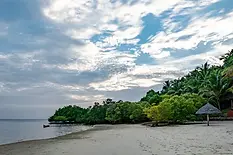
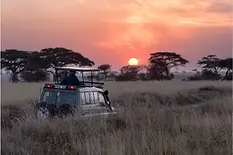
Nyerere landscape Ruaha landscape
The right choice depends less on which park is “better” than on how you want to spend each day. Start with XTRAfrica’s Tanzania travel guide if you are still deciding between the country’s northern, southern and coastal regions. If the southern circuit is already your priority, this comparison shows where each park is strongest.
Should you choose Nyerere or Ruaha for a southern Tanzania safari? Choose Nyerere for easier access from Dar es Salaam or Zanzibar and a varied safari combining drives, boats and guided walks. Choose Ruaha for a more remote, land-based safari with expansive drives, dramatic dry-country scenery and more time devoted to tracking wildlife.
Southern Tanzania Safari Orientation
Both parks lie far from Arusha and Tanzania’s familiar northern safari route. Nyerere occupies part of the Selous landscape south and west of Dar es Salaam. The Tanzania National Parks authority’s Nyerere profile describes more than 30,000 square kilometres of miombo woodland, floodplain, lakes and Rufiji River channels. Most photographic safaris concentrate in a smaller northern sector where camps, airstrips and river activities are established.
Ruaha lies farther inland in south-central Tanzania, west of Iringa. TANAPA records its area as 20,226 square kilometres. The Great Ruaha River and its tributaries organise much of the best-known game-viewing country, but the wider park also contains extensive woodland, plains, rocky outcrops and baobab-dotted hills.
Nyerere is the more natural extension from Dar es Salaam or Zanzibar and gives travellers several ways to experience one ecosystem. Ruaha asks for a longer air connection or an overland approach through Iringa. XTRAfrica’s northern-versus-southern safari comparison explains how both differ from Serengeti and Ngorongoro itineraries.
Choose Nyerere for Water and Activity Variety
A Nile crocodile in Nyerere National Park A hippopotamus in the Rufiji River An African wild dog running through the Selous landscape
Nyerere’s defining advantage is the ability to change perspective. A morning game drive can be followed by a boat safari among the Rufiji channels or a permitted walk with an authorised guide. TANAPA lists boat safaris, guided walking and photographic game drives, and notes that walks require advance booking and permits.
The water changes what visitors can observe. Hippos and crocodiles are closely associated with the river and lakes, while fish eagles, kingfishers, bee-eaters and wetland birds add interest even when large mammals are resting. A boat is also a slower, quieter contrast to a full day in a vehicle. It should never be treated as a close-contact wildlife ride: the skipper’s instructions and distance from animals matter.
Nyerere also supports lions, elephants, buffalo, giraffes, leopards, hyenas and African wild dogs. Wild dogs are an important reason many enthusiasts choose the park, but they range over large areas and should not be promised. The honest sales question is whether the guide has enough time and mobility to follow current signs not whether a brochure lists the species.
Choose Nyerere when the group contains travellers with different interests, when the safari follows time in Zanzibar, or when four nights must provide more than repeated vehicle drives. It is also the easier first step into southern Tanzania for travellers who want remoteness without committing most of a day to reaching the park.
Choose Ruaha for Expansive Game Drives
A mature baobab in Ruaha National Park A lion in Ruaha National Park Open country in Ruaha National Park and woodland
ADVERTISEMENT
Ruaha’s strength is the scale and character of its land safari. The best-known routes follow the Great Ruaha River and seasonal watercourses, where wildlife often concentrates as the dry season advances. Away from the river, woodland, rocky kopjes, open plains and baobabs give the park a visual identity quite different from Nyerere’s lakes and floodplains.
TANAPA lists elephants, buffalo, lions, leopards, crocodiles and hippos among Ruaha’s wildlife and identifies both greater and lesser kudu as notable species. The park is especially rewarding for travellers who enjoy interpreting tracks, revisiting an area after fresh predator signs, and letting a guide build a wildlife picture over several days rather than rushing through a checklist.
That depth requires time. Four nights is a stronger starting point because arrival and departure reduce usable game-viewing hours, while wildlife may be spread across different river systems or woodland zones. A fifth night suits photographers, repeat visitors and travellers dividing the stay between separate areas.
Ruaha is not simply “Nyerere without boats.” Its remoteness, longer drives and drier scenery are the attraction. Travellers who become restless during long vehicle sessions or who strongly want water-based activities may find Nyerere more varied. Those who want the day organised around tracking and landscape usually find Ruaha the more absorbing choice.
Which Park Has Better Wildlife Viewing?

Neither park can guarantee a species, and a short sighting list is a poor way to compare them. Season, water, fire, guide knowledge, recent animal movement and the location of the camp all affect what a visitor sees.
Nyerere has the clearer advantage for hippos, crocodiles and river-associated birds because boats and lakes create viewing opportunities unavailable on a standard Ruaha itinerary. It is also widely associated with African wild dogs. Ruaha’s appeal is stronger for travellers prioritising lions, large herbivores, kudu and a predator-focused driving safari across varied dry-country habitats.
Birders should not dismiss either park. TANAPA reports more than 440 species for Nyerere and more than 570 for Ruaha, but totals alone should not decide a trip. Nyerere offers riverine and wetland habitats; Ruaha combines river corridors with woodland and drier-country species. Ask whether the itinerary leaves dedicated time for birding.
Access, Flight Time and a Realistic Itinerary

Nyerere is usually simpler from Dar es Salaam. Coastal Aviation’s currently published Selous–Nyerere timetable lists several daily Dar es Salaam connections and service from Zanzibar, with flights using airstrips including Mtemere, Siwandu and Beho Beho. The correct airstrip depends on the camp; booking the wrong one can create an expensive ground transfer or an impossible pickup.
Ruaha is farther from the coast. Coastal’s Dar es Salaam route information currently lists a morning service to Ruaha, while road travellers normally approach through Iringa. Schedules, stops and operating days can change, and a bush flight may call at another airstrip before reaching the final destination. Confirm the routing, luggage allowance and minimum check-in time directly with the operating airline.
A sensible single-park plan is three or four nights in Nyerere or four or five in Ruaha. To combine them, allow at least seven safari nights: three in Nyerere and four in Ruaha is a practical minimum. Coastal currently publishes an air connection between the two safari areas, so the pair can work without returning to Dar es Salaam, although the operator must reconfirm the service for the exact travel date.
ADVERTISEMENT
Travellers with only seven to ten days should avoid adding both parks, the northern circuit and Zanzibar. XTRAfrica’s 10-day Serengeti, Ngorongoro and Zanzibar itinerary demonstrates a northern alternative; choose one coherent circuit.
When to Visit Nyerere and Ruaha
June through October is generally the easiest shared window. Roads are usually more manageable, vegetation becomes less dense in many areas, and wildlife increasingly uses remaining water. September and October can be hot and dusty, especially in Ruaha, so travellers sensitive to heat may prefer the earlier dry-season months.

The wetter months bring greener scenery, migrant birds, young animals and lower demand at some properties, but access becomes less predictable. Roads can deteriorate, wildlife may disperse and some camps or activities may close. Boat conditions in Nyerere and river levels in both parks also vary; water-based activities should be reconfirmed rather than assumed from an old itinerary.
Use XTRAfrica’s best time to visit Tanzania guide for the national climate pattern, then ask the chosen camp for sector-specific conditions. A countrywide forecast cannot tell you whether a particular park road, airstrip or river activity is operating.
Costs: Compare the Whole Safari, Not Only Park Entry
The official park profiles currently display the same headline international-adult entry figure for Nyerere and Ruaha. However, TANAPA’s central tariff portal is still labelled for the 2023/2024 financial year. Do not treat an undated screenshot or an old PDF as the final 2026 charge.

Ask every operator to separate conservation fees, concession or camping charges, activity fees, vehicle costs, domestic flights, transfers, accommodation, taxes and tips. Nyerere may cost less to reach from Dar es Salaam because the flight is shorter, but a premium river camp with private activities can still exceed a modest Ruaha itinerary. Ruaha’s longer air sector and remote logistics often raise the total; accommodation standard and season can outweigh that difference.
XTRAfrica’s 2026 Tanzania safari cost guide explains why group size, vehicle type, camp location and inclusions matter more than a single advertised daily rate. Compare quotations line by line and ask whether flights are direct, shared or routed through other airstrips.
Responsible Travel Is Part of the Choice
These parks are conservation areas embedded in larger human landscapes, not empty wildernesses. Around Ruaha, questions about park boundaries, village access and livelihoods became serious enough for the World Bank to suspend and later cancel the REGROW project. Its 2025 management action statement acknowledges shortcomings involving resettlement risks, access restrictions and effects on nearby communities.

The Great Ruaha River also faces long dry spells and competing water demands. The IUCN’s account of restoration work connects river health with farming, livelihoods and wildlife across the basin. Travellers cannot solve those pressures, but they can ask operators how local staff are employed, how community partnerships work and how water is managed at camp.
Nyerere belongs to the wider Selous ecosystem. UNESCO describes the Selous World Heritage property as a globally important mixture of miombo woodland, grassland, riverine forest and swamp, while also recording it on the List of World Heritage in Danger. Avoid language that presents either landscape as empty, untouched or valuable only because tourists can see wildlife there.
TRENDING NOW


POPULAR TODAY


ADVERTISEMENT
The Decision: Nyerere, Ruaha or Both?
Choose Nyerere if this is your first southern safari, the trip begins in Dar es Salaam or Zanzibar, you have three or four nights, or you want boat, walking and vehicle activities in one stay.
Choose Ruaha if you can dedicate four or five nights, value long game drives and predator tracking, prefer dry-country scenery, and accept more complicated access in exchange for a remoter experience.
Choose both if you have at least seven safari nights and the budget for the inter-park flight. Begin with Nyerere’s rivers and activity variety, then continue to Ruaha’s deeper land safari.
Choose neither merely because the southern circuit is described as crowd-free. Visitor numbers, vehicle concentrations and wildlife locations change by season and sector. The strongest choice is the park whose daily rhythm matches the traveller not the one with the most dramatic marketing language.
Frequently Asked Questions
Is Nyerere the same as Selous Game Reserve?
Not exactly. Nyerere National Park was created from part of the wider Selous landscape, and older airline, camp and safari material may still use “Selous” for the photographic tourism area. Confirm whether a booking is inside Nyerere National Park, elsewhere in the Selous ecosystem or using an older destination name.
Can you drive from Dar es Salaam to Nyerere?
Road access is possible, especially in drier conditions, but it is a long journey and the exact duration depends on the gate, road condition, traffic and vehicle. For short safaris, a bush flight usually protects more wildlife-viewing time. Confirm the road plan with an experienced operator.
Can you drive from Dar es Salaam to Ruaha?
Yes, but it is a long overland journey normally routed through Iringa. It works better as part of a broader road itinerary than as a quick transfer. A flight is usually more practical when the total holiday is short.
Are walking safaris available in both parks?
Yes, TANAPA lists guided walking in both Nyerere and Ruaha. Availability depends on permits, authorised guides, weather, location and the camp’s programme. Book in advance and never walk independently in wildlife areas.
How many nights do you need?
Allow three or four nights for Nyerere and four or five for Ruaha. Combining both works best with at least seven safari nights, excluding international arrival and departure buffers.
Which park is better after Zanzibar?
Nyerere is usually the easier extension because scheduled bush flights connect Zanzibar with the Nyerere Selous airstrip network. Ruaha can also be reached by air, but the journey is generally longer and may involve stops.
Sources and reference
All sources below were accessed and checked on 18 August 2026.
TANAPA: Nyerere National Park: official landscape, wildlife, activity and access information.
TANAPA: Ruaha National Park: official park size, wildlife and activity information.
TANAPA: Park Fees and Tariffs: official fee categories and payment guidance; page currently carries an older tariff period.
Coastal Aviation: Selous–Nyerere: current published air connections and airstrips.
Coastal Aviation: Dar es Salaam: current published Dar–Ruaha connection.
UNESCO World Heritage Centre: Selous Game Reserve: ecosystem, heritage and conservation status.
ADVERTISEMENT
RELATED ARTICLE