The best time to visit Tanzania depends on which Tanzania you mean. A dry-season safari in Tarangire, a calving-season stay in the southern Serengeti, a beach holiday on Zanzibar and a Kilimanjaro climb do not share one perfect calendar. Even within the same month, conditions can differ between the northern highlands, central plateau and Indian Ocean coast.
For travellers combining several experiences, June to October is usually the easiest all-round window. January and February are the strongest alternative. The first period generally brings drier safari roads and a common mountain-climbing window; the second can combine southern Serengeti calving, hot coastal weather and another favourable climbing period. Both involve trade-offs.
When is the best time to visit Tanzania? Choose June to October for the strongest overall combination of safari access, generally drier weather and Kilimanjaro conditions. Choose January or February for southern Serengeti calving, warmer beach days and another popular climbing window. Rain, wildlife movement and mountain weather can still vary.
Planning a Tanzania Trip Around Different Climate Zones
Tanzania stretches from Lake Victoria and the Serengeti to the central plateau, southern parks,
high mountains and the Indian Ocean. The north-eastern highlands and northern coast commonly have two rainfall seasons, while much of central, western and southern Tanzania has one longer wet season. The Tanzania Meteorological Authority’s 2026 Masika outlook, for example, treats the Lake Victoria basin, Arusha–Kilimanjaro highlands, northern coast and Zanzibar as distinct forecast areas.
That geography matters. A shower in Stone Town does not describe conditions in Ruaha, and a clear morning at a Kilimanjaro gate says little about the summit. Start with XTRAfrica’s Tanzania travel guide if you are still deciding between the northern circuit, southern parks, mountain country and the coast.
These are planning tendencies, not guarantees. Tanzania’s tourism board advises visitors to plan around the long and short rains and check forecasts close to departure.
June to October: The Best All-Round Window
June to October is the simplest answer for a first trip combining safari, beach time and possibly Kilimanjaro. Rainfall is generally lower across many major tourism areas, vegetation thins in some savannas, and animals often concentrate near remaining water.
AFRICAN CULTURE
Best Time to Visit Tanzania for Safari, Beaches and Kilimanjaro

Aug 3, 2026
Aug 3, 2026
16 min read

Published
Updated:
The best time to visit Tanzania depends on which Tanzania you mean. A dry-season safari in Tarangire, a calving-season stay in the southern Serengeti, a beach holiday on Zanzibar and a Kilimanjaro climb do not share one perfect calendar. Even within the same month, conditions can differ between the northern highlands, central plateau and Indian Ocean coast.
For travellers combining several experiences, June to October is usually the easiest all-round window. January and February are the strongest alternative. The first period generally brings drier safari roads and a common mountain-climbing window; the second can combine southern Serengeti calving, hot coastal weather and another favourable climbing period. Both involve trade-offs.
When is the best time to visit Tanzania? Choose June to October for the strongest overall combination of safari access, generally drier weather and Kilimanjaro conditions. Choose January or February for southern Serengeti calving, warmer beach days and another popular climbing window. Rain, wildlife movement and mountain weather can still vary.
Planning a Tanzania Trip Around Different Climate Zones

Tanzania stretches from Lake Victoria and the Serengeti to the central plateau, southern parks,
high mountains and the Indian Ocean. The north-eastern highlands and northern coast commonly have two rainfall seasons, while much of central, western and southern Tanzania has one longer wet season. The Tanzania Meteorological Authority’s 2026 Masika outlook, for example, treats the Lake Victoria basin, Arusha–Kilimanjaro highlands, northern coast and Zanzibar as distinct forecast areas.
That geography matters. A shower in Stone Town does not describe conditions in Ruaha, and a clear morning at a Kilimanjaro gate says little about the summit. Start with XTRAfrica’s Tanzania travel guide if you are still deciding between the northern circuit, southern parks, mountain country and the coast.
These are planning tendencies, not guarantees. Tanzania’s tourism board advises visitors to plan around the long and short rains and check forecasts close to departure.
June to October: The Best All-Round Window

June to October is the simplest answer for a first trip combining safari, beach time and possibly Kilimanjaro. Rainfall is generally lower across many major tourism areas, vegetation thins in some savannas, and animals often concentrate near remaining water.
In Tarangire, this can be particularly rewarding as wildlife gathers around the river system. TANAPA confirms that Tarangire remains open year-round, so “dry season” should be understood as a change in wildlife distribution and access not the only time the park works.
For the Serengeti, these months can suit central and northern itineraries, but they do not guarantee a Mara River crossing. Herd locatio n depends on rain and grazing, and animals may wait for hours or change direction. Responsible guides also follow TANAPA’s Mara River crossing rules, which require vehicles to remain in designated areas and give animals room to pass.
On the coast, June to October often delivers comfortable beach weather, but “Zanzibar conditions” are not uniform. Wind, tides and sea state differ by coast and activity. A swimming holiday, kitesurfing week and diving trip may favour different beaches. XTRAfrica’s Indian Ocean islands comparison is a useful starting point for choosing between Zanzibar, Pemba and Mafia rather than treating them as interchangeable.
ADVERTISEMENT
Kilimanjaro’s official park guide identifies late June to September as a dry period with cool nights and generally clearer days. The same guide notes that summit programmes commonly take five to nine days, depending on the route. A longer route can provide more acclimatisation time; favourable weather does not remove altitude risk.
The disadvantages are demand and pressure. Well-located safari camps, experienced guides and preferred mountain departures can fill early. Dust can affect roads and photography, mornings at altitude or in open vehicles can be cold, and popular wildlife areas may feel busy. Book the scarce component first, but do not overpack the itinerary simply because transfers are easier.
January and February: Calving, Heat and a Second Climbing Window

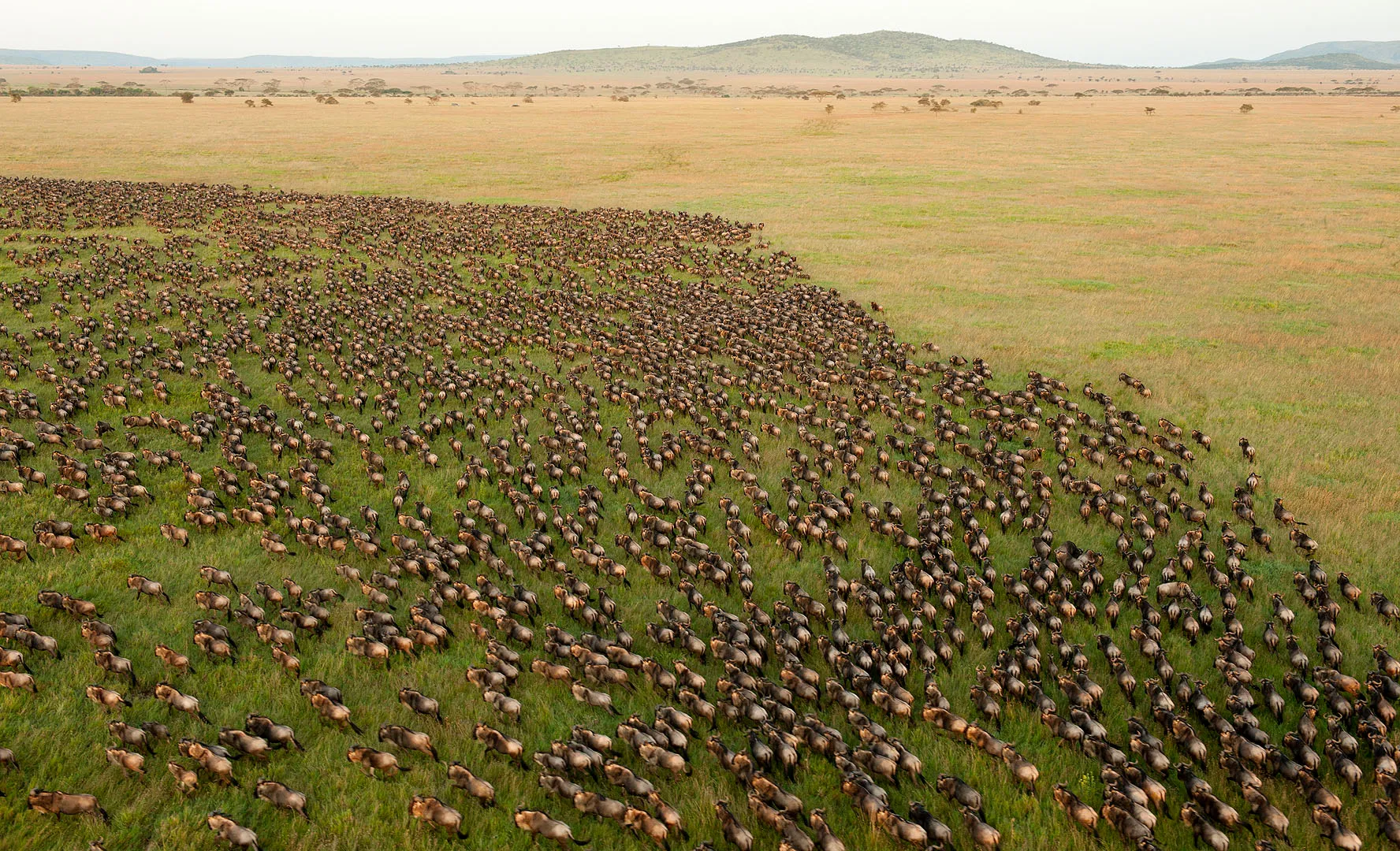
January and February are often the most rewarding alternative to the long dry season. The southern Serengeti and Ndutu area become central to migration planning as the herds use the short-grass plains. TANAPA’s revised migration guidance says most calves are born within a few weeks around mid-February. That is a useful seasonal anchor not a promise that every traveller will see a birth or predator encounter.
Choose accommodation for the southern plains if calving is the priority. Staying in the central or northern Serengeti and attempting long daily drives south wastes time. Resident wildlife elsewhere remains valuable, so travellers who do not want a migration-focused trip can combine Ngorongoro, Tarangire and central Serengeti. XTRAfrica’s overview of Tanzania’s national parks can help widen the plan beyond one famous event.
The coast is typically hot at this time. Beach stays can work well, especially when travellers accept occasional tropical showers and choose a property for its actual shoreline, tidal pattern and preferred activities. Ask dive or boat operators about recent visibility, winds and cancellation terms rather than relying on a national monthly average.
December to early March is also identified by TANAPA as a drier Kilimanjaro period. January and February therefore work well for a mountain-and-safari combination. Put the climb first if summit recovery might affect long game drives, and keep a flexible night near Moshi or Arusha before the next major transfer.
November and December: Green, Photogenic and Less Predictable

The short rains usually influence northern and coastal planning in this period, but they are variable. Rain may fall in intense bursts rather than all day. Savannas can turn green, migrant birds arrive, dust settles and some travellers find the light and scenery more attractive than in the late dry season.
This can be a good choice for photographers, repeat safari visitors and people willing to trade certainty for atmosphere. It is less suitable when one specific river crossing, uninterrupted beach week or rigid road itinerary is the entire purpose of the trip. Roads can deteriorate locally, and small-aircraft or marine schedules can be affected by weather.
Late December is not automatically quiet: festive travel creates its own demand. Confirm camp openings, transfer times and cancellation conditions. For a northern arrival or departure, XTRAfrica’s Arusha National Park guide offers an adaptable forest-and-lakes alternative near the safari gateway.
ADVERTISEMENT
March to May: The Green Season With Real Operational Risks

March to May brings the broad long-rains period to northern, north-eastern and coastal Tanzania. April is often the most difficult month for road-heavy itineraries, although the timing and intensity vary from year to year. Current evidence shows why averages are not enough: Tanzania’s 2026 rains had an erratic distribution, according to the FAO’s July 2026 Tanzania country brief.
There are rewards. Landscapes are green, clouds can create dramatic photography, birding is strong and some places feel quieter. But a low-season discount is only valuable if the camp, road, airstrip and activity operate. Heavy rain can damage tracks, lengthen transfers and close areas temporarily. Some seasonal safari camps shut, while others remain open with changed schedules.
Beach holidays are possible, but travellers seeking uninterrupted sun face a higher risk of wet days and cancelled boat activities. Kilimanjaro’s park guide identifies March to May as the wet season around the mountain base, with snow accumulation higher up. Climbs still operate, but wetter forest trails, cold and limited visibility make this a specialist choice rather than the default recommendation.
Best Months by Travel Priority
Travel period | Safari | Beaches | Kilimanjaro | Main trade-off |
June–Oct | Strong general game-viewing window in many parks | Usually drier; some coasts can be breezy | Common climbing window | Peak demand, dust and cooler mornings |
Nov–Dec | Green scenery and migrant birds; showers vary | Warm, but short rains can interrupt plans | Wetter trails, especially around short rains | Less predictable weather and road conditions |
Jan–Feb | Southern Serengeti calving focus; hot lowlands | Hot, bright periods with tropical showers possible | Another common climbing window | Heat and busy festive or calving dates |
Mar–May | Lush landscapes and fewer visitors where open | Long rains can disrupt beach and boat days | Wettest broad climbing period | Mud, difficult roads and seasonal closures |
Best time for a Tanzania safari

Choose July to October for generally easier roads and strong dry-season viewing across many northern and southern parks. Choose late January to February when southern Serengeti calving is the central objective. Choose November or early December for green landscapes and birding, provided your itinerary can absorb rain-related changes.
Do not judge a safari only by migration headlines. Ngorongoro and many parts of the Serengeti have resident wildlife, while Tarangire, Ruaha and Nyerere follow their own seasonal patterns. The best itinerary matches the park and zone to the month.
Best time for Zanzibar and Tanzania’s beaches

June to October is the safest broad pairing with a safari. January and February are hotter alternatives that often combine well with calving-season travel. March to May carries the greatest rain disruption risk. In any month, ask for beach-specific information about tides, seaweed, wind and swimming access. The official tourism portal’s beach and island overview helps distinguish beach stays from diving, dhow trips and heritage-led coastal travel.
Best time to climb Kilimanjaro

The broadest favourable windows are late June to September and December to early March. Weather still changes rapidly across Kilimanjaro’s elevation zones, and the summit can be cold, windy or snowy in any month. Timing is only one part of the safety decision.
Kilimanjaro reaches about 5,900 metres. The CDC Yellow Book’s high-altitude guidance stresses gradual acclimatisation and notes that physical fitness does not prevent altitude illness. Choose a route and operator with adequate acclimatisation, health monitoring and a clear descent or evacuation procedure. Consult a qualified travel-health professional for personal medical advice.
TRENDING NOW


POPULAR TODAY


ADVERTISEMENT
How to Book the Right Season, Not Just the Right Month

Before paying, ask the operator to name the exact Serengeti zone, beach, mountain route, airstrip and transfer sequence. “Serengeti in August” or “Zanzibar in February” is too vague to judge. Request a dated itinerary and verify which camps or activities operate during your dates.
Reconfirm the following shortly before booking and again before departure:
the latest TMA seasonal, ten-day and marine forecasts;
recent road, airstrip and park-area conditions;
camp opening dates and domestic-flight baggage limits;
beach tides, wind and boat-cancellation rules;
the Kilimanjaro route length, guide procedures and evacuation cover;
visa, health, insurance and park requirements for your nationality and route.
Allow margin between expensive components. One flexible night near Arusha, Moshi, Dar es Salaam or Zanzibar can protect the trip from a missed connection. For broader route choices and current planning links, use XTRAfrica’s Visit Tanzania collection.
FAQs
What is the single best month to visit Tanzania?
September is a strong all-round choice for many travellers because it falls within a common dry-season safari and Kilimanjaro window and combines reasonably with the coast. It is also popular, dusty in some parks and never weather-proof. Travellers focused on Serengeti calving may prefer February.
When is Tanzania’s rainy season?
Northern, north-eastern and coastal areas commonly experience long rains around March to May and shorter rains around October or November into December. Much of central and southern Tanzania follows a longer single wet season, broadly from November into April. Exact onset and intensity vary, so check current TMA forecasts.
Can I see the Great Migration all year?
The migration remains within the wider Serengeti–Mara ecosystem throughout the year, but the herds’ location changes with rain, water and grazing. Calving and river crossings are seasonal phases, and neither a herd location nor a crossing can be guaranteed. Choose the correct Serengeti zone for your dates.
Is July or February better for a safari?
July is better for broadly drier conditions and easier access across many parks. February is better when southern Serengeti calving and green scenery are the priority. July often feels busier; February can be hotter and more locally affected by showers.
Is the dry season automatically best for Zanzibar?
Not for every activity. June to October is a dependable broad beach window, but wind and sea conditions vary by coastline. Divers, kitesurfers and swimmers can prefer different areas or months. Ask an operator about the exact beach and activity rather than accepting a generic island forecast.
Should I climb Kilimanjaro before or after safari?
Climbing first often works better because it protects the expedition from earlier travel delays and allows safari or beach time afterward. Add recovery time before long drives or flights. If you climb after safari, keep a buffer night and avoid an itinerary that reaches the mountain gate immediately after a long transfer.
ADVERTISEMENT
RELATED ARTICLE