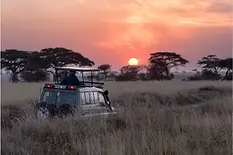
Northern and southern Tanzania create different kinds of safari. The north links major wildlife areas in an overland route from Arusha. The south spreads fewer camps across large parks commonly reached by light aircraft from Dar es Salaam or Zanzibar.
For most first-time visitors, the north is the stronger introduction. It combines the Serengeti, Ngorongoro Crater and Tarangire without requiring several bush flights. The south becomes more compelling when quiet viewing, walking and boat safaris matter more than headline landmarks.
Is northern or southern Tanzania better for safari? Choose northern Tanzania for a first safari, the Serengeti migration, Ngorongoro Crater and a flexible road itinerary. Choose southern Tanzania for fewer vehicles, walking and boat safaris, wild-dog country and a more remote fly-in experience. Neither is universally better; access, season and budget decide the winner.
Where the Two Safari Circuits Actually Are
The northern circuit is organised around Arusha and Kilimanjaro International Airport. Its central route runs through Tarangire, Lake Manyara and the Ngorongoro highlands before reaching the Serengeti. These areas are separated by meaningful distances, but they form a logical road progression. A driver-guide and one safari vehicle can remain with a group for much of the trip.
Southern Tanzania is normally planned from Dar es Salaam, although Zanzibar can also be a useful flight gateway. Its best-known safari parks are Nyerere and Ruaha; Mikumi and the Udzungwa Mountains may appear in longer overland plans. The south is not one compact loop. Nyerere lies around the Rufiji River system, while Ruaha is farther inland in south-central Tanzania. Combining them usually makes most sense by air.
XTRAfrica's broader Tanzania travel guide explains how both circuits fit alongside Kilimanjaro, the coast and western Tanzania. This comparison focuses only on the decision between the two main safari regions.
The North Wins for Tanzania's Best-Known Wildlife Geography
The northern circuit contains two places that strongly shape the global image of a Tanzania safari. UNESCO describes the Serengeti as the core of an annual circular migration involving more than a million wildebeest and hundreds of thousands of other hoofed animals. Their location changes with pasture and rainfall, so choosing the north does not guarantee that the large herds will be beside a particular camp.
Travellers planning around the migration should use XTRAfrica's guide to tracking Tanzania's wildebeest rather than treating a month-by-month diagram as a timetable. Central Serengeti remains valuable outside the most publicised herd movements because resident lions, leopards, cheetahs, hyenas and herbivores do not disappear when the migration moves elsewhere.
TRAVEL GUIDE
Northern vs Southern Tanzania Safari: Which Circuit Is Better?

Aug 10, 2026
Aug 10, 2026
14 min read
Published
Updated:
Northern and southern Tanzania create different kinds of safari. The north links major wildlife areas in an overland route from Arusha. The south spreads fewer camps across large parks commonly reached by light aircraft from Dar es Salaam or Zanzibar.
For most first-time visitors, the north is the stronger introduction. It combines the Serengeti, Ngorongoro Crater and Tarangire without requiring several bush flights. The south becomes more compelling when quiet viewing, walking and boat safaris matter more than headline landmarks.
Is northern or southern Tanzania better for safari? Choose northern Tanzania for a first safari, the Serengeti migration, Ngorongoro Crater and a flexible road itinerary. Choose southern Tanzania for fewer vehicles, walking and boat safaris, wild-dog country and a more remote fly-in experience. Neither is universally better; access, season and budget decide the winner.
Where the Two Safari Circuits Actually Are
The northern circuit is organised around Arusha and Kilimanjaro International Airport. Its central route runs through Tarangire, Lake Manyara and the Ngorongoro highlands before reaching the Serengeti. These areas are separated by meaningful distances, but they form a logical road progression. A driver-guide and one safari vehicle can remain with a group for much of the trip.

Southern Tanzania is normally planned from Dar es Salaam, although Zanzibar can also be a useful flight gateway. Its best-known safari parks are Nyerere and Ruaha; Mikumi and the Udzungwa Mountains may appear in longer overland plans. The south is not one compact loop. Nyerere lies around the Rufiji River system, while Ruaha is farther inland in south-central Tanzania. Combining them usually makes most sense by air.
XTRAfrica's broader Tanzania travel guide explains how both circuits fit alongside Kilimanjaro, the coast and western Tanzania. This comparison focuses only on the decision between the two main safari regions.
The North Wins for Tanzania's Best-Known Wildlife Geography

The northern circuit contains two places that strongly shape the global image of a Tanzania safari. UNESCO describes the Serengeti as the core of an annual circular migration involving more than a million wildebeest and hundreds of thousands of other hoofed animals. Their location changes with pasture and rainfall, so choosing the north does not guarantee that the large herds will be beside a particular camp.
Travellers planning around the migration should use XTRAfrica's guide to tracking Tanzania's wildebeest rather than treating a month-by-month diagram as a timetable. Central Serengeti remains valuable outside the most publicised herd movements because resident lions, leopards, cheetahs, hyenas and herbivores do not disappear when the migration moves elsewhere.
Ngorongoro provides a different experience: a concentrated crater-floor drive inside a wider conservation area where wildlife, pastoral communities and archaeological sites share the landscape. The Ngorongoro Conservation Area Authority prohibits off-road driving and restricts photography of local residents along the road; community photographs require consent and, in designated settings, may require formal permission.
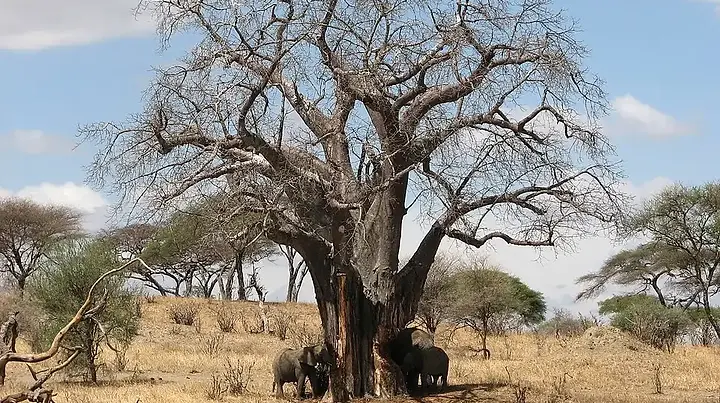
Tarangire adds baobab country, the Tarangire River and important dry-season elephant viewing. TANAPA's current park page also lists night drives and walking activities, but these must be arranged through authorised providers rather than assumed to be available with every itinerary.
The northern advantage is therefore range. In one road journey, travellers can move from Rift Valley and highland scenery to a volcanic caldera and the Serengeti plains. Its weakness is concentration: the same famous places attract many vehicles, especially at crater bottlenecks, river crossings and predator sightings.
The South Wins for Space and a Wider Mix of Activities
Southern Tanzania is not a lesser version of the Serengeti. Its dominant miombo woodland, broad river systems and seasonal floodplains produce a different visual rhythm. Wildlife can be less immediately visible in thick vegetation, yet the absence of a dense convoy often gives guides more time to interpret tracks, alarm calls and animal movement.

Nyerere National Park combines conventional game drives with authorised walking safaris and boat trips on the Rufiji River and connected lakes. The water-based experience is the southern circuit's clearest distinction: hippos, crocodiles, waterbirds and animals approaching the banks can be observed from a perspective the northern road circuit rarely provides.
ADVERTISEMENT
Ruaha is the stronger choice for vast inland landscapes, the Great Ruaha River and a mix of eastern and southern African wildlife. TANAPA records both greater and lesser kudu in the park and lists walking and game-drive experiences. Ruaha's scale does not mean animals appear on command; patient guiding and multiple nights matter, particularly when woodland disperses wildlife.

African wild dogs are an important southern draw, especially in Nyerere, but no responsible operator should guarantee them. Southern Tanzania is better understood as predator-rich and spatially generous, not as a checklist shortcut.
Access Changes the Price and Pace
Northern safaris can begin by road from Arusha. A common five- to eight-night plan links Tarangire or Lake Manyara, Ngorongoro and the Serengeti without changing aircraft at every stage. The trade-off is road time. Reaching the central Serengeti overland is a substantial travel day even when wildlife stops make the journey interesting.

The southern circuit is more dependent on aviation. Coastal Aviation's current destination schedules show services from Dar es Salaam to Nyerere and Ruaha, as well as connections between Nyerere and Ruaha. Published times are planning references, not promises: bush routes may include stops, use different airstrips or change seasonally. Travellers must reconfirm the operating date, luggage allowance and final airstrip before paying.
That flight dependency produces two opposite effects. It saves long road transfers and puts travellers close to remote camps, but it also adds cost and makes the itinerary less forgiving if a connection changes. Light-aircraft luggage limits usually favour soft bags, and passengers requiring mobility assistance should obtain written arrangements from both the airline and camps.

For a short safari of three or four nights, the north offers more combinations. A southern trip of the same length should normally concentrate on one park rather than rushing between Nyerere and Ruaha. Six to eight safari nights make the south more convincing because the flight expense and travel effort buy enough time on the ground.
Which Circuit Costs More?
There is no single circuit price. Accommodation tier, season, group size, vehicle exclusivity, park charges and domestic flights matter more than the label “north” or “south.” XTRAfrica's 2026 Tanzania safari cost guide explains how those components change a quotation.
At comparable comfort levels, the north usually offers more ways to control cost. Travellers may share a road vehicle, stay outside some protected areas or choose among a wider range of camps. A private northern safari can still be expensive, especially with premium migration camps or fly-in sectors.
ADVERTISEMENT
The south often starts higher because scheduled bush flights and remote-camp logistics are central to the trip. However, a quote may include game drives, walks, boat outings, meals and local transfers that another property prices separately. Compare complete packages, not nightly room rates.
Ask each operator to itemise:
park, conservation and activity fees;
road transport and domestic flights;
the exact camp and room category;
shared versus private vehicles and boats;
meals, drinks, laundry and transfers;
taxes, concession charges and supplements;
baggage, cancellation and flight-change conditions.
The Best Season Is Not Identical Across Both Circuits
June to October is the simplest shared window. Drier conditions often improve road access, while wildlife in Tarangire, Ruaha and parts of Nyerere becomes more associated with remaining water. It is also a busy and expensive period in northern Tanzania.

January and February are especially relevant to the southern Serengeti plains and Ndutu area during the broad calving period. The exact herds and weather remain variable. April and May can bring lower prices and greener landscapes in the north, but heavy rain can slow park roads and some accommodation may reduce operationsSouthern Tanzania usually requires more care in the wet season.
Green landscapes and birdlife can be excellent, but roads, airstrip conditions and seasonal camp schedules may narrow the practical choices. Consult XTRAfrica's complete best-time guide to Tanzania and then verify the actual camp and flight dates.
Choose the Northern Circuit If...
Choose the north if this is your first African safari and Serengeti or Ngorongoro would feel like a serious omission. It is also the more straightforward choice for a family wanting several accommodation levels, a traveller adding Kilimanjaro or anyone who prefers one continuous road journey to repeated light-aircraft transfers.
Photographers targeting the Great Migration should also begin in the north, but must choose the Serengeti sector according to current herd conditions. Anyone adding a community visit should approach Maasailand as a living region, not a staged attraction; XTRAfrica's guide to visiting Maasai land respectfully explains consent, local ownership and photography etiquette.
Choose the Southern Circuit If...
Choose the south if quiet viewing and varied safari methods matter more than famous place names. It particularly suits repeat safari travellers, birders, walkers and couples prepared to pay for fly-in logistics. Nyerere is the obvious southern anchor for river and boat experiences, while Ruaha rewards travellers who want extended drives through large, dry-country landscapes.
The south is not automatically suitable for every child or traveller with limited mobility. Camps set their own minimum ages for walks and boats, while aircraft, sandy banks, rough tracks and raised lodge structures create different barriers. Request exact vehicle steps, paths, bathroom arrangements and assistance procedures before booking.
Can You Combine North and South?
Yes, but only when time and budget justify the flight. A sensible combination gives each circuit at least three or four nights and uses an air connection rather than attempting a huge road loop. With fewer than ten safari nights, choosing one circuit usually produces a deeper trip.
TRENDING NOW


POPULAR TODAY


ADVERTISEMENT
Do not combine them merely to increase the number of park names. The strongest two-circuit itinerary pairs contrasting experiences for example, Serengeti plains followed by Rufiji boat safaris not two rushed sequences of similar game drives.
Final Verdict: Which Tanzania Safari Circuit Is Better?
For a first Tanzania safari, choose the northern circuit. Its road logic, landmark parks and wider range of itinerary styles make it the safer all-round decision. Accept that famous sightings can attract more vehicles and allow enough time for the long Serengeti sector.
Choose the southern circuit when remoteness is part of the purpose. Nyerere and Ruaha demand more logistical commitment, but return it through space, specialised guiding and activities beyond the vehicle. The south is not “better because it is empty,” and the north is not “better because it is famous.” The right circuit is the one whose transport, pace and wildlife style match the traveller.
Before departure, recheck park conditions, flight schedules and a current official advisory such as the UK FCDO Tanzania guidance. As of 9 August 2026, its geographically specific warning concerns areas near Tanzania's border with Cabo Delgado Province in Mozambique, not the entire country; travellers should still read the full advice and obtain suitable insurance.
Frequently Asked Questions
Is southern Tanzania cheaper than the Serengeti?
Not usually at the same comfort level. Southern trips commonly rely on bush flights and remote camps, while northern trips provide more road-based and shared options. Compare what the quotation includes rather than assuming a less visited park is cheaper.
Which circuit is better for the Big Five?
The north is the more practical choice for travellers whose priority is the traditional Big Five list, particularly because Ngorongoro and the Serengeti can be combined. Sightings, including black rhinoceros and leopard, are never guaranteed.
Where are African wild dogs easier to look for?
Nyerere is one of Tanzania's important wild-dog landscapes, making the southern circuit the stronger choice for travellers interested in the species. They range widely and can be difficult to locate, so no itinerary should promise a sighting.
How many days do you need for each circuit?
Allow about five to eight safari nights for a rounded northern route. For the south, three or four nights can work in one park, while six to eight nights allow a more satisfying Nyerere–Ruaha combination by air.
Is the southern circuit completely uncrowded?
No. Popular camps, airstrips and productive wildlife areas can still bring vehicles together. The circuit generally has lower vehicle density than the northern landmarks, but “private wilderness” should not be treated as a guarantee.
Can either circuit be combined with Zanzibar?
Yes. Northern travellers can fly from Serengeti or Arusha, while southern schedules may connect Nyerere or Ruaha with Zanzibar. Confirm seasonal routes and baggage rules directly with the airline.
ADVERTISEMENT
RELATED ARTICLE