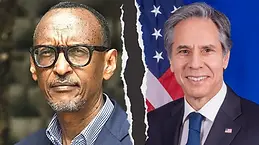
How Kagame’s Isolation Mirrors Tshisekedi’s Global Rise
Between 2010 and 2018, Paul Kagame was the West’s favorite African leader. Rwanda was marketed as the “Singapore of Africa,” and Kagame was lauded as a visionary reformer. He shared stages with Bill Clinton, received praise from Donald Trump at Davos, spoke at TED, and was welcomed at G7 summits.
But fifteen years later, that image has collapsed.
In 2025, Kagame stands diplomatically isolated, and his regime is condemned for regional destabilization and war crimes. Meanwhile, Félix Antoine Tshisekedi, once underestimated as a political novice, has become the most influential statesman in Central Africa, repositioning the DRC as a key global partner for peace, green energy, and regional leadership.
This is the Great Lakes Reversal, a shift in narrative, alliances, and legitimacy between two presidents who now symbolize two opposing futures for Africa.
Kagame’s Rise and Fall: From Global Darling to Diplomatic Pariah
The Glory Days (2010–2018)During the 2010s, Kagame’s Rwanda was the poster child for post-conflict development. With polished PR, military discipline, and tight internal control, Kigali projected an image of efficiency, growth, and anti-corruption.
Behind the scenes, firms like Racepoint Group reshaped global perception, securing speaking slots and media praise. Rwanda signed military deals with the U.S., UK, and Israel and positioned itself as a strategic security partner.
But these glossy accolades masked a darker reality: political repression, disappearances, and zero tolerance for dissent, long flagged by human rights watchdogs.
Turning Point: The M23 Rebellion and Congo War (2021–2025)
WAR IN DR CONGO
Kagame’s Isolation, Tshisekedi’s Rise: Great Lakes Shift 2025

11 nov. 2025
15 mai 2026
7 min read

Publié
Mis à jour:
How Kagame’s Isolation Mirrors Tshisekedi’s Global Rise
Between 2010 and 2018, Paul Kagame was the West’s favorite African leader. Rwanda was marketed as the “Singapore of Africa,” and Kagame was lauded as a visionary reformer. He shared stages with Bill Clinton, received praise from Donald Trump at Davos, spoke at TED, and was welcomed at G7 summits.
But fifteen years later, that image has collapsed.
In 2025, Kagame stands diplomatically isolated, and his regime is condemned for regional destabilization and war crimes. Meanwhile, Félix Antoine Tshisekedi, once underestimated as a political novice, has become the most influential statesman in Central Africa, repositioning the DRC as a key global partner for peace, green energy, and regional leadership.
This is the Great Lakes Reversal, a shift in narrative, alliances, and legitimacy between two presidents who now symbolize two opposing futures for Africa.
Kagame’s Rise and Fall: From Global Darling to Diplomatic Pariah
The Glory Days (2010–2018)During the 2010s, Kagame’s Rwanda was the poster child for post-conflict development. With polished PR, military discipline, and tight internal control, Kigali projected an image of efficiency, growth, and anti-corruption.
Behind the scenes, firms like Racepoint Group reshaped global perception, securing speaking slots and media praise. Rwanda signed military deals with the U.S., UK, and Israel and positioned itself as a strategic security partner.
PUBLICITÉ
But these glossy accolades masked a darker reality: political repression, disappearances, and zero tolerance for dissent, long flagged by human rights watchdogs.
Turning Point: The M23 Rebellion and Congo War (2021–2025)
Kagame’s fall from grace began with the resurgence of the M23 rebellion in eastern Congo.
Between 2022 and 2024, UN reports confirmed the direct involvement of Rwandan troops, an estimated 3,000–4,000 fighters, operating alongside M23, with coordinated military offensives, heavy weaponry, and logistical support.
The diplomatic backlash was swift:
Germany suspended aid and high-level visits.
Belgium froze a €900M minerals deal and rejected Kigali’s new ambassador.
The EU cut military cooperation and condemned Rwanda’s interference.
The U.S. Congress formally denounced Rwanda’s role in the Congo war and sanctioned Gen James Kabarebe.
Within Africa, SADC and Angola sidelined Rwanda from regional peace initiatives. Kagame’s voice vanished from key summits, replaced by Tshisekedi and other regional leaders.
Tshisekedi’s Ascent: From Political Newcomer to Continental Leader
Strategic Partnerships (2021–2025)As Rwanda’s reputation crumbled, Tshisekedi positioned Congo as Africa’s green engine and a bridge between continents.
PUBLICITÉ
Tendances actuelles


Populaire aujourd'hui


Key initiatives include:
U.S.–DRC–Zambia Battery Partnership (2022): Linking Congo’s cobalt and copper to electric vehicle supply chains.
EU Global Gateway & Lobito Corridor (2023): Opening infrastructure corridors to Angola and Zambia.
CAFI Forest Deal: $500M to protect Congo’s rainforest, the world’s second-largest carbon sink.
Gulf Cooperation: $1.9B deal with UAE’s Primera Group; new ties with Qatar and Saudi Arabia.
This economic diplomacy placed Kinshasa at the heart of global climate, energy, and trade discussions.
Regional Leadership and Strategic Realignment
Frustrated by the East African Community (EAC) inaction on M23, Tshisekedi turned to SADC, building deeper defense ties with Angola and South Africa. The DRC regained influence in the ICGLR, reshaping regional mediation to exclude Rwanda.
At global summits, COP30, U.S.–Africa Leaders Summit, and others, Tshisekedi is now a fixture alongside global leaders, while Kagame faces protests and no-shows.
Domestic Reforms and Sovereignty MessageTshisekedi has not limited his vision to foreign diplomacy. At home, his message of economic sovereignty, justice, and value addition has resonated with youth and civil society.
He prioritized:
Local cobalt and copper processing
Advocacy for international recognition of the Congolese genocide
Reforms to link mining with social justice and job creation
This blend of domestic reform and global credibility turned Congo from a victimized state into a sovereign partner, respected, not pitied.
PUBLICITÉ
Kagame’s Isolation vs Tshisekedi’s Spotlight
The contrast is now not only diplomatic, it is visual and symbolic:
Kagame is increasingly absent from global summits
Rwanda faces sanctions, aid freezes, and growing regional mistrust
Protesters now follow Kagame abroad, not applause
Meanwhile:
Tshisekedi’s January 2024 inauguration was attended by leaders. Approximately 20 African heads of state attended the inauguration of Felix Tshisekedi, including Angola, Kenya, Senegal, Egypt, and Zambia
African states like Burundi and Tanzania now back the DRC’s position on M23
The DRC leads peace conversations. Rwanda was once invited to facilitate
Implications for the Region
Regional Power Shift: SADC and ICGLR, now led by the DRC, limit Kigali’s reach
Economic Realignment: Congo attracts green investment while Rwanda faces economic pressure from aid cuts
Narrative Control: Kagame’s “security state” story collapses; Tshisekedi’s “sovereign reformer” message rises
Youth and Civil Society: Congo's youth push for transparency and inclusion, while Rwanda silences dissent
Conclusion: The Age of Congo Has Begun
From 2010–2018, Paul Kagame was the West’s technocratic dream. In 2025, he stands increasingly isolated, accused of war crimes, destabilization, and silencing his own people.
Meanwhile, Félix Tshisekedi has turned the DRC into a respected voice on energy, peace, and climate, replacing Kigali as the diplomatic center of the Great Lakes.
This isn’t just a political shift. It’s a continental reset.
The era of Rwanda’s dominance is over. The age of a sovereign, united, and globally relevant Congo has begun.
PUBLICITÉ
Articles connexes