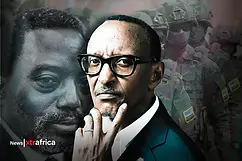
President Félix Tshisekedi has announced a nationwide dialogue process aimed at strengthening national cohesion, addressing the roots of the DRC's recurring crises and building consensus around political, institutional and security reforms.
KINSHASA, Democratic Republic of the Congo --- August 28, 2026 --- President Félix-Antoine Tshisekedi Tshilombo has announced the opening of a national dialogue for peace, national cohesion and the refounding of the State, calling on Congolese citizens and political and social forces to participate in discussions over the country's future.
In his address on August 27, Tshisekedi presented the initiative as a response to the DRC's continuing security, political and institutional challenges, with the conflict in eastern Congo forming an important backdrop to the process.
The President said national cohesion was essential to defending the country's sovereignty and strengthening the Republic.
"The Republic comes before us, transcends us, and will outlive us," Tshisekedi said.
The initiative is expected to begin with consultations across the country before progressing to national-level discussions in Kinshasa.
Dialogue to Reach All 26 Provinces
According to Tshisekedi's announcement, the process will not be limited to political leaders in Kinshasa.
Preparatory consultations are expected to involve the DRC's 26 provinces, allowing political actors, civil society, traditional authorities, religious groups, young people, women and other sections of society to contribute.
The process is expected to culminate in national discussions in Kinshasa.
PEACE FOR DRC NOW
Tshisekedi Launches DRC National Dialogue for Peace and Reform

Aug 28, 2026
Aug 28, 2026
6 min read

Published
Updated:
President Félix Tshisekedi has announced a nationwide dialogue process aimed at strengthening national cohesion, addressing the roots of the DRC's recurring crises and building consensus around political, institutional and security reforms.
KINSHASA, Democratic Republic of the Congo --- August 28, 2026 --- President Félix-Antoine Tshisekedi Tshilombo has announced the opening of a national dialogue for peace, national cohesion and the refounding of the State, calling on Congolese citizens and political and social forces to participate in discussions over the country's future.
In his address on August 27, Tshisekedi presented the initiative as a response to the DRC's continuing security, political and institutional challenges, with the conflict in eastern Congo forming an important backdrop to the process.
The President said national cohesion was essential to defending the country's sovereignty and strengthening the Republic.
"The Republic comes before us, transcends us, and will outlive us," Tshisekedi said.
The initiative is expected to begin with consultations across the country before progressing to national-level discussions in Kinshasa.
Dialogue to Reach All 26 Provinces
According to Tshisekedi's announcement, the process will not be limited to political leaders in Kinshasa.
Preparatory consultations are expected to involve the DRC's 26 provinces, allowing political actors, civil society, traditional authorities, religious groups, young people, women and other sections of society to contribute.
ADVERTISEMENT
The process is expected to culminate in national discussions in Kinshasa.
Tshisekedi said the entire dialogue should be limited to a maximum of three months, indicating that the initiative is intended to produce recommendations within a defined timeframe rather than become an indefinite political process.
The President framed the initiative around several major objectives, including strengthening peace, restoring national cohesion and examining reforms intended to improve the functioning of the Congolese state.
Tshisekedi Draws Red Line Over Armed Groups
While opening the door to political dialogue, Tshisekedi also established limits on who can participate.
The President rejected the idea that armed rebellion should become a pathway to political legitimacy.
"No military conquest can ever be converted into political legitimacy," he said.
He further argued that political actors cannot simultaneously claim a place in national political discussions while taking up arms against the Republic.
The distinction is important as the DRC continues to confront AFC/M23 and other armed groups while simultaneously participating in internationally backed diplomatic processes aimed at ending the conflict in eastern Congo.
ADVERTISEMENT
Tshisekedi's position suggests that the national dialogue will be treated separately from negotiations specifically involving armed groups.
President Calls for Unity Despite Political Differences
A major theme of Tshisekedi's address was the distinction between legitimate democratic disagreement and divisions that weaken the country.
The President acknowledged the right of Congolese political forces to oppose one another democratically but urged them not to allow those disagreements to undermine national cohesion.
"Democracy allows us to disagree, but the nation forbids us from tearing each other apart."
Tshisekedi argued that internal cohesion remains one of the strongest foundations for protecting Congolese sovereignty.
The dialogue is therefore expected to involve both political and broader societal questions rather than focus exclusively on the country's security crisis.
Peace Must Not Mean Impunity, Tshisekedi Says
The President also linked national reconciliation to accountability.
"Peace cannot mean impunity," Tshisekedi declared.
He added that the DRC would not build reconciliation by simply forgetting the country's past.
The remarks indicate that accountability for serious abuses will remain part of the government's position even as it promotes dialogue and reconciliation.


Popular Today


ADVERTISEMENT
Tshisekedi Calls on Congolese Youth to Participate
The President specifically addressed young Congolese, encouraging them to participate in discussions about the country's future rather than remain outside the political process.
"Do not let anyone decide your future without you."
He added:
"The Republic needs your intelligence, your energy and your courage."
Youth participation could become an important component of the consultations.
A Three-Month Test for the National Dialogue
The announcement opens a new political process, but its impact will depend on implementation.
Key questions include which political parties and civil-society organizations ultimately participate, how delegates are selected, what subjects are placed on the formal agenda and how recommendations emerging from the consultations will be implemented.
Tshisekedi presented the dialogue as an opportunity to move beyond recurring political and institutional crises and establish stronger foundations for the future.
The process will now move toward provincial consultations and, eventually, national discussions in Kinshasa.
"It is our responsibility to transform yesterday's suffering into the foundations of tomorrow."
ADVERTISEMENT
Related Articles