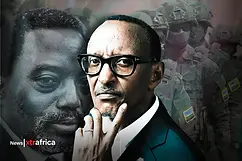
DR Congo government spokesperson Patrick Muyaya accuses former President Joseph Kabila of choosing armed rebellion over democratic politics, arguing that the new FRN coalition is a rebranded continuation of AFC/M23 rather than a genuine break from the conflict in eastern Congo.
KINSHASA, — October 18, 2026 — Democratic Republic of Congo government spokesperson Patrick Muyaya has sharply criticized former President Joseph Kabila’s leadership of a new political-military coalition, accusing him of aligning himself with what Kinshasa considers a Rwandan-backed rebellion and seeking political power through force.
In remarks delivered in French, Muyaya said Kabila’s decision to publicly lead the Front for the Refoundation of the Nation (FRN) amounted to an attack on Congo’s constitutional order and on the right of Congolese citizens to choose their leaders through elections.
The government spokesperson portrayed the new coalition as a change of name rather than a change in purpose. He also said Kinshasa would continue pursuing peace through the Washington and Doha processes while maintaining its military readiness.
Muyaya Accuses Kabila of Choosing Arms Over Elections
Muyaya argued that a former head of state should not seek a return to political influence by joining a movement that includes armed groups fighting the Congolese government.
He said the decision to take up arms carried consequences for civilians already affected by violence, displacement and insecurity in eastern DRC. In his account, any attempt to capture territory by force risked producing more deaths and humanitarian suffering.
“The choice to take up arms means that Congolese people will be killed in an attempt to conquer territory,” Muyaya said, according to an English translation of his French remarks.
He insisted that political authority must come from the Congolese electorate, not armed action. He also challenged political figures who had called for Kabila’s participation in national dialogue to explain whether they still supported that position following his association with the new coalition.
These are accusations and political judgments made by Muyaya; they do not, by themselves, establish Kabila’s individual responsibility for specific attacks or civilian deaths.
JUSTICE & CRIME
Kabila Is Helping Rwanda Disguise Its Aggression, Says Muyaya

Oct 19, 2026
Oct 19, 2026
7 min read

Published
Updated:
DR Congo government spokesperson Patrick Muyaya accuses former President Joseph Kabila of choosing armed rebellion over democratic politics, arguing that the new FRN coalition is a rebranded continuation of AFC/M23 rather than a genuine break from the conflict in eastern Congo.
KINSHASA, — October 18, 2026 — Democratic Republic of Congo government spokesperson Patrick Muyaya has sharply criticized former President Joseph Kabila’s leadership of a new political-military coalition, accusing him of aligning himself with what Kinshasa considers a Rwandan-backed rebellion and seeking political power through force.
In remarks delivered in French, Muyaya said Kabila’s decision to publicly lead the Front for the Refoundation of the Nation (FRN) amounted to an attack on Congo’s constitutional order and on the right of Congolese citizens to choose their leaders through elections.
The government spokesperson portrayed the new coalition as a change of name rather than a change in purpose. He also said Kinshasa would continue pursuing peace through the Washington and Doha processes while maintaining its military readiness.
Muyaya Accuses Kabila of Choosing Arms Over Elections
Muyaya argued that a former head of state should not seek a return to political influence by joining a movement that includes armed groups fighting the Congolese government.
He said the decision to take up arms carried consequences for civilians already affected by violence, displacement and insecurity in eastern DRC. In his account, any attempt to capture territory by force risked producing more deaths and humanitarian suffering.
“The choice to take up arms means that Congolese people will be killed in an attempt to conquer territory,” Muyaya said, according to an English translation of his French remarks.
He insisted that political authority must come from the Congolese electorate, not armed action. He also challenged political figures who had called for Kabila’s participation in national dialogue to explain whether they still supported that position following his association with the new coalition.
ADVERTISEMENT
These are accusations and political judgments made by Muyaya; they do not, by themselves, establish Kabila’s individual responsibility for specific attacks or civilian deaths.
FRN Replaces AFC as Kabila Takes the Lead
The FRN was announced in Goma on October 12, 2026, bringing Kabila into the leadership of a political-military structure linked to the former Alliance Fleuve Congo (AFC) and M23 rebellion. Reporting by Radio Okapi and Africanews identified Corneille Nangaa and Bertrand Bisimwa among the figures retaining senior roles in the new organization.
Muyaya said this continuity was central to the government’s position. He argued that the people involved, the movement’s armed character and its methods had not fundamentally changed, despite the adoption of a new name and the elevation of a former president.
He further alleged that Kabila had been involved in the AFC project before publicly assuming a leadership role. That assertion was made by Muyaya and was not independently established by the remarks themselves.
The FRN has presented itself as a movement opposed to President Félix Tshisekedi’s government. Its representatives have accused the authorities in Kinshasa of misrule and have defended resistance to the current administration, including the possibility of force. Kabila has previously rejected accusations linking him to wrongdoing and described legal proceedings against him as politically motivated.
Rwanda Accusations and the Question of Accountability
Muyaya went further, describing the new alliance as a proxy armed movement serving Rwanda’s interests. He accused Kabila of helping make what Kinshasa regards as Rwandan involvement in the Congolese conflict appear to be a purely domestic political confrontation.
He also alleged that the reorganization could reduce international pressure on President Paul Kagame by shifting attention toward Congolese political rivalries.
ADVERTISEMENT
Rwanda has repeatedly denied supporting M23, while United Nations experts and other international actors have documented or alleged Rwandan military support for the movement. The distinction matters: evidence concerning Rwanda’s support for M23 does not automatically prove every allegation Muyaya made about Kabila’s intentions or personal responsibility.
Muyaya referred to deaths in Goma, sexual violence, the displacement of families and the interruption of children’s schooling as reasons to reject further armed escalation. He invoked a figure of 10,000 deaths in Goma, but the supplied remarks did not identify a source, period or methodology for that number; it is therefore presented here as his claim rather than an independently verified toll.
Washington and Doha Remain Central to Kinshasa’s Approach
Despite his criticism of Kabila, Muyaya said the government remained committed to existing diplomatic initiatives.
He cited United Nations Security Council Resolution 2773, the Washington process involving Rwanda and the Doha negotiations addressing the AFC/M23 conflict as frameworks for resolving the security crisis.
In his description, the Washington track addresses the interstate dimension of the conflict, while the Doha talks address armed actors and commitments related to a ceasefire and broader settlement. Muyaya said the emergence of the FRN did not change Kinshasa’s intention to pursue these channels.
The new coalition has said it will assume the previous AFC structure’s commitments under the Doha process, a position reported by Al Jazeera. Whether that undertaking translates into progress toward a durable ceasefire remains uncertain.
Muyaya also said Congo’s armed forces must remain on alert and prepared to respond when necessary. He characterized military readiness as normal for a country facing an ongoing armed conflict, even while diplomatic talks continue.


Popular Today


ADVERTISEMENT
National Dialogue and Political Parties Under Scrutiny
The spokesperson drew a line between peaceful political opposition and groups seeking power through armed force.
He said those advocating for Kabila’s inclusion in political dialogue, including figures associated with the C64, should clarify their position now that the former president has taken a leading role in the FRN.
Muyaya also defended the interior minister’s authority to suspend political parties whose leaders, in the government’s view, had abandoned democratic competition in favor of armed action. His remarks linked this argument to Kabila’s political camp and the People's Party for Reconstruction and Democracy (PPRD).
Such measures raise separate legal and political questions, including the rights of party members who do not support armed activity. The spokesperson’s remarks set out the government’s justification, not an independent legal determination about every affected party or individual.
Muyaya maintained that a national dialogue should bring together Congolese committed to peace, constitutional institutions and national cohesion. He referred to discussions involving religious organizations and said the country needed stronger security institutions capable of protecting both civilians and territorial integrity.
A New Name, but an Unresolved Conflict
The confrontation places a former Congolese president at the head of a coalition that includes figures from a rebellion already central to the war in eastern DRC.
For Muyaya, the FRN announcement is evidence of continuity rather than transformation. He argues that Kabila’s leadership does not change the government’s assessment of the armed movement or remove the need for accountability over abuses committed during the conflict.
ADVERTISEMENT
Related Articles