Since M23 resumed major operations in eastern Democratic Republic of the Congo in late 2021, President Paul Kagame's government has repeatedly placed two concerns at the center of its explanation for its involvement: the continued presence of the Democratic Forces for the Liberation of Rwanda (FDLR) and threats facing Congolese Tutsi communities. Kigali maintains that its measures are defensive and that AFC/M23 has legitimate Congolese grievances.
None of these realities, however, settles the separate question of whether Rwanda may deploy forces inside a neighboring sovereign country or assist an armed movement in taking and administering its towns.
That distinction is central to Kinshasa's position: a state can have real security concerns without gaining an unlimited right to intervene militarily across an international border. The evidence collected by international investigators increasingly focuses not simply on rhetoric or grievances, but on Rwandan troop deployments in DRC, operational command, territorial administration, forced recruitment and revenue from minerals.
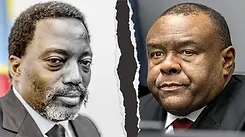
The argument was dramatically sharpened on October 12, 2026, when former president Joseph Kabila was announced as leader of the Front pour la Refondation de la Nation (FRN), a new political-military coalition replacing the AFC/M23 arrangement. Rebel figures Corneille Nangaa, Bertrand Bisimwa, Freddy Kaniki and Sultani Makenga were named among its senior leadership. The FRN has openly connected a former head of state to the armed coalition seeking political change in Kinshasa.
For critics of Kagame and Kabila, the question is unavoidable: if the original justification was protection from the FDLR, why has the armed movement's political mission expanded to changing who governs the DRC?
1. The FDLR argument: a real threat, but not a blank cheque
Kigali's longest-running security argument concerns the FDLR, an armed group operating in eastern Congo whose origins are allegedly linked to forces responsible for the 1994 Rwandan genocide.
Rwanda says Congolese military cooperation with FDLR elements has deepened the danger. In January 2026 testimony published by Rwanda's defence ministry, Ambassador Mathilde Mukantabana openly acknowledged security coordination with AFC/M23 and said it was intended to prevent renewed cross-border threats. She described the movement as an independent Congolese organization and argued that Rwanda's security measures would be reduced in line with verified FDLR disarmament.
But the United States has sanctioned commanders from both FDLR and M23, reflecting a crucial point: one armed group's atrocities do not justify another armed group's violations. Under the Washington peace framework, the neutralization of the FDLR and the disengagement of Rwandan forces or removal of defensive measures are linked commitments, not substitutes for one another.
Kinshasa's challenge to Kagame therefore rests on a question of proportionality, legality and accountability. Evidence of FDLR abuses must lead to lawful disarmament and protection of civilians, not to an indefinite transfer of Congolese territory into the hands of an armed coalition.
JUSTICE & CRIME
Kagame's Failed Justifications for His Military Presence in the DRC

Oct 14, 2026
Oct 14, 2026
10 min read

Published
Updated:
Since M23 resumed major operations in eastern Democratic Republic of the Congo in late 2021, President Paul Kagame's government has repeatedly placed two concerns at the center of its explanation for its involvement: the continued presence of the Democratic Forces for the Liberation of Rwanda (FDLR) and threats facing Congolese Tutsi communities. Kigali maintains that its measures are defensive and that AFC/M23 has legitimate Congolese grievances.
None of these realities, however, settles the separate question of whether Rwanda may deploy forces inside a neighboring sovereign country or assist an armed movement in taking and administering its towns.
That distinction is central to Kinshasa's position: a state can have real security concerns without gaining an unlimited right to intervene militarily across an international border. The evidence collected by international investigators increasingly focuses not simply on rhetoric or grievances, but on Rwandan troop deployments in DRC, operational command, territorial administration, forced recruitment and revenue from minerals.
The argument was dramatically sharpened on October 12, 2026, when former president Joseph Kabila was announced as leader of the Front pour la Refondation de la Nation (FRN), a new political-military coalition replacing the AFC/M23 arrangement. Rebel figures Corneille Nangaa, Bertrand Bisimwa, Freddy Kaniki and Sultani Makenga were named among its senior leadership. The FRN has openly connected a former head of state to the armed coalition seeking political change in Kinshasa.
For critics of Kagame and Kabila, the question is unavoidable: if the original justification was protection from the FDLR, why has the armed movement's political mission expanded to changing who governs the DRC?
1. The FDLR argument: a real threat, but not a blank cheque
Kigali's longest-running security argument concerns the FDLR, an armed group operating in eastern Congo whose origins are allegedly linked to forces responsible for the 1994 Rwandan genocide.
Rwanda says Congolese military cooperation with FDLR elements has deepened the danger. In January 2026 testimony published by Rwanda's defence ministry, Ambassador Mathilde Mukantabana openly acknowledged security coordination with AFC/M23 and said it was intended to prevent renewed cross-border threats. She described the movement as an independent Congolese organization and argued that Rwanda's security measures would be reduced in line with verified FDLR disarmament.
But the United States has sanctioned commanders from both FDLR and M23, reflecting a crucial point: one armed group's atrocities do not justify another armed group's violations. Under the Washington peace framework, the neutralization of the FDLR and the disengagement of Rwandan forces or removal of defensive measures are linked commitments, not substitutes for one another.
ADVERTISEMENT
Kinshasa's challenge to Kagame therefore rests on a question of proportionality, legality and accountability. Evidence of FDLR abuses must lead to lawful disarmament and protection of civilians, not to an indefinite transfer of Congolese territory into the hands of an armed coalition.
2. Protecting Congolese Tutsis cannot mean exposing other civilians to abuse
Rwanda also invokes discrimination against Congolese Tutsi and other Rwandophone communities. Those grievances deserve serious attention. Citizenship rights, equal protection and freedom from ethnic violence are obligations of the Congolese state; protecting these communities should not be treated as a concession to Kigali.
Yet independent investigations have documented extensive abuses by the very coalition Rwanda says shares its security concerns. In a June 2026 report, Human Rights Watch described mass roundups, arbitrary detention, coercion and forced recruitment by M23 and Rwandan forces in occupied parts of eastern Congo. The report documented the treatment of civilians, including young men and boys, after the fall of Goma and Bukavu.
This creates a fundamental contradiction in the public narrative. An operation presented as the defence of threatened populations must still answer for the rights of everyone living under the control of its forces. No community's security can be built on the arbitrary imprisonment, forced recruitment or displacement of another.
3. 'Defensive measures' versus the facts on the ground
The biggest challenge to Kigali's description of its presence came from international findings about the scale and character of operations in 2025 and 2026.
The UN Group of Experts' 2025 final report found that AFC/M23 and the Rwanda Defence Force jointly captured strategic areas, including Goma and Bukavu. It concluded that RDF support was critical to the rebels' territorial expansion and identified sophisticated military systems, active operations and a Rwandan role in securing AFC/M23 leadership.
In March 2026, the U.S. Treasury sanctioned the Rwanda Defence Force and senior officers, stating that the RDF was actively supporting, training and fighting alongside M23. Washington said M23's offensives would not have been possible without the RDF's support.
These findings matter because they move the debate away from a simple argument over whether Rwanda has legitimate fears. They ask what Rwanda's armed forces were doing inside the DRC, whom they were fighting alongside and what territories they helped seize. A military presence associated with offensives and control of major cities cannot be assessed solely through a government's preferred label of 'defence.'
ADVERTISEMENT
Rwanda disputes accusations that it directs M23 as a proxy and says it does not seek to determine Congo's political future. The contradiction between that position and international findings is at the center of the diplomatic confrontation.
4. The mineral question is no longer just a slogan
Congolese critics have long argued that the conflict cannot be understood without eastern Congo's mineral wealth, The UN investigators have identified specific economic networks that make the question impossible to dismiss.
The UN Group of Experts' 2025 report documented minerals from the AFC/M23-controlled Rubaya area being smuggled into Rwanda, mixed with Rwandan production and exported through downstream supply chains. Reporting on the 2026 UN findings described continued integration of mineral production from rebel-controlled territory into Rwanda-linked markets.
The pattern matters: military control gives an armed movement access to mines, transport corridors, trading centers and tax revenue. That revenue can help sustain a war while depriving the Congolese state and communities of resources and public accountability.
President Kagame has rejected claims that Rwanda's actions are driven by mineral extraction. But a denial of motive does not erase documented mineral flows. For Kinshasa, one of the most consequential fronts of the conflict is therefore financial: trace the minerals, identify beneficiaries and enforce responsible supply-chain controls.
5. Kabila's FRN: a new political label over an established armed coalition
The October 12 FRN announcement is the clearest new political development. according to them, Kabila would lead a replacement for the AFC/M23 alliance, with senior positions for figures already associated with the rebellion. The new structure describes its purpose in terms of changing the government in Kinshasa, not merely addressing cross-border security concerns.
There is an important history behind this announcement. The UN experts had been informed of an impending AFC/M23 leadership restructuring, including a possible name change and a prominent role for Kabila. The UN Group of Experts report also described the possibility that a more visibly Congolese leadership could obscure Rwanda's role in the rebellion.
Those findings make the October development particularly significant. The appearance of FRN was not simply a fresh acronym arriving without context; a possible restructuring had been discussed in UN reporting months earlier.
TRENDING NOW


POPULAR TODAY


ADVERTISEMENT
For Congolese officials and other critics, Kabila has become the public political face of a coalition whose military strength was built with major Rwandan support.
The U.S. Treasury sanctioned Kabila for supporting M23 and AFC; Kabila contests the accusations against him. His public leadership of FRN now places his relationship with the armed movement in a new light.
The change of name does not erase the records of the constituent movements. Nor does it transform a coalition that includes armed commanders into an ordinary opposition party. For civilians in Goma, Bukavu, Rutshuru, Masisi and elsewhere, the essential questions concern who exercises coercive power, whether residents can move freely, and whether violations are investigated and punished.
The real test for FRN is not its name, but its conduct
There is a long history of armed movements, shifting alliances and political realignments in eastern Congo. Some had Rwandan backing; they were not all one organization simply changing its letterhead. The AFDL helped overthrow Mobutu in 1997; the RCD emerged in a different war; the CNDP later became influential; M23 was defeated in 2013 before resurging in the 2020s. Each period had different leaders, circumstances and outcomes.
Nevertheless, the repeated use of armed coalitions to seek political power has imposed a familiar burden on Congolese civilians. The FRN's launch raises the same basic questions that past rebellions raised: who is supplying weapons, who benefits from territorial control, who is accountable for attacks on civilians, and who has the authority to decide Congo's government?
For all the attention surrounding Kabila's return to the center of the rebellion, those questions matter more than the new organization's branding. A political movement seeking public legitimacy cannot acquire it simply by changing its name or presenting a former president as its leader.
Sources and further reading
Reuters, October 12, 2026 — Kabila forms new group to replace AFC/M23
Associated Press, October 2026 — Kabila launches FRN with M23-linked rebels
UN Group of Experts on the DRC, 2025 final report (S/2025/446)
U.S. Treasury, March 2, 2026 — Sanctions on Rwanda Defence Force
U.S. Treasury, June 2, 2026 — Sanctions on FDLR and M23 commanders
Rwanda Ministry of Defence, January 23, 2026 — Ambassador Mukantabana's statement
Actualite.cd, July 1, 2026 — UN experts on possible AFC/M23 restructuring and Kabila's role
Actualite.cd, July 2, 2026 — Rubaya coltan and Rwanda-linked mineral supply chains
Qatar Ministry of Foreign Affairs, July 2026 — DRC–Rwanda security mechanism and Washington Accords
The New Humanitarian, September 14, 2026 — How Rwanda-backed M23 finances its war
ADVERTISEMENT
RELATED ARTICLE