The photograph is familiar: young Maasai men rise vertically while a line of singers watches. It is a powerful scene, but it has become an inadequate shorthand for an entire musical culture. The jump draws the camera. The voices carry the occasion.
Maasai performance belongs to a much larger oral world. Song can praise, teach, pray, remember, tease, advise and mark a change in social responsibility. Stories, proverbs and riddles extend that work beyond music.
Meaning comes not from one spectacular movement but from who is speaking, who answers, why people have gathered and what the community needs to remember.
What do Maasai songs and oral traditions communicate? Maasai songs and oral traditions communicate history, moral expectations, age-set identity, spiritual ideas, relationships, livestock knowledge and community memory. Their meanings vary by locality, generation, gender and occasion. The famous jumping dance is one visible performance within this broader system of voice, movement, teaching and collective participation.
The Maasai Communities Behind the Performance
The Maasai are Indigenous East Africans whose homeland crosses southern Kenya and northern Tanzania. Maa language, pastoral knowledge, kinship, age sets and ceremonial relationships have historically shaped community life.
Maasai people today also live in cities and work in education, business, conservation, government, health and the arts. XTRAfrica's guide to Maasai culture, history and traditions provides the wider context.
There is no single performance rule for this large cross-border society. A song documented in Kajiado, Kenya, should not automatically be assigned to Monduli, Tanzania. Words, vocal styles, participation and ceremonial use may differ among sections, settlements, age groups and families. Religious commitment, schooling, migration and the intended audience also matter.
Maa is equally important. A translation can communicate a song's subject, but it may not carry every verbal association, sound pattern, joke or relationship encoded in the original performance. The history and regional variation of Maa explain why online lists of supposedly universal lyrics or song names deserve caution.
The Dance Is Visible, but the Voice Organises the Moment
AFRICAN CULTURE
Maasai Songs and Oral Tradition Beyond the Jumping Dance

Jul 28, 2026
Jul 28, 2026
14 min read

Published
Updated:
The photograph is familiar: young Maasai men rise vertically while a line of singers watches. It is a powerful scene, but it has become an inadequate shorthand for an entire musical culture. The jump draws the camera. The voices carry the occasion.
Maasai performance belongs to a much larger oral world. Song can praise, teach, pray, remember, tease, advise and mark a change in social responsibility. Stories, proverbs and riddles extend that work beyond music.
Meaning comes not from one spectacular movement but from who is speaking, who answers, why people have gathered and what the community needs to remember.
What do Maasai songs and oral traditions communicate? Maasai songs and oral traditions communicate history, moral expectations, age-set identity, spiritual ideas, relationships, livestock knowledge and community memory. Their meanings vary by locality, generation, gender and occasion. The famous jumping dance is one visible performance within this broader system of voice, movement, teaching and collective participation.
The Maasai Communities Behind the Performance
The Maasai are Indigenous East Africans whose homeland crosses southern Kenya and northern Tanzania. Maa language, pastoral knowledge, kinship, age sets and ceremonial relationships have historically shaped community life.

Maasai people today also live in cities and work in education, business, conservation, government, health and the arts. XTRAfrica's guide to Maasai culture, history and traditions provides the wider context.
There is no single performance rule for this large cross-border society. A song documented in Kajiado, Kenya, should not automatically be assigned to Monduli, Tanzania. Words, vocal styles, participation and ceremonial use may differ among sections, settlements, age groups and families. Religious commitment, schooling, migration and the intended audience also matter.
Maa is equally important. A translation can communicate a song's subject, but it may not carry every verbal association, sound pattern, joke or relationship encoded in the original performance. The history and regional variation of Maa explain why online lists of supposedly universal lyrics or song names deserve caution.
The Dance Is Visible, but the Voice Organises the Moment
The jumping performance widely called adumu is especially associated in public imagery with young men. It can display stamina, discipline, rhythm and age-set fellowship. Yet isolating the jump from its vocal and social setting turns a participatory event into an athletic trick.
Many Maasai performances bring individual and collective voices into relationship. A lead part may prompt a response; repeated phrases allow a group to enter; breath, pulse and bodily movement help hold the performance together. The result is not simply a “song” separated from daily life. It is an exchange in which performers and listeners recognise roles, reputations, memories and the reason for gathering.
An archival recording makes the limits of the popular image clear in a different way. The Smithsonian Folkways catalogue identifies a 1963 Tanzanian track, “War Chant of the Elmoran,” as Maa-language group vocals by young Maasai warriors. It preserves audible evidence, but its unnamed performers and old catalogue label also show why an archive is not a complete community explanation. Recordings capture performances; they do not automatically preserve every relationship and interpretation around them.
ADVERTISEMENT
Songs Mark Responsibility, Not Just Celebration
Some of the clearest institutional evidence comes from three Kenyan rites of passage: Enkipaata, Eunoto and Olng'esherr. UNESCO's cultural-heritage record describes a progression from preparation for initiation through moranhood and towards elderhood. It links the rites with responsibility, livestock knowledge, conflict management, legends, traditions and life skills.
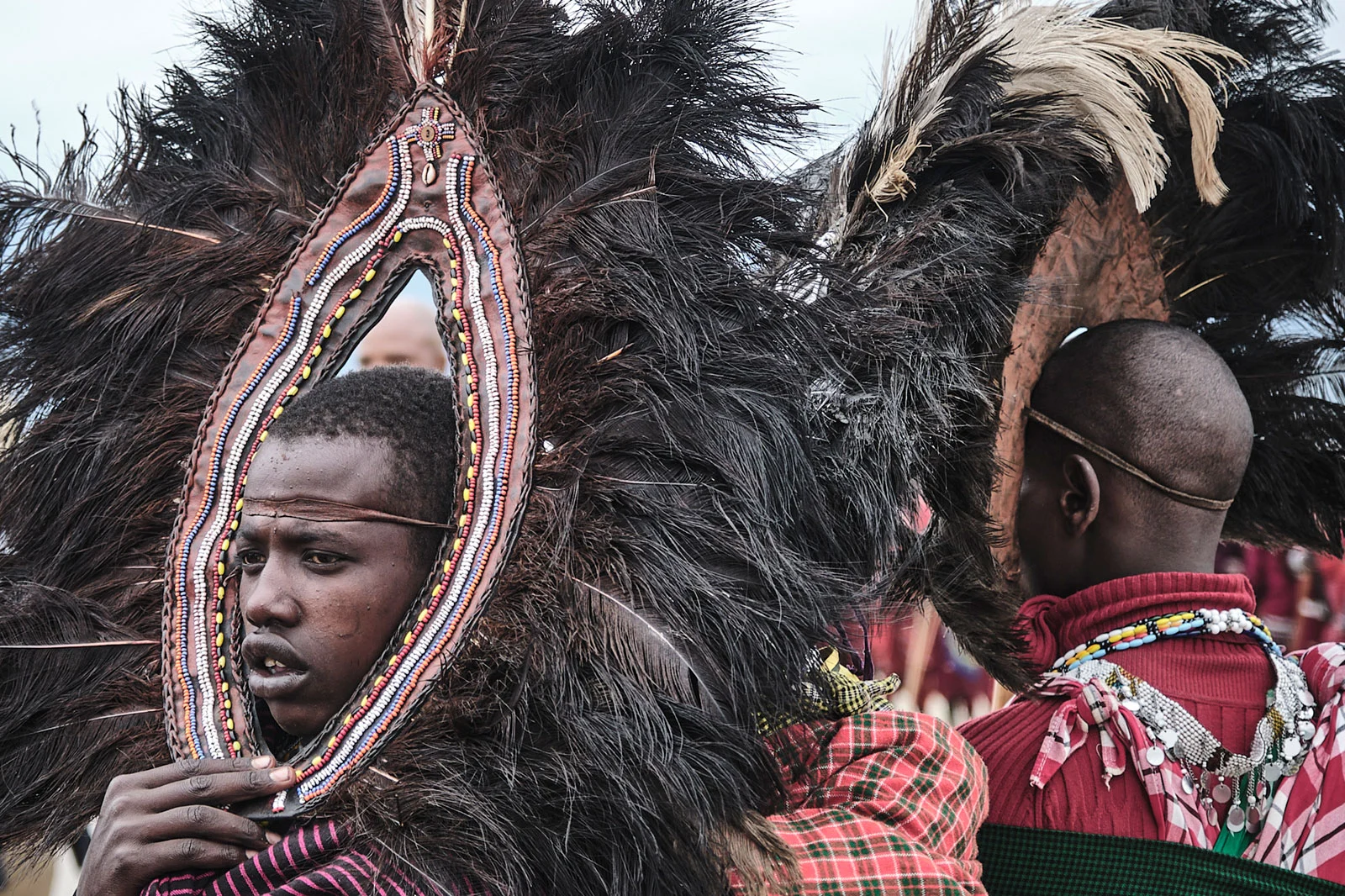
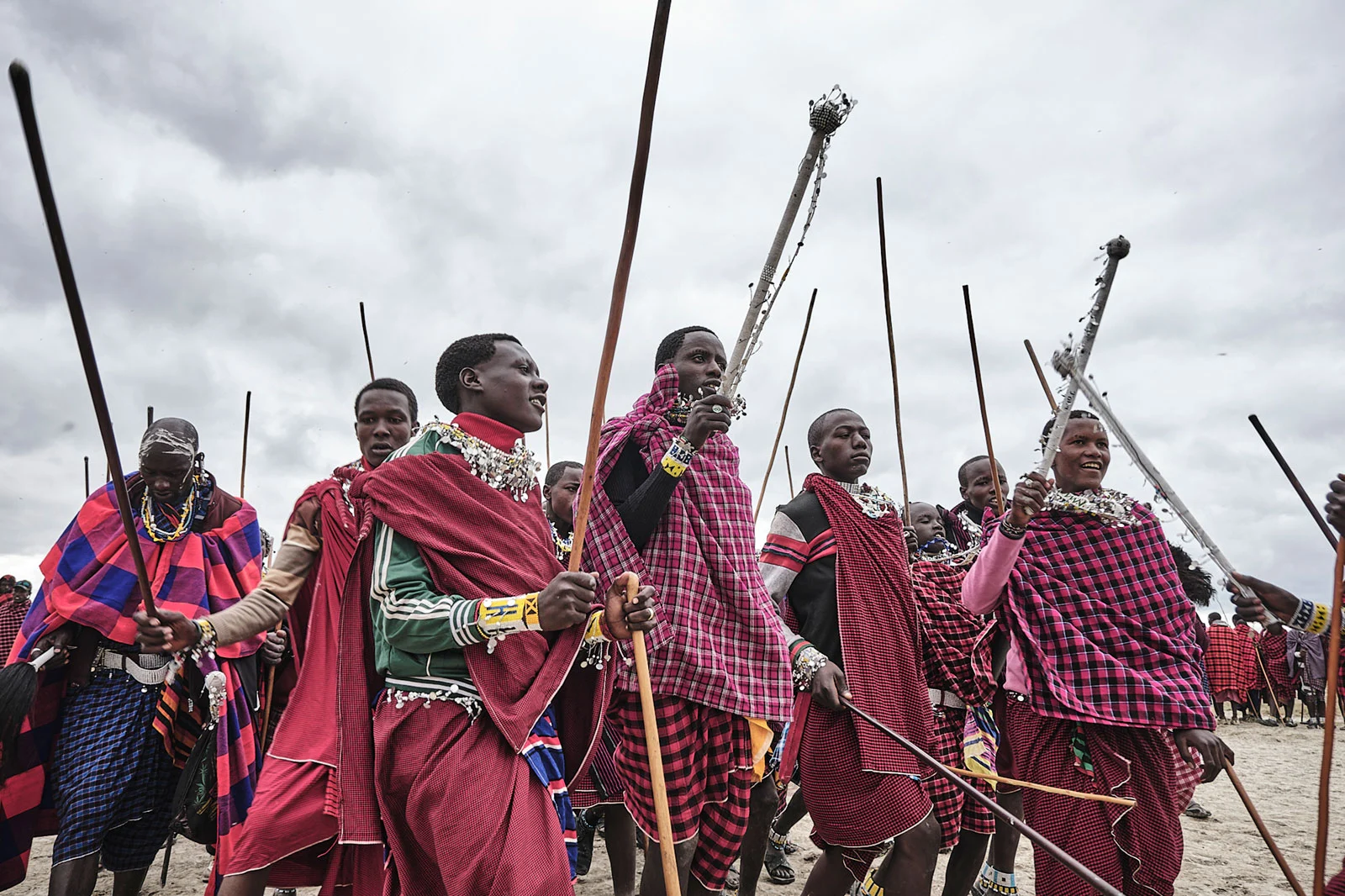
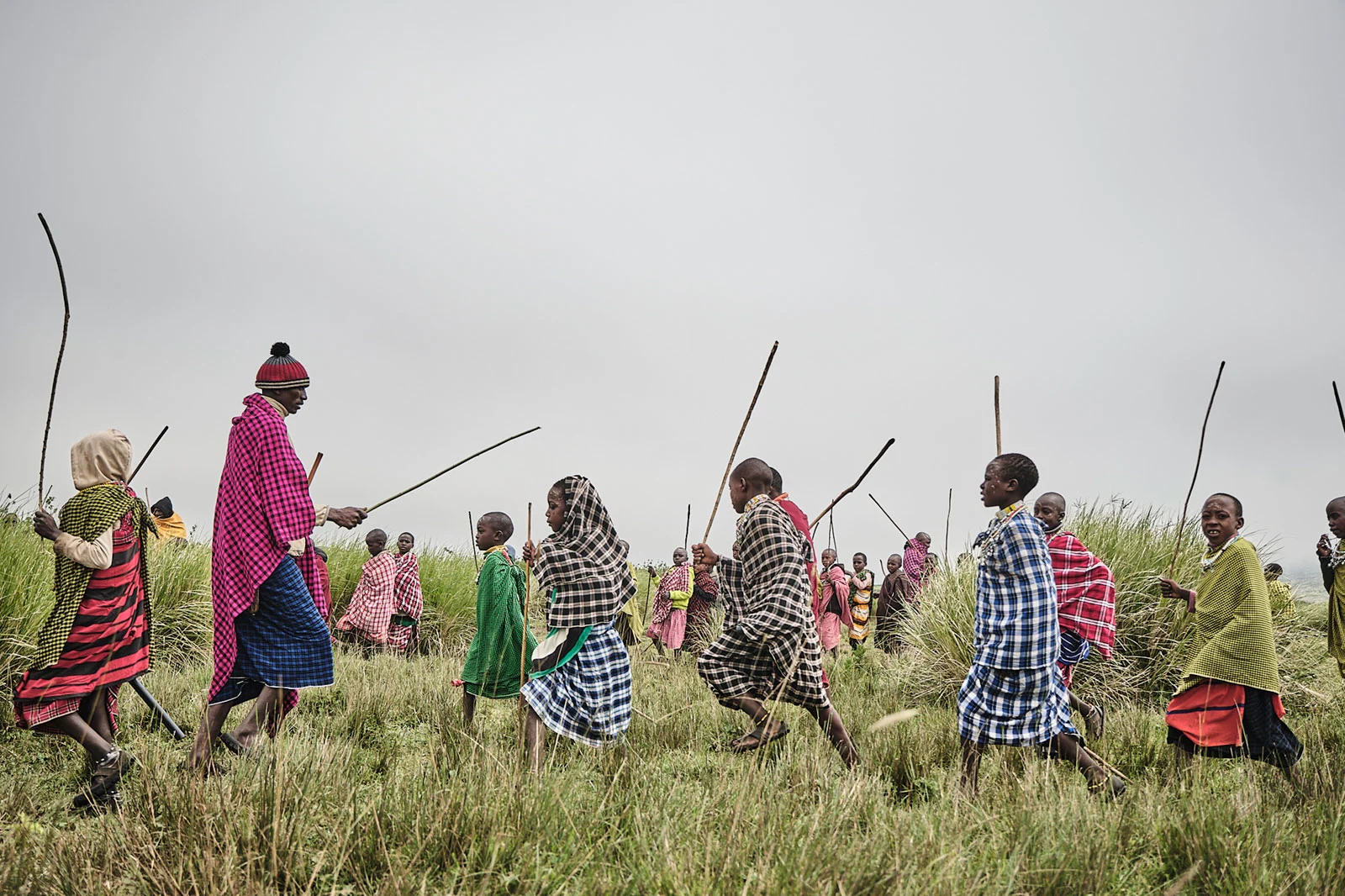
Song is part of that larger curriculum. A separate UNESCO safeguarding account says the rites involve the community and feature songs alongside folktales, proverbs and riddles. In other words, performance helps make a change of status publicly intelligible. It teaches what a new position demands while connecting one age set to those before and after it.
That context matters when watching a ceremonial clip online. Clothing, singing or movement may be the visible surface of instruction, blessing and transfer of responsibility. XTRAfrica's detailed account of Enkipaata, Eunoto and Olng'esherr also explains why school calendars, land pressure, religion, employment and cost can alter the timing and form of rites without making every adaptation a cultural disappearance.
Women’s Voices Are Central, Not Background
Tourist imagery often places young men in the foreground and women at the edge of the frame. The oral record is broader. Women sing, respond, compose, remember, teach and shape the social force of performances. Their participation cannot be understood as decoration around male action.

One carefully bounded example comes from the Ereto Maasai Women Group. A scholarly review of the field-recorded album Maigisa: Songs of the Maasai documents 21 performances with Maa, Kiswahili and English song texts. It does not represent all Maasai women, but it establishes women as named performers whose repertoire merits translation and documentation on its own terms.
Recent ethnography offers a more specific Tanzanian view. Joseph Pesambili's open-access study in Meserani and Engaruka reports eight months of fieldwork and interviews or discussions with 72 mothers and female elders.
In the documented night gatherings, young women and men sang and danced together; participants described the setting as a place where girls learned confidence, social expectations and relationships through observation and participation. The Monduli study is local evidence, not a universal template, but it corrects any account in which women merely watch.
Oral Literature Reaches Beyond Song
Music sits inside a wider field of spoken art. Naomi Kipuri's Oral Literature of the Maasai collects narratives, proverbs, riddles and songs for different occasions. Its value lies partly in its precision about place: the versions came from a particular community around Ilbissil in Kajiado County, and many examples were recorded during live performances in the early 1970s.

ADVERTISEMENT
The publisher-supplied book description also connects the material with livestock, environment, moral and spiritual concerns and human relationships.
That range challenges the idea that oral tradition is an imperfect substitute for writing. A proverb can condense a judgement into memorable language. A riddle can train attention and shared reference.
A narrative can organise remembered experience, while a song can make a message collective and repeatable. None is a sealed container. A skilled performer selects, adapts and delivers material to people who already know how to answer, laugh, challenge or interpret it.
Oral accounts also require historical care. Memory is evidence, but it is not a mechanical recording. A story may explain identity or moral order without supplying a date-by-date chronology. Historians compare oral testimony with linguistic, archaeological and documentary evidence.
Respecting oral tradition means taking its knowledge seriously while also asking what kind of truth a particular performance is designed to communicate.
Children Learn by Listening, Joining and Repeating
Songs are educational because participation joins words to bodies, relationships and occasions. Alexander Ronoh's Kenyan study, based on archival work, interviews and student focus groups, found that Maasai singing and dancing transmit learning drawn from history, culture and nature. The article argues that these practices have implications for a school curriculum that often treats knowledge as something delivered only through a classroom.

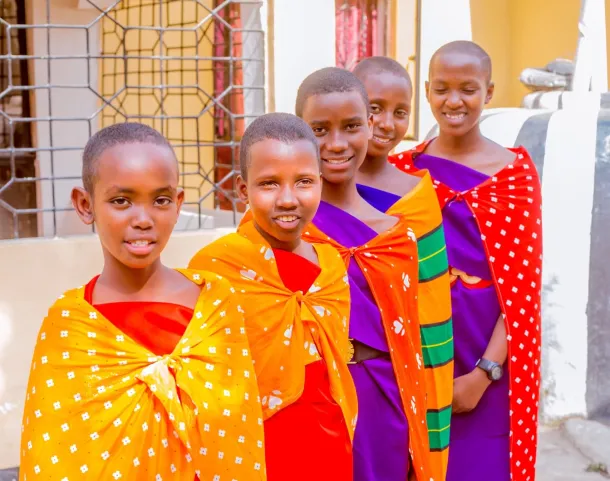
Learning may begin before a child understands every word. Children hear how adults greet, praise, warn and remember. They watch when particular people lead or answer. Gradually they join repeated parts, learn the expectations surrounding an occasion and connect language with livestock, landscape, kin and responsibility.
This is not a claim that song replaces literacy or formal schooling. The stronger argument is that education occurs through several systems. Community-based oral teaching can coexist with books, classrooms, recordings and digital media. The Pitt Rivers Museum's Maasai educational films, produced with Maasai video collectives in Kenya and Tanzania, show one contemporary method: community members use recorded media to represent their own knowledge and living culture.
When Performance Meets Tourism, Church and the Phone
Public performance changes when the audience changes. A short programme for visitors may select the most visually recognisable movement, compress the sequence and remove the private instruction that gives it local depth. Such a performance can still be genuinely created and controlled by Maasai people, but it should not be mistaken for a complete ceremony or the musical life of every community.
Other settings produce different changes.


POPULAR TODAY


ADVERTISEMENT
Christian worship may introduce new texts and occasions while older patterns of blessing, collective voice and ceremonial belonging continue, combine or become contested. XTRAfrica's examination of Maasai spirituality and Christianity shows why the result is rarely a clean division between “traditional” and “modern.”
Phones, studios and social platforms create another audience. A song can travel beyond the locality that understands all its references. Recording can preserve a voice and give artists reach, yet it can also detach sound from consent, translation and context. The answer is not to demand that Maasai culture remain offline. It is to ask who performs, who explains, who earns, what has been edited and whether material intended for a limited setting should circulate at all.
That question matters in cities too. As XTRAfrica's account of Maasai professionals balancing city life and heritage makes clear, cultural belonging does not end when someone takes an office job or lives away from a rural homestead. Oral tradition survives through use and reinterpretation, not through confinement to a safari stage.
Frequently Asked Questions
What is the Maasai jumping dance called?
It is widely called adumu in popular and English-language accounts. Usage and explanation can vary, and the jump should be understood within a larger vocal, age-set and social performance rather than as a standalone contest.
Are all Maasai songs warrior songs?
No. Documented repertoires include songs connected with ceremony, social relationships, praise, prayer, learning and other occasions. Warrior performance is prominent in outside imagery, but it is one part of a much wider oral world.
Do Maasai women perform songs and dances?
Yes. Women may lead, respond, compose, teach and perform, although roles differ by place and occasion. Women’s field recordings and Tanzanian ethnography both demonstrate active participation rather than a merely decorative presence.
Is Maasai oral tradition only music?
No. It also includes narratives, proverbs, riddles, praise, blessings and other forms of spoken knowledge. These forms can preserve memory, teach judgement, entertain and organise community understanding.
Is a tourist performance an authentic Maasai tradition?
It may be authentically performed and community controlled, but it is usually selected for a particular audience and time limit. Viewers should not treat one staged programme as a complete ceremony or a universal picture of Maasai culture.
The famous jump deserves appreciation, but not the burden of representing everything. To listen beyond it is to hear a social archive in motion: women and men, elders and young people, leaders and respondents using voice, language and memory to make responsibility public. Maasai oral tradition is not a surviving fragment behind modern life. It is one of the ways Maasai communities continue to interpret that life.
Sources and Further Reading
Kipuri, Naomi. Oral Literature of the Maasai. East African Educational Publishers. First published 1983; ebook edition listed 2023. Book description and collection scope available through OverDrive.
Pesambili, Joseph C. 2026. “Exploring Traditional Learning and Socialisation Pathways Outside Formal Schooling among Maasai Girls in Monduli, Tanzania.” Discover Education 5, article 487. Full open-access article, especially the abstract, Methods and section 4.2.
Ronoh, Alexander K. 2016. “Indigenous Educational Practices in Kenya: Traditional Singing and Dancing as Elements of Maasai Children’s Learning Experiences.” Journal of Global Research in Education and Social Science 8(4): 253–259. Abstract and citation record.
UNESCO Intangible Cultural Heritage. “Enkipaata, Eunoto and Olng'esherr, Three Male Rites of Passage of the Maasai Community.” Inscribed in 2018. Nomination and decision record.
UNESCO Intangible Cultural Heritage. “Safeguarding of Enkipaata, Eunoto and Olng'esherr.” Project implemented 2017–2020. Safeguarding overview.
Hill, Stephen. 2003. Review of Maigisa: Songs of the Maasai, performed by the Ereto Maasai Women Group. Yearbook for Traditional Music 35: 215–216. Cambridge Core record.
Smithsonian Folkways Recordings. “War Chant of the Elmoran.” The Demonstration Collection of E.M. von Hornbostel and the Berlin Phonogramm-Archiv, released 1963. Catalogue record.
Pitt Rivers Museum. “Maasai Living Cultures Educational Films.” Community-produced learning resources.
ADVERTISEMENT
RELATED ARTICLE