The Maasai people are Indigenous East Africans whose homeland extends across southern Kenya and northern Tanzania. They are widely recognised for their Maa language, cattle-centred pastoral traditions, age-set system, beadwork and public ceremonies. Yet those familiar images show only part of a much larger story.
Maasai people are herders, farmers, teachers, athletes, business owners, conservation workers, activists, artists, public servants and urban professionals. Some live in rural homesteads; others live in towns and cities. Customs also differ by region, family, generation, education and religious background.
Respect and accuracy therefore matter. Maasai culture should not be presented as a colourful performance created for safari visitors, or as a way of life that has remained unchanged for centuries. The Maasai Living Cultures project at Oxford's Pitt Rivers Museum, made with Maasai participants from Kenya and Tanzania, offers a better starting point: Maasai people speaking for themselves about a living culture.
Who are the Maasai people? The Maasai are an Indigenous people of Kenya and Tanzania who speak Maa. Cattle, family, land, age sets and community ceremonies have historically shaped Maasai identity. Today, Maasai communities combine pastoral traditions with education, farming, business, conservation, politics and urban employment while defending their language, heritage and land rights.
Customs vary: This guide describes broadly documented practices, not rules followed by every Maasai person. Traditions vary by locality, family, age, gender, religion and personal choice.
Quick Facts About the Maasai
The word “tribe” remains common in searches and everyday speech, which is why readers may use the phrase “Maasai tribe.” However, “Maasai people” or “Maasai communities” usually better reflects a large, diverse society spread across two countries.
Where Do the Maasai Live?
The Maasai homeland, sometimes called Maasailand in historical and academic writing, crosses the international boundary between Kenya and Tanzania. That border is politically important today, but it cuts across older pastoral, kinship and ceremonial landscapes.
Maasai regions in Kenya
AFRICAN CULTURE
Who are the Maasai People: Culture, History and Traditions

Jul 15, 2026
Jul 17, 2026
45 min read

Published
Updated:
The Maasai people are Indigenous East Africans whose homeland extends across southern Kenya and northern Tanzania. They are widely recognised for their Maa language, cattle-centred pastoral traditions, age-set system, beadwork and public ceremonies. Yet those familiar images show only part of a much larger story.
Maasai people are herders, farmers, teachers, athletes, business owners, conservation workers, activists, artists, public servants and urban professionals. Some live in rural homesteads; others live in towns and cities. Customs also differ by region, family, generation, education and religious background.
Maasai Kids Maasai Kids Maasai Kids Maasai Kids
Respect and accuracy therefore matter. Maasai culture should not be presented as a colourful performance created for safari visitors, or as a way of life that has remained unchanged for centuries. The Maasai Living Cultures project at Oxford's Pitt Rivers Museum, made with Maasai participants from Kenya and Tanzania, offers a better starting point: Maasai people speaking for themselves about a living culture.
Who are the Maasai people? The Maasai are an Indigenous people of Kenya and Tanzania who speak Maa. Cattle, family, land, age sets and community ceremonies have historically shaped Maasai identity. Today, Maasai communities combine pastoral traditions with education, farming, business, conservation, politics and urban employment while defending their language, heritage and land rights.
Customs vary: This guide describes broadly documented practices, not rules followed by every Maasai person. Traditions vary by locality, family, age, gender, religion and personal choice.
Quick Facts About the Maasai
The word “tribe” remains common in searches and everyday speech, which is why readers may use the phrase “Maasai tribe.” However, “Maasai people” or “Maasai communities” usually better reflects a large, diverse society spread across two countries.
Where Do the Maasai Live?

The Maasai homeland, sometimes called Maasailand in historical and academic writing, crosses the international boundary between Kenya and Tanzania. That border is politically important today, but it cuts across older pastoral, kinship and ceremonial landscapes.
Maasai regions in Kenya
Nairobi's southern edge and rapidly growing towns such as Kitengela and Ngong lie within landscapes long connected to Maasai history.
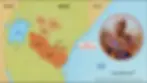
References to “Maa counties” sometimes include Samburu. This reflects linguistic and political cooperation among Maa-speaking communities, not the idea that the Samburu and Maasai are identical. A 2025 Kajiado County account of Maa Cultural Week described participation from Narok, Kajiado, Samburu, Laikipia, Baringo, Isiolo, Nakuru and Marsabit.
Maasai regions in Tanzania
In Tanzania, Maasai communities are found mainly in the north, including Arusha Region, Manyara Region, parts of Kilimanjaro Region and the Ngorongoro area. Important localities include Longido, Monduli and areas around Arusha; Simanjiro and the Tarangire-Manyara landscape; and settlements around Ngorongoro and Loliondo.
Maasai communities are not limited to the Serengeti, Ngorongoro, Amboseli or Maasai Mara tourist circuits. People live in agricultural areas, roadside settlements, county and district towns, Nairobi, Arusha and other cities. A Maasai person does not become less Maasai by living in a permanent house, wearing office clothes or working far from a pastoral settlement.
History of the Maasai People
Origins, migration and historical uncertainty
Maasai history is reconstructed from Maa oral traditions, historical linguistics, archaeology, neighbouring peoples' accounts and written records produced during the nineteenth and twentieth centuries. These sources do not always agree.
Scholars generally place Maa within the Eastern Nilotic languages and connect the longer history of Maa-speaking peoples to movements through East Africa. Over several centuries, pastoral Maa-speaking communities expanded into parts of the Rift Valley in what are now Kenya and Tanzania. The exact routes and dates remain debated, so a single migration story should not be presented as certain fact.
The influential academic collection Being Maasai, edited by Thomas Spear and Richard Waller, shows why simple origin stories are misleading. Its chapters examine expansion, language change, interaction, conflict and communities that became Maasai or maintained Maa identities in different economic ways. In other words, Maasai identity developed through movement, alliance, intermarriage, absorption, separation and adaptation not through an isolated people travelling unchanged from one point to another (Spear and Waller, 1993).
Expansion, cattle and age sets
By the nineteenth century, Maasai sections controlled or used extensive grazing country. Cattle wealth, mobility and age-set organisation helped communities coordinate herding, defence and political action across large territories. However, Maasai society was never one centrally governed kingdom. Territorial sections could cooperate, compete or fight, while ritual leaders and prominent elders exercised influence rather than absolute rule.
Maasai pastoralist Maasai pastoralist
Oral traditions remember major nineteenth-century conflicts, including struggles involving Laikipiak and Purko-Kisongo forces. Historians compare those accounts with other evidence instead of treating every remembered event as a literal chronology. The Cambridge history of Laikipiak defeat and dispersal explicitly separates legendary explanations from historical reconstruction.
The late nineteenth century also brought severe shocks. Rinderpest devastated cattle, while drought, smallpox and other diseases affected people and herds. These crises weakened many pastoral communities just before colonial power expanded.
Colonial land loss in Kenya
British rule transformed Maasai access to land. Colonial authorities and Maasai representatives entered agreements in 1904 and 1911, followed by forced moves and the loss of important northern grazing areas to settler occupation. Maasai representatives challenged the process in court in 1913 but lost.

Historian Lotte Hughes used Maasai oral testimony and British and Kenyan archives to reconstruct these events. Her Oxford research describes two major forced moves, non-violent resistance and the way colonial narratives obscured Maasai perspectives (Hughes, 2003, thesis abstract). Her later book emphasises that the land alienation helped create Kenya's settler-controlled “White Highlands” (Hughes, 2006).
Colonial and post-independence change in Tanzania
Maasai communities in present-day Tanzania experienced German and then British colonial rule. Conservation boundaries became especially important. People were excluded from or moved out of areas set aside for wildlife protection. In 1959, Maasai residents and others were moved from the Serengeti as the Ngorongoro Conservation Area was established as a multiple-use landscape intended to combine pastoral residence with conservation.
After Kenya's independence in 1963 and Tanzania's independence in 1961, Maasai communities gained full citizenship within two modern states, but disputes over land, conservation, political representation and services continued. Schools, roads, markets, towns, land subdivision and wage employment changed everyday life. None of these changes ended Maasai culture; they changed the conditions in which Maasai identity is practised.
The Maa Language
Maa is the language most closely associated with Maasai identity. Glottolog classifies Maasai within the Nilotic, Eastern Nilotic and Teso-Lotuxo-Maa branches. Closely related Maa varieties are spoken by other communities, including Samburu, but language relationship does not erase distinct ethnic identities.
Maa has regional variation. Speech associated with Kisongo, Purko, Kaputiei, Keekonyokie, Loitai and other areas may differ in vocabulary, pronunciation or usage. Spellings also vary when Maa words are written in English-language publications. That is one reason this guide does not offer unverified internet greeting lists or pretend there is only one correct spelling for every term.
Many Maasai people are multilingual. Swahili is widely used in Kenya and Tanzania; English is important in Kenyan education, government and professional life and is also used in Tanzanian higher education and some workplaces. People may additionally speak neighbouring languages.
Maa carries oral history, blessings, songs, environmental knowledge, humour, kinship terms and ceremonial speech. Language preservation therefore involves more than translating vocabulary. It means creating places where children can learn and use Maa with confidence.
In February 2026, UNESCO profiled Tanzanian Maasai educator Naomi Koinase and her work in mother-tongue education. She explained Maa as a source of identity and belonging, while UNESCO highlighted what children lose when school systems do not reflect their language and culture (UNESCO, 2026). Similar efforts include community media, cultural festivals, local publishing, oral-history recording and the teaching of Maa in some schools.
Readers interested in how language supports identity can compare this with XTRAfrica's guides to the Hadza language and OtjiHimba and Herero.
Maasai Social Organisation
Family, clans and territorial sections
Historically, households were linked through extended families, patrilineal clans, marriage ties and mutual obligations. Clans helped regulate relationships, including whom a person could marry. Territorial sections connected communities to particular regions and ceremonies. A clan is not the same thing as a territorial section, though popular accounts often confuse them.
Livestock, labour and care could be shared through wide networks. Kin might assist during drought, illness, marriage negotiations or livestock loss. These relationships remain important, but cash income, schooling, private land titles, urban residence and national law increasingly shape family decisions.
Age sets and elders
The male age-set system historically grouped initiated males of a similar generation across family lines. Members moved through recognised life stages, including warriorhood and elderhood. The system created long-term bonds and organised responsibility, ceremony and public identity.

Elders traditionally handled deliberation, blessings, dispute settlement and community guidance. Decisions often emerged through discussion rather than orders from a single chief. Colonial administrations sometimes appointed “chiefs” for their own administrative convenience, which could distort existing authority.
An oloiboni often written laibon in English was a ritual specialist associated with prophecy, healing, blessing and spiritual counsel. A laibon was not simply a political king of all Maasai.
Today, customary authority exists alongside elected leaders, county and district officials, courts, churches, mosques, schools and civil-society organisations. Women and younger educated people increasingly claim public leadership. Authority therefore differs from place to place.
Maasai Warriors and the Moran Tradition
“Moran” is the widely used English and East African term for a young man in the warrior life stage; the Maa plural is commonly written ilmurran. Moranhood formed part of the wider age-set system rather than a permanent occupation.

Historically, ilmurran herded livestock over long distances, defended people and animals, guarded grazing areas, trained together and built a strong shared identity. Discipline, endurance, public service, appearance, song and age-set loyalty were as important as fighting.
Outside portrayals often turn the moran into a naturally violent “tribal warrior.” That is inaccurate. Warrior institutions developed within particular historical conditions, including the need to protect livestock and territory in mobile pastoral societies. Conflict existed, as it did in neighbouring societies and colonial states, but it does not define Maasai men.
The role has changed. Police, courts and national borders now regulate security. Formal education and employment reshape the time young men can devote to age-set life. Some communities preserve ceremonies and age-set bonds while redirecting ideas of courage toward conservation, sport, education and service.
The Maasai Olympics in Kenya, for example, has used organised sport and conservation education as an alternative to lion hunting. Kenyan athlete David Rudisha has supported events linked to the initiative. This is a modern adaptation, not evidence that every Maasai community once followed one identical hunting custom.
Maasai Clothing
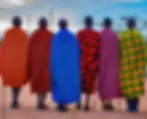
The best-known item of Maasai clothing is the shúkà, a rectangular cloth wrapped around the body. Red is strongly associated with Maasai public identity, but blue, purple, black, checked and multicoloured cloths are also common.
ADVERTISEMENT
The red checked shúkà should not be described as an unchanged garment from the distant past. Cloth styles developed through trade, colonial economies, regional taste and modern manufacturing. Today, the shúkà can be everyday clothing, ceremonial clothing, a public marker of Maasai identity or an item worn for a particular event.
Dress varies by age, gender, place and occasion. Some people combine a shúkà with shirts, sweaters, jackets, sports shoes or mobile-phone accessories. Others wear school uniforms, business suits, dresses, jeans or professional clothing and choose traditional dress for ceremonies and festivals.
Sandals were historically made from animal hide; recycled tyre rubber later became common because it is durable on rough ground. Commercially made sandals and shoes are now widely used.
Clothing can communicate age, beauty, ceremony and belonging, but no single colour has one fixed meaning everywhere.
The same caution applies when reading about the appearance of other pastoral peoples, as XTRAfrica's article on Himba clothing and adornment explains.
Maasai Beadwork and Jewellery
Beadwork is one of the most visible forms of Maasai artistic expression. Women have traditionally held much of the skill and knowledge required to make necklaces, collars, earrings, bracelets, belts, head ornaments and decorated ceremonial objects.

The materials have changed over time. Locally available leather, fibre, metal and shell were used alongside glass beads obtained through long-distance trade. Museum objects show both historical continuity and change.
A late nineteenth-century necklace in the British Museum collection, made in the Kilimanjaro region, combines glass and shell, while the Metropolitan Museum of Art holds an early twentieth-century Maasai necklace made from glass, metal, leather and shell.
Beadwork may mark life stages, marriage, age-set occasions, affection, public beauty or ceremonial responsibility. The maker, wearer and occasion all matter. Popular tourism charts often state that each colour has one permanent meaning red for bravery, white for milk, blue for sky and so on. Some associations may be meaningful in particular contexts, but they should not be turned into universal rules without evidence from the community concerned.
Craft sales provide income, especially for women. Tourism and international fashion have expanded markets, but they also create risks: middlemen may take most of the profit, designs may be copied without consent, and “Maasai-inspired” products may be sold without benefiting Maasai makers.
Community-led craft enterprises can respond by making producers visible, setting fair prices and returning income to women's groups. The Pitt Rivers Museum's Maasai project, for example, credits Maasai women as custodians of knowledge used to make ceremonial clothing and works with organisations that support women through beadwork.
Cattle and Maasai Identity

They provide milk, meat, hides and, in limited contexts, blood. They can be exchanged, inherited, loaned, given at marriage or used to rebuild a household after loss.
Cattle are also social beings within pastoral life. Herders recognise individual animals by colour, horn shape, temperament and lineage. Songs and praise names may celebrate cattle. A person's wealth was traditionally measured partly through livestock, but wealth also depended on children, relatives, age, reputation and the ability to maintain relationships.
Pastoralism is skilled land management
Pastoral mobility is not aimless wandering. Moving herds allows people to follow water and seasonal pasture, rest grazing areas and respond to drought, disease and local conditions. Cattle, goats and sheep use plants differently, so mixed herds help families spread risk. Goats and sheep can reproduce faster and may survive conditions that are difficult for cattle.
Herders use detailed knowledge of rainfall, soils, salt, water, livestock health and pasture. Seasonal access may be negotiated among families and communities. In dry environments, mobility can be more sustainable than keeping large herds permanently within a small fenced plot.
Cattle in a changing economy
Modern Maasai families sell animals through livestock markets, buy veterinary medicine and pay school, transport, food and housing costs in cash. Some combine herding with cultivation, tourism, salary work or business. Others own few or no cattle.
Land subdivision, fencing, settlement expansion and conservation restrictions can block routes to water and dry-season pasture. Research on southern Kenya describes how fragmented rangelands, restricted mobility and climatic stress are accelerating livelihood diversification (Marty et al., 2022, pp. 136–161; ILRI research record).
The cultural centrality of cattle should therefore not be confused with complete economic dependence. XTRAfrica's overview of the Himba people of Namibia offers a useful comparison: cattle can remain powerful symbols of identity even as households diversify.
Traditional Maasai Food
Traditional Maasai food grew from a pastoral economy. Milk was especially important because it could nourish people without slaughtering the animal. Meat was eaten on particular occasions and when an animal was killed. Animal fat, broth and soups also formed part of the diet.

Blood has a real place in some historical and ceremonial food practices, but it is greatly exaggerated in popular writing. It could be drawn from a living animal in a controlled way and mixed with milk, or used in particular circumstances. It was never the only Maasai food, and many Maasai people rarely or never drink it today.
Maize meal called ugali in Swahili tea, sugar, rice, beans, potatoes, vegetables, cooking oil and purchased milk are now common in many households. Diet depends on location, income, livestock ownership, markets, farming and personal choice. Urban Maasai families eat the same wide range of East African and international foods as their neighbours.
Common myths about Maasai food
Myth: Maasai people live only on milk, meat and blood. In reality, this describes a pastoral ideal found in older accounts, not the full modern diet.
Myth: Blood is consumed every day. Its use varies greatly and may be rare, ceremonial or absent.
Myth: Maasai people reject crops. Some communities have long interacted with cultivators, and many Maasai households now grow or buy grains and vegetables.
Myth: Every family has enough cattle to eat pastoral foods. Herd inequality, drought and land loss mean livestock access differs sharply.
Historical Smithsonian documentation already noted that milk and meat, with occasional blood, were increasingly combined with maize, potatoes, beans and other foods as land and herd conditions changed (Smithsonian collection record citing Klumpp, 1987).
Religion and Spirituality
Traditional Maasai belief centres on Enkai, also written Engai, the supreme divine power and creator. Enkai is associated with rain, fertility, cattle, blessing and the moral relationship between people and the world around them. Spellings and explanations vary across Maa dialects and published sources.
Prayer and blessing may accompany births, marriage, age-set ceremonies, journeys, healing, cattle and moments of danger. Elders can give blessings, while an oloiboni or laibon may act as a ritual specialist, healer, diviner and counsellor. These roles are complex and should not be translated simply as “witch doctor” or “chief.”
Land, rain and livestock are spiritual as well as material concerns. Sacred hills, trees, springs and ceremonial places may hold community meaning. The importance of cattle does not mean Maasai religion is “cattle worship”; cattle help organise relationships among Enkai, people, livelihood and blessing.
Christianity is now widespread in Maasai communities, with Catholic, Anglican, Lutheran, evangelical and other churches present across Kenya and Tanzania. Some Maasai people are Muslim, especially where families have long interacted with Muslim neighbours or urban communities. Individuals may identify fully with one faith or combine Christian practice with older forms of blessing, age-set identity and respect for sacred places.
Religion therefore cannot be divided neatly into an “old” faith that disappeared and a “modern” faith that replaced it. Belief is personal, and families negotiate continuity and change differently. For a comparative example of how an African pastoral culture combines Indigenous religion with modern faith, see XTRAfrica's guide to Himba religion and ancestor beliefs.
Ceremonies and Rites of Passage
Maasai ceremonies connect individuals to family, age sets, elders, cattle, land and spiritual blessing. They can mark birth, naming, initiation, adulthood, marriage, elderhood, healing, reconciliation and communal renewal.
Three interconnected male rites in Kenya Enkipaata, Eunoto and Olng'esherr were added to UNESCO's List of Intangible Cultural Heritage in Need of Urgent Safeguarding in 2018. UNESCO describes Enkipaata as preparing boys for initiation, Eunoto as marking a moran's transition toward adulthood, and Olng'esherr as a meat-eating ceremony associated with movement into eldership (UNESCO Intangible Cultural Heritage).
These rites transmit ethics, responsibility, oral knowledge, song and social bonds. Their form and timing have changed because of school calendars, law, religion, urban work, cost and changing attitudes. They should not be described as if every Maasai boy passes through an identical process.
Female genital mutilation, law and community reform
Some Maasai communities historically connected female genital mutilation (FGM) with initiation, marriageability or social recognition. The practice is not followed by every Maasai family and is increasingly opposed by Maasai women, men, elders, health workers and activists.
FGM has no health benefit and can cause serious immediate and lifelong physical and psychological harm, according to the World Health Organization. Kenya prohibits FGM under its Prohibition of Female Genital Mutilation Act. Tanzania's Sexual Offences Special Provisions Act amended the country's criminal law to address FGM against girls, while national policy works toward eliminating the practice. Legal coverage and enforcement have evolved differently in the two countries.
Reform is not simply imposed from outside. In Narok County, Maasai women in the Polonga Women Group have worked with Kenya's Anti-FGM Board and UNFPA to change community attitudes (UNFPA Kenya, 2024). Amref's community-led alternative rites preserve celebration, teaching, clothing and blessings while removing cutting, early marriage and other harms (Amref Health Africa).
This approach matters: protecting girls' health and rights does not require condemning an entire people. It requires listening to survivors, enforcing the law and supporting community-led change.
Maasai Marriage and Family Life

Marriage has historically joined families and wider kin groups, not only two individuals. Elders and relatives could take part in negotiations, and livestock bridewealth helped formalise relationships between families. Clan rules affected acceptable partners.
Polygyny a man having more than one wife has existed in Maasai society, often linked historically to livestock wealth, labour and status. It is incorrect, however, to assume that every Maasai man is polygynous or wants to be. Many marriages are monogamous, and cost, religion, education, law and personal preference influence household form.
Women and men have traditionally carried different responsibilities, including livestock care, food production, house building, childcare and ceremonial duties. Those divisions have never meant that women lacked knowledge, economic contribution or influence. They also vary by herd size, age and local conditions.
Marriage is changing. Young adults increasingly meet through school, work, churches, towns and social media. Civil and Christian weddings may exist alongside customary exchanges and blessings. Women are more likely to insist on education, consent, property rights and a say in the timing of marriage.
Child marriage and forced marriage remain serious concerns in some communities, but they are neither universal nor uniquely Maasai. The responsible response is to support girls' rights and local reformers without turning harmful practices into the sole story of Maasai family life.
Children remain highly valued. Grandparents, siblings, co-wives and extended relatives may share care, though modern households differ. Boarding school, migration and salaried work can separate family members for long periods, while phones help maintain contact.
ADVERTISEMENT
Maasai Homes and Villages
An enkang is a homestead or settlement organised around family life and livestock. The word manyatta is also widely used, although its meaning can vary and older literature often used it especially for a warriors' settlement.
A traditional homestead may contain several houses within a protective fence made from thorn branches. Livestock are brought into an inner enclosure at night to reduce theft and predator attacks. The layout reflects practical knowledge of security, wind, rain, cattle movement and the available environment.
Women have traditionally built houses using a framework of branches covered with a mixture that can include earth, dung, ash and water. Materials differ with place and availability. Small openings help retain warmth and security, though they may also make interiors smoky when fires burn without good ventilation.
Not every Maasai settlement is circular, and not every house is made from the same materials. Iron-sheet roofs, timber, bricks, concrete, solar panels, water tanks and separate livestock structures are common. Some families move seasonally; others live permanently in one rural settlement. Many Maasai people live in rented rooms, suburban homes or urban apartments.
Tourist “cultural villages” may adapt their layout and activities for visitors. They can be community businesses, but they should not be treated as a complete picture of Maasai housing.
Maasai Music, Dance and Oral Tradition
Voice is central to many Maasai performances. Songs may use solo and group parts, call-and-response, repeated rhythms, deep vocal sounds and movement. Performances can accompany age-set ceremonies, weddings, praise, prayer, political events, tourism or entertainment.
The well-known jumping dance is often called adumu in popular accounts and is associated especially with young men in public performance. Jumping can display stamina, control, rhythm and age-set fellowship. It is only one part of a much wider musical world.
Women also lead and shape songs, especially at ceremonies and community events. Jewellery and clothing move with the body, adding visual and percussive dimensions to performance.
Oral tradition includes histories, praise poetry, proverbs, prayers, cattle knowledge, moral instruction, humour and accounts of migration or conflict.
A story may carry truth and identity without functioning as a modern written chronology. Historians therefore respect oral evidence while comparing versions, speakers and other sources.
Tourist performances may be shortened, rearranged or repeated for a paying audience. They can still involve skilled Maasai performers, but they should not automatically be described as private ritual.
Maasai Women
In pastoral households, women may milk animals, process and distribute food, build or maintain houses, collect water and fuel, care for children and small livestock, manage household purchases and organise ceremonies. Labour varies with wealth, age, environment and access to hired help or services.

Beadwork can preserve cultural knowledge and generate income. Women's groups sell jewellery, run savings circles, organise tourism enterprises and fund education. Yet women may receive only a small share of the final price when traders and tourism companies control the market.
Education has expanded women's opportunities in teaching, medicine, law, government, business, conservation and civil society. Maasai women also lead campaigns for girls' schooling, an end to FGM and child marriage, better maternal health, land rights and representation in community decisions.
Land privatisation can affect women differently from men.
When household or group land is registered mainly in men's names, women may lose practical access to grazing, farming or housing even though their labour supports the household. Widows and unmarried women can face particular insecurity. These outcomes are not inevitable, but they show why gender must be included in land reform and conservancy agreements.

Women-led change is visible across the region. Nice Nailantei Leng'ete has worked with Maasai elders and youth to replace FGM with non-harmful rites. Dr Kakenya Ntaiya built education and health programmes for girls in rural Kenya. Tanzanian Indigenous defender Nailejileji Asia Tipap helped create a women's organisation concerned with ecological knowledge and land-rights defenders, according to UN Human Rights in 2026.
These women disagree with the idea that culture and women's rights must be enemies. Their work shows that Maasai women are authors of cultural change.
Education and Employment
Maasai attitudes toward education are diverse, and the claim that Maasai people simply reject school is false. The real picture includes both historical mistrust and practical barriers.

Colonial and missionary schools sometimes demanded that children leave pastoral life, use unfamiliar languages or reject cultural practices. Families could also lose essential herding labour when children stayed far from home. Those experiences shaped suspicion in some places.
Today, barriers may include long distances, transport costs, drought-related movement, school fees and supplies, inadequate classrooms, teacher shortages, language differences, early marriage, pregnancy and the safety of children living away from home. Boarding schools can solve distance problems but may weaken daily language use and family contact or expose children to poor conditions.
At the same time, families increasingly view education as protection in an uncertain livestock economy. A 2025 UNICEF report from Narok South described teachers and enrolment campaigns bringing children back to school after cultural and economic pressures contributed to dropout (UNICEF Kenya).
Mother-tongue teaching can help children begin learning in a language they understand, while Swahili and English create access to national education and employment. The strongest model does not force children to choose between Maa identity and academic success.
Maasai students now attend secondary schools, colleges and universities. Maasai adults work as teachers, doctors, nurses, lawyers, researchers, elected leaders, civil servants, pilots, soldiers, police officers, athletes, artists, journalists, guides, rangers, drivers, farmers and entrepreneurs. Tourism and conservation are important in some regions, but they are not the only modern careers.
Maasai People and Wildlife Conservation
Livestock and wild animals have long shared open rangelands, water and seasonal routes. Pastoral diets generally relied on domestic animals rather than routine hunting of wildlife for meat, while mobility allowed different areas to be used at different times.

This history does not mean coexistence was always peaceful. Lions, hyenas and other predators kill livestock. Elephants damage water points or crops, and buffalo can injure people. Wildlife may transmit disease, while livestock can also affect wildlife and habitat. Coexistence involves costs as well as cultural knowledge.
Community conservancies
In Kenya, community and private conservancies around the Maasai Mara and other regions lease or manage land for wildlife, tourism and sometimes regulated grazing. Landowners may receive lease payments, jobs, bursaries, infrastructure or business opportunities. The Maasai Mara Wildlife Conservancies Association says its network brings landowners and tourism partners together across a large part of the Greater Mara ecosystem.
Conservancies can protect migration corridors and produce income when drought reduces livestock earnings. However, agreements may also restrict settlement or grazing. Benefits can favour registered landowners, wealthier households or tourism operators, while women, youth, tenants and families without title receive less.
Research in the Mara therefore describes trade-offs, not a simple success or failure. Tourism income can help households spread risk, but limits on rangeland access and human-wildlife conflict can weaken pastoral resilience (Bedelian and Ogutu, 2017).
Conservation must include rights
National parks have protected globally important wildlife and supported national tourism economies. They have also excluded Maasai communities from land, pasture, water or sacred places. Conservation works best when communities have real authority, transparent contracts, fair revenue, access to agreed grazing and meaningful participation not when people are treated as obstacles to nature.
Maasai-led innovations show another path. Inventor Richard Turere developed solar-powered “lion lights” to discourage predators from attacking his family's cattle near Nairobi National Park. Such solutions protect both herds and lions without pretending that local families should bear every conservation cost.
Land Rights and Displacement
Land is the thread connecting Maasai history, pastoralism, culture and modern politics. Without enough connected rangeland, even a family with cattle may be unable to reach dry-season pasture or water.
Kenya: colonial loss, group ranches and subdivision
Colonial alienation removed Maasai communities from valuable land and compressed pastoral movement. After independence, group ranch schemes registered communal or semi-communal land under named members. They were intended to secure tenure and organise livestock development, but membership lists often excluded women, young people and some customary users.
Many group ranches were later subdivided into individual parcels. A title can give an owner security, collateral or the ability to sell. But subdivision can also fragment grazing land, encourage fencing and break routes used by livestock and wildlife. Families who sell during hardship may be unable to recover land later.
This is not merely historical. Kenyan courts continue to hear disputes about group-ranch membership, subdivision, trustees and community land. A 2024 Environment and Land Court judgment noted official instructions that undissolved group ranches should transition to community land under the Community Land Act 2016 (Tamei v Kaiye, Kenya Law). The exact rights in each dispute depend on documents, law and evidence, so one case cannot prove every Maasai land claim.
Tanzania: Ngorongoro and Loliondo
Land and conservation disputes remain especially serious in northern Tanzania. In Ngorongoro, the government says relocation to places including Msomera is voluntary and intended to balance human needs with ecological protection.
President Samia Suluhu Hassan established commissions to examine land complaints and the relocation programme; a 2026 State House notice said she had received their reports and described Ngorongoro as important for biodiversity, tourism, human history and the culture of its Indigenous residents (Tanzania State House, 2026).
Human-rights organisations and affected Maasai advocates dispute the claim that the programme has been genuinely voluntary. Human Rights Watch reported in 2024 that reduced services, grazing restrictions and inadequate consultation placed pressure on residents to leave. Its report was based on interviews conducted in Ngorongoro, Arusha and Msomera between 2022 and 2023 (Human Rights Watch, 2024, “Summary” and “Methodology”).
The dispute was still active in July 2026. In April 2026, UN experts asked Tanzania to publish the two commission reports and expressed concern about Indigenous rights and pending policy decisions (OHCHR, April 2026). In June 2026, UN Human Rights profiled Tanzanian defenders who said Maasai pastoralists were being pushed from ancestral land in the name of conservation.
UNESCO, for its part, stated in 2022 that it had never asked Tanzania to displace the Maasai from Ngorongoro (UNESCO World Heritage Centre). This clarification does not resolve the wider land conflict; it identifies who should and should not be credited with a particular demand.
Trending Now


Popular Today


ADVERTISEMENT
Responsible reporting must therefore distinguish four things: the Tanzanian government's stated policy; documented actions by public authorities; the testimony and claims of affected residents; and findings by courts, UN bodies or independent investigations. “Conservation” alone does not settle questions of consent, compensation or customary land rights.
For a related Tanzanian case involving another Indigenous community, see XTRAfrica's article on Hadza land rights and property.
Challenges Facing Maasai Communities Today
Maasai communities face connected pressures rather than one single “culture problem.”
Climate change and drought
Longer or more severe dry periods can reduce pasture and water, weaken animals, increase livestock disease and force families to sell at low prices. A herd built over decades can collapse within one drought. Climate shocks also affect school attendance, nutrition and household debt.
Pastoralists respond by moving livestock, changing herd composition, storing fodder, using veterinary services, restoring rangelands, buying insurance, farming, taking paid work or joining savings groups. The World Bank's regional DRIVE programme, for example, supports drought-related financial protection and livestock-market access for pastoralists in Kenya and neighbouring countries (World Bank, 2023).
Reduced and fragmented grazing land
Fences, private subdivision, farms, towns, roads, tourism facilities and protected areas can close movement routes. Population growth increases demand for land, but it is misleading to blame pastoral families alone while ignoring commercial acquisition and public policy.
Poverty and unequal livestock wealth
Some families own large herds and land; others own very little. Drought, medical bills, school costs or an unfair land sale can deepen inequality. Women and young adults may work with family livestock without controlling the animals or title.
Healthcare and livestock disease
Remote settlements may be far from clinics, maternity care, clean water and emergency transport. Human health and animal health are connected because herd disease reduces income and nutrition. Mobile clinics, community health workers, vaccination and better roads can help, but services must be designed with pastoral movement in mind.
Education and youth employment
More young people finish school, but jobs may not grow fast enough. A graduate can face unemployment while also lacking land or cattle to return to pastoralism. Youth combine casual work, driving, guiding, online business, music, sport and migration to towns.
Cultural exploitation
Maasai names, patterns, images and performances are used globally to sell fashion, safaris and products. Communities often receive no consent, credit or share of revenue. Photography can turn real people into anonymous symbols. Stronger intellectual-property protection, fair contracts and Maasai-owned media and businesses are part of the solution.
Political representation and land governance
Maasai politicians hold office in both countries, but representation does not automatically secure every community's rights. Transparent land records, women's participation, consultation and access to courts remain essential.
The most important point is that Maasai people are not passive victims. They organise conservancies, rangeland committees, women's groups, schools, legal cases, language projects, political campaigns and businesses. Community knowledge is part of adaptation, not an obstacle to it.
How Maasai Culture Is Changing
Culture changes whenever people respond to new conditions. Maasai culture was changing before colonialism, and it continues to change today.
Formal education has created new professions and ways of debating tradition. Mobile phones help herders check prices, send money, report predators and maintain family contact. Social media lets Maasai creators challenge false claims, teach Maa, sell beadwork and speak directly to international audiences.
Urban employment changes clothing, housing and daily routines, yet people may return for ceremonies, support rural relatives or remain active in age-set networks. Christianity and Islam reshape worship and marriage while Maa blessings and respect for elders may continue. Farming and business supplement cattle. Musicians and filmmakers combine Maa language and imagery with contemporary forms.
Tourism has encouraged some public performances and craft styles while also providing income. Conservation employment has created work for scouts, rangers and guides, even as communities question restrictions imposed in conservation's name.
“Traditional” and “modern” are therefore not two sealed worlds. A Maasai woman can manage an online beadwork business and take part in a family ceremony. A herder can use satellite weather information. An elder can carry a smartphone. A university graduate can speak Maa and own cattle. These combinations are culture in motion.
Maasai Culture and Tourism
Cultural villages, homestays, dance performances, guided walks, craft markets and conservancies can provide income and create space for cultural education.
The quality of the exchange depends on ownership and consent. A genuinely community-run project can employ local guides, pay performers fairly, support schools and allow residents to decide what visitors may see. A poorly managed project may keep most revenue outside the community or pressure people to perform stereotypes.
Ethical guidance for visitors
Ask before photographing or filming anyone, including children.
Agree on fees before a visit, performance or photography session and pay honestly.
Buy directly from makers or transparent community cooperatives when possible.
Do not enter a home, livestock enclosure or private ceremony without permission.
Do not pressure people to wear particular clothes or repeat a dance for a photograph.
Avoid treating a community as a human exhibition.
Learn the guide's name and listen to how residents describe themselves.
Do not hand out sweets or money directly to children; support an accountable community programme instead.
Respect “no,” even when another visitor was allowed to do something.
Choose locally owned accommodation, guides and conservancies where possible.
Ask how tourism income is distributed, especially to women and families without land titles.
Visitors should also understand that a cultural presentation is not necessarily fake because it is adapted for tourism. It is a paid public performance. The problem begins when outsiders describe it as the complete, timeless or private life of all Maasai people.
Common Myths About the Maasai
The wider lesson is similar to XTRAfrica's guide to the Suri people of Ethiopia: famous images can introduce a culture, but they become misleading when treated as the whole story.
Famous Maasai People
This short list is not a ranking and does not represent every field. Each person is included because a reliable source explicitly connects them to a Maasai community.
David Rudisha is a Kenyan middle-distance runner, two-time Olympic 800-metre champion and world-record holder. The International Olympic Committee's profile connects his early life and cattle herding to Maasai tradition (Olympics.com).
Nice Nailantei Leng'ete is a Kenyan women's-rights activist known for community-led work against FGM. Amref explicitly identifies her as a Maasai woman who engaged elders, young men and girls (Amref Health Africa).
Dr Kakenya Ntaiya is a Kenyan educator and girls' rights activist. Her organisation describes her work in her Indigenous Maasai community and across rural Africa (Kakenya's Dream).
Richard Turere is a Kenyan inventor known for “lion lights,” designed to reduce predator attacks on livestock. TED identifies him as a young Maasai innovator (TED).
Meitamei Olol Dapash is a Kenyan Maasai land-rights activist and co-author of Decolonizing Maasai History, published in 2025. His work argues for histories centred on Maasai evidence and political experience (book review in The Journal of African History).
Naomi Koinase is a Tanzanian Maasai educator and language advocate whose mother-tongue education work was profiled by UNESCO in 2026.
Frequently Asked Questions
Who are the Maasai people?
The Maasai are an Indigenous East African people whose homeland crosses Kenya and Tanzania. They speak Maa and have a strong historical connection to cattle pastoralism, age sets, family, land, ceremony and oral tradition. Maasai people today also work in farming, education, business, government, conservation and many professions.
Where do the Maasai live?
In Kenya, major Maasai regions include Kajiado and Narok, with communities in Laikipia, Nakuru, Baringo and other Rift Valley areas. In Tanzania, Maasai people live mainly in northern regions including Arusha, Manyara and Kilimanjaro, as well as Ngorongoro and surrounding districts. Many also live in towns and cities.
What language do the Maasai speak?
They speak Maa, an Eastern Nilotic language. Maa has regional varieties and is related to languages spoken by other Maa-speaking peoples. Many Maasai people also speak Swahili, English or neighbouring languages.
What religion do the Maasai follow?
Traditional Maasai spirituality recognises Enkai or Engai as the supreme divine power. Prayer, blessings, elders and ritual specialists are important in some communities. Many Maasai are Christian, some are Muslim, and individuals may combine newer religious practice with older cultural forms.
Why are cattle important to the Maasai?
Cattle have historically provided milk, meat, hides, exchange value and social security. They are involved in marriage, inheritance, ceremony and relationships between families. Cattle also carry spiritual and emotional meaning, though not every modern Maasai household owns a large herd.
What do Maasai people eat?
Traditional pastoral foods include milk, meat, broth and, in limited situations, blood. Modern diets commonly include maize meal, tea, rice, beans, potatoes, vegetables and other East African foods. Diet varies by region, wealth and personal choice.
Do Maasai people still live traditionally?
Some families continue mobile or semi-mobile herding and live in rural homesteads. Others combine herding with farming, school, business or salaried work. Many live in permanent settlements, towns or cities. Tradition and modern life are often combined rather than separated.
Why do Maasai people wear red?
Red has become a powerful and visible marker of Maasai identity, especially in the shúkà. It may be valued for visibility and public association with strength or cultural pride, but not every Maasai person wears red and its meaning is not fixed in every community.
What is a Maasai warrior?
A Maasai warrior, commonly called a moran, is traditionally a young man in a recognised age-set life stage. Historical responsibilities included livestock protection, herding, training and community defence. Moran identity today may continue through ceremony, service, sport and age-set bonds.
What is the Maasai jumping dance?
The jumping dance commonly called adumu is a public performance associated especially with young men. It can express rhythm, stamina and fellowship. It is only one part of Maasai music and dance, which also includes women's songs, blessings, call-and-response and many ceremonial forms.
Are the Maasai only found in Kenya?
No. Maasai communities live in both Kenya and Tanzania. The modern international border crosses an older cultural and pastoral landscape.
Can tourists visit Maasai communities?
Yes, when a community or locally accountable organisation invites visitors. Tourists should use community-owned guides where possible, ask before taking photographs, respect private spaces and ceremonies, agree on fees and buy directly from local makers.
What challenges do Maasai communities face today?
Challenges include drought, climate change, livestock disease, reduced grazing land, land subdivision, conservation restrictions, unequal tourism benefits, limited services, unemployment, cultural exploitation and land-rights disputes. Conditions differ greatly among communities.
How is climate change affecting the Maasai?
Unreliable rainfall and severe drought can reduce pasture and water, kill livestock, increase food insecurity and force families to sell animals. Communities adapt through mobility, mixed herds, rangeland restoration, insurance, education, farming, business and other income sources.
Is Maasai culture disappearing?
No. Some practices and knowledge face pressure, especially when land, language and ceremonial spaces are lost. But Maasai culture is also being renewed through Maa education, community media, ceremonies, art, activism and new forms of work. Change is not the same as disappearance.
Conclusion
The Maasai are a diverse, modern Indigenous African people not a costume, a dance or a photograph beside a safari vehicle.
Maa language, cattle, family, age-set relationships, land and community ceremony remain powerful sources of identity. Their meanings continue even when people attend university, live in cities, run businesses, practise Christianity or Islam, use smartphones or wear modern clothing.
Maasai traditions have never been completely fixed. They have changed through migration, trade, conflict, colonialism, national borders, education, religion, tourism and the choices of Maasai people themselves. The most accurate way to understand Maasai culture is to recognise both continuity and change.
The future of Maasai communities depends not only on preserving visible customs but also on protecting the foundations that make cultural life possible: land, language, consent, education, health, fair economic opportunity and the authority to speak for themselves.
Sources and reference
Only sources examined for this article are included below.
Bedelian, Claire, and Joseph Ogutu. 2017. “Trade-offs for climate-resilient pastoral livelihoods in wildlife conservancies in the Mara ecosystem, Kenya.” Pastoralism. ILRI research record.
Glottolog. 2026. “Masai.” Language classification and regional varieties. Glottolog 5.3.
Hughes, Lotte. 2003. Moving the Maasai: A Colonial Misadventure. DPhil thesis, University of Oxford. Oxford University Research Archive.
Hughes, Lotte. 2006. Moving the Maasai: A Colonial Misadventure. Palgrave Macmillan. Open Research Online record and extract.
Human Rights Watch. 2024. “It's Like Killing Culture”: Human Rights Impacts of Relocating Tanzania's Maasai. Full report.
Marty, Edwige, Robin Bullock, Matthew Cashmore, Todd Crane and Siri Eriksen. 2022. “Adapting to climate change among transitioning Maasai pastoralists in southern Kenya.” The Journal of Peasant Studies 50(1): 136–161. ILRI research record.
Pitt Rivers Museum and Maasai Living Cultures partners. 2023–2026. “Maasai Living Cultures Educational Films.” University of Oxford.
ADVERTISEMENT
Related Articles


