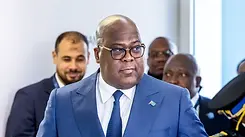
Tshisekedi’s Grand Strategy: Inside His Bid to Redefine Africa’s Place in the Global Order
As the snow settles over Davos and the elite gather under the banner of “A Spirit of Dialogue,” a quiet geopolitical revolution is taking place, one that few expected to be led from Kinshasa.
In a year marked by fractured alliances, supply chain crises, and the rise of transformative AI, the World Economic Forum’s 56th Annual Meeting seeks common ground through renewal and cooperation. Into this high-stakes atmosphere walks President Félix Tshisekedi of the Democratic Republic of the Congo, bringing with him something rarer than ambition: momentum.
Backed by a landmark Strategic Partnership Agreement with the United States, signed just weeks ago, and fresh from a reelection victory at home, Tshisekedi arrives at Davos not as an observer, but as a strategic actor in global affairs. His mission? To transform Congo from a war-torn mineral supplier into a decisive, rules-shaping partner, and in the process, to redefine Africa’s position in the global order.
From Silent Diplomacy to Strategic Doctrine
Tshisekedi’s rise to global relevance hasn’t been loud; it’s been calculated.
In his early years, critics saw him as a transitional figure, hemmed in by a post-Kabila political compromise and burdened by weak state institutions. But since 2022, amid Rwanda’s renewed aggression in Eastern Congo via the M23 militia, Tshisekedi shifted from domestic reformer to geopolitical strategist.
Rather than escalating a regional war, he leveraged African solidarity, European recalibration, and U.S. interests to isolate Rwandan President Paul Kagame diplomatically. The result? In December 2025, a Washington-brokered peace agreement was signed; the same month, Congo and the United States formalized an unprecedented strategic minerals and investment pact.
Davos as the Global Stage for Congo’s New Role
This week, Tshisekedi takes his place among 65+ heads of state and 3,000 global leaders in Davos, in what is now officially the Forum’s most government-heavy gathering in history. But unlike in years past, where African leaders were relegated to climate finance pleas or security panels, Tshisekedi’s presence reflects power.
BUSINESS & INVESTMENT
Tshisekedi’s Grand Strategy at Davos 2026

Jan 16, 2026
May 15, 2026
5 min read

Published
Updated:
Tshisekedi’s Grand Strategy: Inside His Bid to Redefine Africa’s Place in the Global Order
As the snow settles over Davos and the elite gather under the banner of “A Spirit of Dialogue,” a quiet geopolitical revolution is taking place, one that few expected to be led from Kinshasa.
In a year marked by fractured alliances, supply chain crises, and the rise of transformative AI, the World Economic Forum’s 56th Annual Meeting seeks common ground through renewal and cooperation. Into this high-stakes atmosphere walks President Félix Tshisekedi of the Democratic Republic of the Congo, bringing with him something rarer than ambition: momentum.
Backed by a landmark Strategic Partnership Agreement with the United States, signed just weeks ago, and fresh from a reelection victory at home, Tshisekedi arrives at Davos not as an observer, but as a strategic actor in global affairs. His mission? To transform Congo from a war-torn mineral supplier into a decisive, rules-shaping partner, and in the process, to redefine Africa’s position in the global order.
From Silent Diplomacy to Strategic Doctrine
Tshisekedi’s rise to global relevance hasn’t been loud; it’s been calculated.
ADVERTISEMENT
In his early years, critics saw him as a transitional figure, hemmed in by a post-Kabila political compromise and burdened by weak state institutions. But since 2022, amid Rwanda’s renewed aggression in Eastern Congo via the M23 militia, Tshisekedi shifted from domestic reformer to geopolitical strategist.
Rather than escalating a regional war, he leveraged African solidarity, European recalibration, and U.S. interests to isolate Rwandan President Paul Kagame diplomatically. The result? In December 2025, a Washington-brokered peace agreement was signed; the same month, Congo and the United States formalized an unprecedented strategic minerals and investment pact.
Davos as the Global Stage for Congo’s New Role
This week, Tshisekedi takes his place among 65+ heads of state and 3,000 global leaders in Davos, in what is now officially the Forum’s most government-heavy gathering in history. But unlike in years past, where African leaders were relegated to climate finance pleas or security panels, Tshisekedi’s presence reflects power.
Congo’s critical mineral reserves, especially cobalt and copper, are central to global reindustrialization and energy transition strategies. And the U.S.–DRC partnership offers American companies preferential access, sidelining Chinese dominance and permanently damaging Kagame’s old role as regional “fixer.”
ADVERTISEMENT
In Davos terms, Tshisekedi brings three things:
A continental-scale solution to global mineral insecurity;
A just energy transition blueprint, rooted in the Grand Inga Dam and green infrastructure;
A diplomatic narrative that reflects the Forum’s theme: cooperation, not confrontation.
Kagame Is Out — Congo Is In
If 2010s-era Davos embraced Kagame as the model African leader, digital, disciplined, and donor-friendly, 2026 belongs to Tshisekedi. While Kagame faces U.N. investigations for war crimes, the collapse of his international brand, and a crumbling war economy, Tshisekedi now hosts U.S. investors, pushes regional peace, and wields hard resources.
This realignment isn’t just diplomatic, it’s structural. With the Lobito Corridor, Congo offers a West-aligned export route for critical minerals. The Strategic Asset Reserve, it controls the terms of cobalt extraction. With the Kinshasa Doctrine, a term gaining traction among analysts, Congo is positioning itself as a leader in African economic sovereignty.
An African Vision, A Global Conversation
In line with Davos 2026’s aim to “spark long-term solutions and unlock new opportunities for growth and resilience,” Tshisekedi offers something the world needs: a vision from the Global South that is not reactionary, but generative.


POPULAR TODAY


ADVERTISEMENT
He speaks of local value chains, regional railways, and reformed mining governance. His administration is pushing for the formalization of artisanal mining, VAT reform, and investment-friendly legal frameworks, not just to attract capital, but to ensure Congolese citizens benefit from it.
In doing so, he’s joined by youth voices from Congo’s civil society, energy technocrats, and regional allies who see Congo’s transformation as Africa’s turning point.
Conclusion: The Spirit of Dialogue in Practice
The World Economic Forum says 2026 is a year to “move the world forward together.” For the DRC, that starts with leaving the role of raw material pawn and claiming the role of global partner.
Tshisekedi’s grand strategy may not make the loudest headlines, but in Davos, it is making waves: Africa’s largest, richest, and most misunderstood country has a seat at the table, and it’s playing to win.
ADVERTISEMENT
RELATED ARTICLE