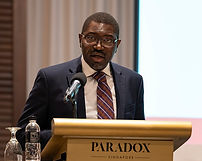
Nigeria's Centre for Disease Control and Prevention (NCDC) says the ₦10 billion emergency intervention approved by President Bola Tinubu is intended to support preparedness for several epidemic-prone diseases, not Ebola alone. Director-General Jide Idris outlined the agency's position in remarks reported on 3 November 2026, as Nigeria faces scrutiny over its health emergency spending.
The NCDC says the emergency intervention is intended for broad public-health preparedness rather than a single Ebola response. The agency identifies surveillance, early detection and rapid response as priorities. Questions remain about the exact release date of the funds and how spending will be publicly accounted for.
What the NCDC says the money covers
According to Punch's report, Idris said the intervention is meant to strengthen prevention, preparedness, early detection and response across diseases including Lassa fever, cholera, meningitis, diphtheria, measles and mpox. The agency also cited antimicrobial resistance as part of its wider health-security agenda.
Idris said the allocation was released directly to the NCDC, not to a presidential Ebola task force. Punch noted that he did not specify precisely when the money was released. That distinction matters: approval, release and actual expenditure are separate stages, and the report does not establish how much has already been spent.
Why the clarification matters
Nigeria's public-health response is being tested by regional Ebola concerns and the continuing need to detect other infectious diseases. The intervention was approved in June 2026, according to Idris, following the outbreak in the Democratic Republic of Congo. But the agency argues that strengthening laboratory systems, surveillance and emergency response can serve more than one disease threat.
The director-general put the projected five-year cost of Nigeria's National Action Plan for Health Security at about ₦522 billion for 2025–2029. He said ₦10 billion represents only a small fraction of the average annual requirement. These are the agency's estimates, not an independent spending audit.
What Nigerians should know about Ebola status
Idris said Nigeria confirmed an imported Bundibugyo Ebola case in October but had no active case at the time of his statement, with identified contacts still under surveillance. This is a dated status report and should not be interpreted as a live case count. Readers should consult the NCDC, the World Health Organization, and Africa CDC for updated health advisories.
HEALTH NEWS
Nigeria NCDC Explains ₦10bn Emergency Fund Beyond Ebola

Sep 11, 2026
Nov 3, 2026
3 min read

Published
Updated:
Nigeria's Centre for Disease Control and Prevention (NCDC) says the ₦10 billion emergency intervention approved by President Bola Tinubu is intended to support preparedness for several epidemic-prone diseases, not Ebola alone. Director-General Jide Idris outlined the agency's position in remarks reported on 3 November 2026, as Nigeria faces scrutiny over its health emergency spending.
The NCDC says the emergency intervention is intended for broad public-health preparedness rather than a single Ebola response. The agency identifies surveillance, early detection and rapid response as priorities. Questions remain about the exact release date of the funds and how spending will be publicly accounted for.
What the NCDC says the money covers
According to Punch's report, Idris said the intervention is meant to strengthen prevention, preparedness, early detection and response across diseases including Lassa fever, cholera, meningitis, diphtheria, measles and mpox. The agency also cited antimicrobial resistance as part of its wider health-security agenda.
ADVERTISEMENT
Idris said the allocation was released directly to the NCDC, not to a presidential Ebola task force. Punch noted that he did not specify precisely when the money was released. That distinction matters: approval, release and actual expenditure are separate stages, and the report does not establish how much has already been spent.
Why the clarification matters
Nigeria's public-health response is being tested by regional Ebola concerns and the continuing need to detect other infectious diseases. The intervention was approved in June 2026, according to Idris, following the outbreak in the Democratic Republic of Congo. But the agency argues that strengthening laboratory systems, surveillance and emergency response can serve more than one disease threat.
The director-general put the projected five-year cost of Nigeria's National Action Plan for Health Security at about ₦522 billion for 2025–2029. He said ₦10 billion represents only a small fraction of the average annual requirement. These are the agency's estimates, not an independent spending audit.
ADVERTISEMENT
What Nigerians should know about Ebola status
Idris said Nigeria confirmed an imported Bundibugyo Ebola case in October but had no active case at the time of his statement, with identified contacts still under surveillance. This is a dated status report and should not be interpreted as a live case count. Readers should consult the NCDC, the World Health Organization, and Africa CDC for updated health advisories.
In separate reporting, Punch described support arrangements for monitored contacts, underscoring that outbreak management can include accommodation, feeding and monitoring costs as well as clinical care.


Popular Today


ADVERTISEMENT
What remains unanswered
The exact release date of the ₦10 billion, detailed expenditure lines, procurement records and implementation milestones were not independently established in the reporting reviewed. These are important accountability questions, but they should not be converted into allegations of misuse without evidence.
The NCDC's central argument is that an emergency allocation should be judged against the country's overall disease preparedness needs, not only against the immediate Ebola response. The next useful public update would be a dated spending breakdown and measurable programme results.
ADVERTISEMENT
Related Articles