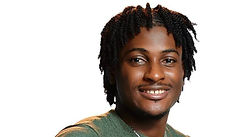
Marie-Célestin Karondwa Mwanaweka Bytaty was a Congolese political figure in Butembo, North Kivu, associated with the Union for Democracy and Social Progress (UDPS/Tshisekedi). He served as acting head of the party's federal electoral commission in Butembo and as a party communicator.
His name drew wider attention after he was violently attacked on September 27, 2026, following a radio appearance, and later died from his injuries. The Congolese Press Agency reported the death from an obituary statement issued by the UDPS federation in Butembo, while later international coverage documented his burial and the continuing questions around the attack.
Who was Marie-Célestin Karondwa? Marie-Célestin Karondwa was a local UDPS/Tshisekedi official and party communicator in Butembo, eastern Democratic Republic of the Congo. He held an acting role in the party's federal electoral structure and became nationally and internationally known after his September 2026 death following a violent attack whose motive remained under investigation.
His role inside UDPS/Tshisekedi in Butembo
Karondwa was part of the local structure of the Union for Democracy and Social Progress, the party of President Félix Tshisekedi. The clearest official description available in the immediate aftermath of his death came through the UDPS/Tshisekedi federation in Butembo. In a statement carried by ACP, the party identified him as acting president of the federal Permanent Electoral Commission (CEP/Fédérale) and a party communicator.
That distinction matters because some international reports used broader descriptions such as “local official” or “acting president” of a federal party structure. The underlying local statement is more specific: Karondwa held an acting position in the party's electoral structure and also spoke publicly on the party's behalf.
Local reporting also linked him to community life beyond party communication. TIC-TAC Hebdo identified him as a teacher at EP Mihake in addition to his political responsibilities. That detail is useful in understanding why his profile was rooted in Butembo rather than in national-level politics in Kinshasa.
The September 27 attack
Karondwa was attacked on Sunday, September 27, 2026, after returning from a political radio program on Radio Mwangaza in Butembo. The UDPS obituary statement said he had used the program to raise awareness about the fight against Ebola. It also said his house and belongings were burned during the violence.
The Associated Press later reported that he was attacked at his home in Butembo and died from his injuries at a local hospital. AP also reported that a senior local UDPS official said Karondwa had called on listeners to follow public-health measures such as handwashing and social distancing.
BIOGRAPHY
Marie-Célestin Karondwa Biography: UDPS Role, Death and Legacy

Oct 1, 2026
Oct 1, 2026
9 min read

Published
Updated:
Marie-Célestin Karondwa Mwanaweka Bytaty was a Congolese political figure in Butembo, North Kivu, associated with the Union for Democracy and Social Progress (UDPS/Tshisekedi). He served as acting head of the party's federal electoral commission in Butembo and as a party communicator.
His name drew wider attention after he was violently attacked on September 27, 2026, following a radio appearance, and later died from his injuries. The Congolese Press Agency reported the death from an obituary statement issued by the UDPS federation in Butembo, while later international coverage documented his burial and the continuing questions around the attack.
Who was Marie-Célestin Karondwa? Marie-Célestin Karondwa was a local UDPS/Tshisekedi official and party communicator in Butembo, eastern Democratic Republic of the Congo. He held an acting role in the party's federal electoral structure and became nationally and internationally known after his September 2026 death following a violent attack whose motive remained under investigation.
His role inside UDPS/Tshisekedi in Butembo
Karondwa was part of the local structure of the Union for Democracy and Social Progress, the party of President Félix Tshisekedi. The clearest official description available in the immediate aftermath of his death came through the UDPS/Tshisekedi federation in Butembo. In a statement carried by ACP, the party identified him as acting president of the federal Permanent Electoral Commission (CEP/Fédérale) and a party communicator.
That distinction matters because some international reports used broader descriptions such as “local official” or “acting president” of a federal party structure. The underlying local statement is more specific: Karondwa held an acting position in the party's electoral structure and also spoke publicly on the party's behalf.
Local reporting also linked him to community life beyond party communication. TIC-TAC Hebdo identified him as a teacher at EP Mihake in addition to his political responsibilities. That detail is useful in understanding why his profile was rooted in Butembo rather than in national-level politics in Kinshasa.
The September 27 attack
Karondwa was attacked on Sunday, September 27, 2026, after returning from a political radio program on Radio Mwangaza in Butembo. The UDPS obituary statement said he had used the program to raise awareness about the fight against Ebola. It also said his house and belongings were burned during the violence.
The Associated Press later reported that he was attacked at his home in Butembo and died from his injuries at a local hospital. AP also reported that a senior local UDPS official said Karondwa had called on listeners to follow public-health measures such as handwashing and social distancing.
The sequence of events is established: he appeared on radio, he was attacked later that day, his home was set on fire, and he died from the injuries he suffered. What remains less certain is the motive.
ADVERTISEMENT
Was Karondwa killed because of his Ebola comments?
The UDPS linked the attack to Karondwa's public support for the Ebola response. That interpretation was repeated in several early reports and became the dominant international framing of the case.
However, the available evidence does not establish motive as a settled fact. Congo Inter reported that Pascal Saghasa of the UDPS in Butembo acknowledged that the motive remained unknown. The outlet also cited other local accounts that questioned whether the killing could yet be definitively tied to what Karondwa said about Ebola.
A separate local report said Radio Mwangaza disputed the claim that the broadcast itself was centered on Ebola. Those competing accounts make careful wording essential. Karondwa spoke publicly during an Ebola crisis, the party said he supported the official response, and he was attacked after the radio appearance. But who organized the attack, why it happened and whether Ebola-related statements were the decisive cause remained unresolved as of October 1.
That caution is also consistent with The Guardian's reporting, which described the killing in the context of mistrust and resistance surrounding the outbreak while noting that the attackers were unidentified.
Why his death became part of the wider Ebola story
Karondwa's death occurred during a severe Ebola outbreak in eastern DRC, where public-health teams were confronting not only the virus but also distrust, misinformation and insecurity. AP reported that the outbreak had passed 8,000 confirmed cases and nearly 4,000 deaths by late September 2026, while responders described persistent resistance in some communities.
This context explains why a local political official from Butembo quickly became part of a much larger story. Karondwa was not primarily a national celebrity or senior cabinet figure. His significance came from the intersection of local politics, public communication and a dangerous health emergency.
The attack also followed other violence affecting Ebola response efforts. International reports described attacks on health workers and response infrastructure in eastern Congo, increasing concern about whether trusted local figures could safely communicate public-health guidance.
Funeral, family and calls for an investigation
Karondwa was buried after mourners gathered in Butembo and his case received wider international coverage. Al Jazeera reported on October 1 that mourners had gathered for his burial and that the perpetrators, number of attackers and motive were still unclear.
ADVERTISEMENT
Africanews reported that relatives and political colleagues were calling for answers. The UDPS federation in Butembo had already demanded what it called a serious investigation to identify those responsible and establish the exact circumstances of Karondwa's death.
Public reporting establishes that Karondwa had a wife and children, but reliable coverage opened for this profile did not establish their names or the number of children in a way that would justify publishing private family details. That information is therefore kept limited to what has direct public relevance.
What is known about Karondwa's background
The public record on Karondwa's earlier life is limited. Reliable reporting available after his death consistently places his public activity in Butembo and identifies him with the local UDPS/Tshisekedi structure. It does not provide a securely verified birth date, age, university history or detailed account of his upbringing.
Rather than fill those gaps with repeated but unsupported biographical claims, the strongest available profile is built around his documented roles: local party official, communicator and, according to local reporting, teacher. Those positions suggest a public life centered on political organization and community communication in Butembo.
His full name also appears in slightly different orders across reports. The UDPS statement reproduced by ACP gives Karondwa Mwanaweka Marie-Célestin Bytaty, while international reports commonly shorten the name to Marie-Célestin Karondwa. Both refer to the same official.
Timeline of Marie-Célestin Karondwa's final public record
Year | Event | Significance |
Before 2026 | Active in the UDPS/Tshisekedi structure in Butembo | Served as a party communicator and held an acting role in the federal electoral commission |
September 27, 2026 | Took part in a Radio Mwangaza political program and was later violently attacked | The attack became the central event leading to his death |
September 27, 2026 | His residence and belongings were reported burned | The destruction formed part of the party's account of the violence |
September 28, 2026 | UDPS/Tshisekedi's Butembo federation publicly announced his death | Provided authoritative political confirmation of his death and called for an investigation |
September 30, 2026 | Mourners gathered for his funeral | International reporting expanded attention beyond North Kivu |
October 1, 2026 | Burial coverage circulated internationally | Renewed questions about his identity, political role and the unresolved motive |
What remains unresolved
The central unresolved question is motive. The UDPS has argued that Karondwa became a target after defending the reality of Ebola and the government's response. Other local accounts have urged caution about making that causal link before an investigation is complete.
There was also no publicly established identification of the attackers in the reliable sources reviewed for this profile. Those uncertainties should not obscure the confirmed facts of the case, but they do limit what can responsibly be said about responsibility or motive.
Karondwa's death therefore sits at two levels. It is a criminal case requiring an investigation into who attacked him and why. It is also a public-health and political story because it occurred in a city facing an Ebola emergency where mistrust had already complicated response efforts.
TRENDING NOW


POPULAR TODAY


ADVERTISEMENT
Frequently asked questions about Marie-Célestin Karondwa
Who was Marie-Célestin Karondwa?
Marie-Célestin Karondwa was a Congolese UDPS/Tshisekedi official and communicator in Butembo, North Kivu. He also held an acting position in the party's federal electoral commission.
What was Marie-Célestin Karondwa's full name?
The UDPS statement reproduced by ACP identified him as Karondwa Mwanaweka Marie-Célestin Bytaty. International coverage commonly used the shorter form Marie-Célestin Karondwa.
What political party did Karondwa belong to?
He belonged to the Union for Democracy and Social Progress, commonly known as UDPS/Tshisekedi.
What role did Karondwa hold in Butembo?
The local UDPS federation identified him as acting president of its federal Permanent Electoral Commission and as a party communicator in Butembo.
When did Marie-Célestin Karondwa die?
He died after the September 27, 2026 attack in Butembo. The UDPS federation publicly announced his death in a communiqué reported on September 28.
Was Karondwa killed because he spoke about Ebola?
The UDPS linked the attack to his public support for the Ebola response, but the motive had not been established by an investigation as of October 1, 2026. Other local reporting also cautioned against treating that explanation as proven.
What happened to Karondwa's house?
The UDPS said his home and belongings were burned during the violence surrounding the attack.
Was anyone arrested for Karondwa's killing?
The reliable reporting reviewed for this profile did not establish an arrest connected to the killing by October 1, 2026. The UDPS and relatives were calling for an investigation and accountability.
ADVERTISEMENT
RELATED ARTICLE