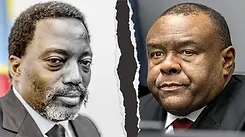
In the court of Congolese public opinion, where Analyst track the endless cycle of violence in the Eastern DRC, the announcement of the Front for the Refoundation of the Nation (FRN) on October 12 in Goma has been met not with surprise, but with weary recognition. “THIS IS THE AFDL ERA ALL OVER AGAIN!” listing the sequence: AFDL, RCD, CNDP, M23, AFC/M23, and now FRN. The pattern is clear to millions of Congolese: when one Rwandan-backed proxy falters under military pressure, international scrutiny, or the weight of its own crimes, Kigali simply prints a new acronym.
The Historical Playbook
From the Alliance of Democratic Forces for the Liberation of Congo-Zaire (AFDL) that toppled Mobutu with Rwandan and Ugandan muscle in 1996–97, to the Rally for Congolese Democracy (RCD) that tore the country apart during the Second Congo War, the National Congress for the Defence of the People (CNDP) under Laurent Nkunda, and the successive incarnations of the March 23 Movement (M23), the architecture remains the same.
Leadership overlaps. The ethnic base is carefully cultivated. Command-and-control traces back to Kigali. UN Group of Experts reports have documented Rwandan Defence Force troops, training, weapons, and operational direction for years.
When the brand becomes too toxic—when M23 was defeated in 2013, or when AFC/M23’s territorial gains brought fresh sanctions and global condemnation—the label is retired and a new one is unveiled.
Several political analysts have pointed to a recurring pattern in the history of armed rebellions in eastern Congo.
“No new rebel group has emerged without Rwanda's involvement. Since 1996, Kagame's RPF has been linked to the formation or support of armed movements, including the AFDL, RCD, CNDP, M23, AFC and now FRN,” they argue.
“M23, backed by Rwanda, has merely changed its name, while the violence against civilians continues. Nothing has fundamentally changed, and Rwanda must continue to be held accountable for its alleged role,” the analysts maintain.
FRN: Cosmetic Surgery, Not Transformation
The FRN is presented as a new politico-military structure succeeding the AFC, with former President Joseph Kabila at its head and M23-linked figures Bertrand Bisimwa, Corneille Nangaa, and Sultani Makenga occupying senior positions.
JUSTICE & CRIME
From AFDL to FRN: Analysts Question Rwanda's Rebel Rebranding

Oct 13, 2026
Oct 13, 2026
5 min read

Published
Updated:
In the court of Congolese public opinion, where Analyst track the endless cycle of violence in the Eastern DRC, the announcement of the Front for the Refoundation of the Nation (FRN) on October 12 in Goma has been met not with surprise, but with weary recognition. “THIS IS THE AFDL ERA ALL OVER AGAIN!” listing the sequence: AFDL, RCD, CNDP, M23, AFC/M23, and now FRN. The pattern is clear to millions of Congolese: when one Rwandan-backed proxy falters under military pressure, international scrutiny, or the weight of its own crimes, Kigali simply prints a new acronym.
The Historical Playbook
From the Alliance of Democratic Forces for the Liberation of Congo-Zaire (AFDL) that toppled Mobutu with Rwandan and Ugandan muscle in 1996–97, to the Rally for Congolese Democracy (RCD) that tore the country apart during the Second Congo War, the National Congress for the Defence of the People (CNDP) under Laurent Nkunda, and the successive incarnations of the March 23 Movement (M23), the architecture remains the same.
Leadership overlaps. The ethnic base is carefully cultivated. Command-and-control traces back to Kigali. UN Group of Experts reports have documented Rwandan Defence Force troops, training, weapons, and operational direction for years.
When the brand becomes too toxic—when M23 was defeated in 2013, or when AFC/M23’s territorial gains brought fresh sanctions and global condemnation—the label is retired and a new one is unveiled.
Several political analysts have pointed to a recurring pattern in the history of armed rebellions in eastern Congo.
ADVERTISEMENT
“No new rebel group has emerged without Rwanda's involvement. Since 1996, Kagame's RPF has been linked to the formation or support of armed movements, including the AFDL, RCD, CNDP, M23, AFC and now FRN,” they argue.
“M23, backed by Rwanda, has merely changed its name, while the violence against civilians continues. Nothing has fundamentally changed, and Rwanda must continue to be held accountable for its alleged role,” the analysts maintain.
FRN: Cosmetic Surgery, Not Transformation
The FRN is presented as a new politico-military structure succeeding the AFC, with former President Joseph Kabila at its head and M23-linked figures Bertrand Bisimwa, Corneille Nangaa, and Sultani Makenga occupying senior positions.
Several political analysts quickly questioned the motives behind the restructuring.
“KABILA IS THE NEW FACE. KAGAME REMAINS THE ARCHITECT,” one social media account declared.
ADVERTISEMENT
Others pointed to findings reportedly raised by UN experts in June 2026, suggesting that a possible rebranding of the rebellion and a prominent leadership role for Kabila could help obscure Rwanda's involvement by portraying the movement as an exclusively Congolese initiative.
Government figures have echoed the public consensus. Peter Kazadi, former Interior Minister and UDPS deputy, stated clearly that the FRN “is just another side of the same coin. This is not a new rebellion, but rather an incarnation of the same rebellion under another name.” Changing the letterhead does not erase the occupation of Congolese territory, the displacement of hundreds of thousands, or the documented atrocities.
Accountability Cannot Be Rebranded Away
For the Tshisekedi government and the Congolese people, the question is not whether FRN is “new.” It is whether the international community will finally refuse to play along with the cycle.
Every previous iteration was sold as a local grievance movement defending Congolese Tutsi or fighting “tyranny.” Every previous iteration collapsed under the weight of evidence linking it to Kigali’s strategic interests—mineral corridors, buffer zones, and regional dominance. The human cost has been borne almost entirely by Congolese civilians.
TRENDING NOW


POPULAR TODAY


ADVERTISEMENT
According to many Congolese: “Congo is not a laboratory for endless rebel rebranding. You cannot change the name on the door and expect the history behind it to disappear.”
They ask the practical question: does the FRN inherit the crimes, the rapes, the massacres, and the obligations of the Washington and Doha agreements, or is the rename an attempt to reset the clock?
President Félix Tshisekedi’s administration has maintained that sovereignty is non-negotiable and that military conquest cannot be laundered into political legitimacy through a new acronym.
The FRN announcement, made in territory still controlled by the same forces that seized Goma and Bukavu, simply confirms what Congolese citizens have been saying for three decades: the problem is not the name on the flag. It is the foreign hand that keeps rewriting it after every failure.
Until Kigali ends its support for these successive projects, the cycle will continue. The Congolese people, watching the rebrand unfold in real time on their timelines, have already drawn the conclusion. The rest of the world should catch up.
ADVERTISEMENT
RELATED ARTICLE