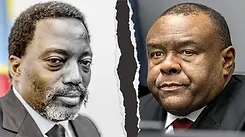
Joseph Kabila Kabange, born on 4 June 1971, served as president of the Democratic Republic of the Congo from January 2001 until January 2019. He inherited the presidency after the assassination of his father, Laurent-Désiré Kabila, oversaw negotiations that helped bring an end to a regional war, and won the country's presidential elections in 2006 and 2011.
His administration also faced criticism over political repression, contested voting and the delay of elections beyond his second elected term. In October 2026, Kabila became president of a newly announced politico-military front, the Front pour la refondation de la nation (FRN), linking a former head of state to the country's continuing eastern conflict. His life is inseparable from the promises, conflicts and unfinished transitions of modern Congo.
Who is Joseph Kabila? Joseph Kabila Kabange is a Congolese former president who governed the DRC from 2001 to 2019. Born in South Kivu in 1971, he succeeded his assassinated father, won two presidential elections, and later became a central figure in disputes involving eastern Congo, a 2025 military-court sentence, U.S. sanctions and the 2026 FRN coalition.
From a rebel family's childhood to national leadership
Kabila was born in Hewa Bora II, in the Fizi territory of what is now South Kivu province, on 4 June 1971. The DRC presidency's official archive confirms that date and place, as does the U.S. Treasury's later identity record. On 13 October 2026, he was 55 years old. His father's name, Laurent-Désiré Kabila, would become one of the best-known in modern Congolese politics; his mother is publicly identified in an archived presidential biography as Sifa Mahanya.
The elder Kabila was an opponent of Mobutu Sese Seko, whose long dictatorship governed a country then known as Zaire. Joseph's childhood unfolded while his father was involved in political and guerrilla activity. That context matters more than legends about the family: the son's first political environment was a movement operating outside the institutions he would eventually inherit. His twin sister, Jaynet Kabila, also became a prominent public figure and legislator. Their brother Zoé later entered politics and business.
Much of Kabila's youth was spent across the border in Tanzania. An archived biography prepared by a presidential spokesperson in 2007 says he began primary school in the Fizi area and continued his education in Dar es Salaam before completing secondary studies in Tanzania. It records subsequent military training there. Such official-era accounts describe his path from schooling toward the armed movement rather than a conventional political apprenticeship in Kinshasa.
When Laurent-Désiré Kabila's Alliance of Democratic Forces for the Liberation of Congo-Zaire (AFDL) advanced against Mobutu in 1996 and 1997, Joseph Kabila took military responsibilities in that campaign. Contemporary humanitarian reporting published in 2006 traces his rise as a rebel commander during the First Congo War. After the movement took Kinshasa in 1997, the younger Kabila undertook military training in China. He subsequently held senior positions in the new Congolese armed forces.
It is important not to confuse the father's government with the son's later presidency. Laurent-Désiré Kabila replaced Mobutu in 1997 and led the state during the opening years of the Second Congo War, which began in 1998. Joseph Kabila inherited the office in the middle of that conflict. The armies, foreign governments and armed movements involved in it had interests extending far beyond any single family or political party.
Why Joseph Kabila became president in 2001
BIOGRAPHY
Joseph Kabila Biography: Age, Family, Presidency and 2026 FRN

Oct 13, 2026
Oct 13, 2026
22 min read

Published
Updated:
Joseph Kabila Kabange, born on 4 June 1971, served as president of the Democratic Republic of the Congo from January 2001 until January 2019. He inherited the presidency after the assassination of his father, Laurent-Désiré Kabila, oversaw negotiations that helped bring an end to a regional war, and won the country's presidential elections in 2006 and 2011.
His administration also faced criticism over political repression, contested voting and the delay of elections beyond his second elected term. In October 2026, Kabila became president of a newly announced politico-military front, the Front pour la refondation de la nation (FRN), linking a former head of state to the country's continuing eastern conflict. His life is inseparable from the promises, conflicts and unfinished transitions of modern Congo.
Who is Joseph Kabila? Joseph Kabila Kabange is a Congolese former president who governed the DRC from 2001 to 2019. Born in South Kivu in 1971, he succeeded his assassinated father, won two presidential elections, and later became a central figure in disputes involving eastern Congo, a 2025 military-court sentence, U.S. sanctions and the 2026 FRN coalition.
From a rebel family's childhood to national leadership
Kabila was born in Hewa Bora II, in the Fizi territory of what is now South Kivu province, on 4 June 1971. The DRC presidency's official archive confirms that date and place, as does the U.S. Treasury's later identity record. On 13 October 2026, he was 55 years old. His father's name, Laurent-Désiré Kabila, would become one of the best-known in modern Congolese politics; his mother is publicly identified in an archived presidential biography as Sifa Mahanya.
The elder Kabila was an opponent of Mobutu Sese Seko, whose long dictatorship governed a country then known as Zaire. Joseph's childhood unfolded while his father was involved in political and guerrilla activity. That context matters more than legends about the family: the son's first political environment was a movement operating outside the institutions he would eventually inherit. His twin sister, Jaynet Kabila, also became a prominent public figure and legislator. Their brother Zoé later entered politics and business.
Much of Kabila's youth was spent across the border in Tanzania. An archived biography prepared by a presidential spokesperson in 2007 says he began primary school in the Fizi area and continued his education in Dar es Salaam before completing secondary studies in Tanzania. It records subsequent military training there. Such official-era accounts describe his path from schooling toward the armed movement rather than a conventional political apprenticeship in Kinshasa.
When Laurent-Désiré Kabila's Alliance of Democratic Forces for the Liberation of Congo-Zaire (AFDL) advanced against Mobutu in 1996 and 1997, Joseph Kabila took military responsibilities in that campaign. Contemporary humanitarian reporting published in 2006 traces his rise as a rebel commander during the First Congo War. After the movement took Kinshasa in 1997, the younger Kabila undertook military training in China. He subsequently held senior positions in the new Congolese armed forces.
It is important not to confuse the father's government with the son's later presidency. Laurent-Désiré Kabila replaced Mobutu in 1997 and led the state during the opening years of the Second Congo War, which began in 1998. Joseph Kabila inherited the office in the middle of that conflict. The armies, foreign governments and armed movements involved in it had interests extending far beyond any single family or political party.
Why Joseph Kabila became president in 2001
Laurent-Désiré Kabila was assassinated on 16 January 2001. Ten days later, on 26 January 2001, Joseph Kabila was sworn in as president. The official presidential history places him at the age of 29 when he took office. He did not initially win the presidency through a national election: his rise was an extraordinary succession during wartime, after his father's murder.
The government controlled only part of the territory. Rival rebel administrations, foreign troops and local armed forces dominated other regions. Joseph Kabila faced the task of establishing a credible national negotiating position while competing military and political blocs still exercised authority. In contrast with his father's confrontational approach to some external actors, the younger president pursued broader diplomacy with neighbouring states and international mediators.
The negotiations led to a comprehensive political agreement in December 2002 and a transition that brought former belligerents into a national power-sharing structure. The transitional period included four vice-presidents representing significant political and armed constituencies. These institutions were meant to move the country away from partition and prepare national elections. A presidency made possible by wartime succession was beginning to seek electoral legitimacy.
The transition did not instantly eliminate violence. Militias continued to operate, especially in eastern provinces, and rebuilding the national army presented enormous challenges. Nevertheless, the move from regional warfare toward a national transitional framework was a defining development of Kabila's early presidency. His governing record therefore begins with an authentic peace process, even though later security failures were profound.
Winning the 2006 presidential election
The 2006 elections were a landmark for a country that had lived through dictatorship, state collapse and successive wars. The election process gave millions of citizens a chance to choose a president and legislature through a competitive national vote. Kabila faced Jean-Pierre Bemba, a former rebel leader and one of the vice-presidents in the transition, in a second-round contest.
Kabila won the runoff with approximately 58% of the vote, according to the contemporary record. The contest was not free from intimidation or danger: armed confrontations between forces aligned with the two camps disrupted Kinshasa, and Bemba disputed the outcome. The Carter Center's election work in Congo provides an independent institutional account of the period's historic democratic opportunity and shortcomings.
On 6 December 2006, Kabila took the oath under the new constitutional order. His victory gave an electoral foundation to a presidency he had previously occupied by succession. But the new republic still faced the difficult question of whether state agencies, soldiers, local administrators and courts could operate independently of powerful political networks.
His governing vehicle was the People's Party for Reconstruction and Democracy (PPRD), supported by wider alliances that changed over the years. The party's importance was not only electoral. It became a mechanism through which Kabila's presidential circle engaged provincial leaders, parliamentary allies and officials across the state. The reach of those networks would later help explain his residual influence after he left office.
The 2011 re-election and the limits of electoral credibility
Kabila stood again in 2011, against a field including opposition leader Étienne Tshisekedi. Official provisional returns credited the incumbent with about 49% and Étienne Tshisekedi with about 32%, but independent observers challenged the integrity of the result. The Carter Center's 2011 election findings assessed serious failures in tabulation and concluded that the announced presidential results lacked credibility.
ADVERTISEMENT
Those findings must be understood precisely. The commission declared Kabila the winner, and he stayed in office. But the international observation assessment undercut the claim that the reported figures provided a reliably verified expression of the electorate's choice. Étienne Tshisekedi disputed the official outcome. The gap between legal declaration and public trust became a recurring feature of the political climate.
This episode distinguished the two elected terms. The 2006 poll was a turning point after war, even with major problems. The 2011 process deepened doubts about institutional independence and accountability. Political opponents increasingly treated competition with the president as a question not only of winning votes but also of whether electoral rules would be implemented impartially.
War in eastern Congo during Kabila's presidency
Security was a test no Congolese president could avoid. North Kivu, South Kivu and neighbouring areas continued to suffer attacks by armed groups, forced displacement, sexual violence and struggles over local power and trade routes. Different phases of fighting involved Congolese forces, foreign support, and insurgent movements with shifting alliances. A national presidency in Kinshasa did not amount to uncontested authority over the east.
The M23 movement, which emerged in 2012, seized territory and posed an acute threat to the Congolese state. In 2013, the army, working in an environment transformed by the UN mission's intervention brigade, pushed M23 from major positions. A United Nations Security Council statement of November 2013 welcomed the end of that rebellion's hostilities while calling for disarmament and durable political settlement.
The result was a significant military and diplomatic moment for Kabila's government. But the UN also emphasised that defeating one armed group did not resolve the region's underlying problems. Other militias continued to operate, civilian protection remained difficult, and weak local institutions exposed many communities to violence. Later M23 resurgence showed why a single military victory could not be treated as final peace.
Accounts of Kabila's rule must also examine the conduct of security forces under his authority. Human-rights organisations documented abuses by both armed groups and government units. During the 2016 political crisis, Human Rights Watch reported that senior Congolese security officers had recruited former M23 fighters to suppress anti-government protests. These were documented findings of a human-rights investigation, not a substitute for individual criminal judgments. They complicate any simple claim that Kabila's administration was consistently aligned with or against every M23 faction throughout its history.
The constitutional crisis after 2016
Kabila's second elected term was scheduled to expire in December 2016 under the country's constitutional two-term framework. Elections were not held on schedule, and he remained in office. The government and electoral authorities pointed to logistical and registration problems, while opponents accused the ruling camp of deliberately extending the presidency. The unresolved election timetable became a national confrontation.
Protests were met with severe repression. Human Rights Watch's 2018 country report documented killings, arrests and restrictions against political activists and journalists during the delay. A Catholic Church-mediated agreement reached in December 2016 promised elections and political de-escalation, but its implementation was disputed. The failure to deliver a timely vote damaged confidence in the constitutional system.
Kabila eventually did not stand for a third elected term. His supporters could point to the fact that he ultimately handed over power; critics could point to the two-year delay and violence associated with the transition. These are not contradictory facts. Both the transfer and the repression belong in the same political history.
The stakes were particularly high because the DRC had never achieved such a peaceful transfer of presidential authority since independence in 1960. The election of a successor would test whether leadership could finally change without a coup, assassination or renewed national war.
The 2018 election and the transfer to Félix Tshisekedi
Presidential elections were finally held in December 2018, and opposition figure Félix Tshisekedi, son of Étienne Tshisekedi, was declared the winner. The results were contested, including by opposition candidate Martin Fayulu, and outside observers raised serious transparency concerns. Kabila did not stand as a candidate. He supported the governing camp's candidate, Emmanuel Ramazani Shadary, who was not declared the winner.
In January 2019, Kabila left the presidency and Tshisekedi took office. The Carter Center's 2018 election review describes this as the country's first peaceful transfer of presidential power since independence, while stressing that serious limitations in transparency impaired the process's credibility. It is possible to acknowledge both the constitutional importance of the handover and the unresolved questions about the result.
Kabila did not immediately lose political relevance. His political coalition, the Front commun pour le Congo (FCC), retained considerable parliamentary strength, and Tshisekedi initially governed through a coalition involving Kabila-aligned parties. The structure required cooperation between rival political camps and produced tensions over cabinet composition, appointments and policy direction.
The coalition later fractured as Tshisekedi sought to consolidate a new parliamentary majority. Kabila's period as president had ended, but the dispute over the institutions and networks formed during his government continued. The former leader acquired the status of senator for life under the institutional arrangement for ex-presidents; that status would become important during later legal proceedings.
Wealth, business connections and questions of governance
Kabila's political legacy is also tied to transparency around Congo's mineral wealth and the business interests of its governing elite. The country has extraordinary deposits of copper, cobalt, gold and other resources, yet much of the population has not experienced corresponding levels of public prosperity. Questions about who receives state contracts and benefits from mineral transactions were therefore central during his presidency.
In an investigation supported by the Pulitzer Center, journalists traced holdings of the wider Kabila family across more than 80 companies and interests spanning sectors such as mining, farming, real estate and telecommunications. The investigation raised questions about conflicts of interest and oversight. Crucially, it did not conclude that every holding was illegal, and it said the precise value of the family's assets could not be established from public documents.
ADVERTISEMENT
That distinction matters. A documented company interest is not, by itself, a criminal conviction or proof of personal wrongdoing. Nor can a family's aggregate assets be responsibly converted into a precise personal Joseph Kabila net worth figure. The significance of the investigation lies in the evidence of extensive commercial connections and the accompanying governance questions, rather than an invented billionaire ranking.
The country's minerals-for-infrastructure agreements, dealings involving politically connected businesspeople, and state revenue management became enduring subjects of debate. Supporters of Kabila's administration emphasised roads, reconstruction and the return of international investment. Critics pointed to opaque contracts, weak public services and the concentration of opportunity among well-connected actors. A serious biography places economic initiatives and independent scrutiny side by side.
Wife, children and family relationships
Kabila's spouse is Marie-Olive Lembe di Sita, often known as Olive Lembe Kabila, who served as first lady during his presidency. The couple held a public marriage ceremony in June 2006 in Kinshasa. Contemporary reporting by The New Humanitarian and an official-era presidential account independently document the marriage. The former first lady also pursued public charity and healthcare initiatives under her own name.
Their family includes a publicly documented daughter and son. Reporting from the earlier presidential period identified their daughter, while an October 2008 report based on the Congolese Press Agency records the official birth registration of their son. Their children are not public officeholders in their father's historical role, and details of their private education, residence and daily life are not essential to understanding his presidency.
Kabila's twin sister Jaynet Kabila has held public political roles, and his brother Zoé Kabila has also been prominent in Congolese politics. Their individual careers should not be confused with Joseph Kabila's own offices or legal record. The family's political reach grew during the years in which Joseph occupied the presidency, but members' business and political activities require separate evidence when attributing responsibility.
Return to public attention and the 2025 military trial
After leaving office, Kabila adopted a less visible public posture for extended periods. Tensions with the Tshisekedi administration nevertheless intensified, particularly over accusations that former Kabila allies were connected to the AFC/M23 rebellion in eastern Congo. In a 2024 report from Le Monde, his associates rejected accusations of cooperation with the armed coalition, while the report carefully distinguished party members' actions from proof against the former president himself.
Kabila returned to Goma in 2025, when the city was under the control of the Rwanda-backed AFC/M23 rebellion, drawing scrutiny from authorities and renewed attention to his future political role. A Congolese Senate vote in May 2025 removed his immunity for prosecution, allowing a military case to proceed. Proceedings took place in absentia, meaning he was not present in court.
On 30 September 2025, the DRC's High Military Court sentenced him to death in absentia on charges including treason and war crimes relating to the conflict and the rebel movement. Contemporary Africanews reporting of the judgment and Reuters footage of the court decision confirm the verdict and procedural status. Kabila rejected the accusations and characterised the trial as politically motivated.
The legal terms cannot be collapsed into one another. He was convicted and sentenced by a Congolese military court, not merely accused; a sentence in absentia is not proof of a subsequent arrest or execution. The judgment is a domestic legal finding. Reporting its existence accurately does not remove the need to report that Kabila disputes the process or to distinguish it from separate international actions.
XTRAfrica's earlier report on Kabila's death sentence details that 2025 decision. A separate profile of the military-court president traces the magistrate who pronounced that judgment. Related coverage of the former president's return to the eastern DRC explains why his presence in Goma became politically consequential.
Why the United States sanctioned Kabila in April 2026
On 30 April 2026, the U.S. Treasury's Office of Foreign Assets Control (OFAC) designated Joseph Kabila under its DR Congo sanctions programme. In its official sanctions announcement, the department stated that it was acting over his support for M23 and the AFC. This is an official U.S. sanctions decision, separate from the Congolese military-court judgment.
Treasury said the designation blocks property and interests in property under U.S. jurisdiction and generally restricts transactions by U.S. persons involving the sanctioned individual, subject to applicable rules. The department also laid out allegations involving attempts to build support for the rebel alliance and encourage military defections. Those statements should be attributed to the U.S. government rather than presented as independently adjudicated events.
The underlying OFAC listing for Joseph Kabange Kabila identifies his birth date and links the designation to M23 and the Congo River Alliance. Financial sanctions are not the same thing as an international arrest warrant, and the Treasury announcement does not establish that every foreign government must enforce the Congolese court's sentence.
The sanctions intensified a transformation in Kabila's public standing. The president who had once negotiated regional peace, won elections and ultimately transferred power was now the subject of a severe domestic judgment and targeted U.S. financial restrictions. His supporters challenged the motivations of the Congolese case; his critics treated his actions and associations as part of the country's ongoing security crisis.
Both the chronology and the differences in legal status matter.
For context, XTRAfrica has a separate guide to the legal implications of the U.S. sanctions, which should be read alongside the official OFAC notice rather than used as a substitute for it.
October 2026: Joseph Kabila and the new FRN
On 12 October 2026, a political declaration issued in Goma announced the Front pour la refondation de la nation (FRN) and placed Joseph Kabila at its head. The declaration described a new political-military arrangement involving figures from the AFC and the M23 rebellion. The launch, also covered by Associated Press, was a significant new public step by Kabila after years of disputed allegations about his connection to the eastern insurgency.
TRENDING NOW


POPULAR TODAY


ADVERTISEMENT
The movement's declaration, examined by Actualite.cd, says the FRN succeeds the Alliance Fleuve Congo (AFC), the political coalition previously associated with the Rwanda-backed M23. It names political and military figures including Corneille Nangaa, Bertrand Bisimwa and Sultani Makenga in senior positions. The declaration explicitly allows for the use of force in pursuing its political objectives.
There are important limits to what the announcement proves. The declaration refers to ending and replacing the AFC as an organisation; it does not independently establish that M23 ceased to exist as a distinct armed movement. Nor does language about possible force establish that a particular offensive began on the announcement date. The group's stated aims belong to its own political document, while its actual operations require separate reporting.
The FRN also complicated an already difficult landscape of peace talks and regional diplomacy. The DRC government rejects armed challenges to its authority, while the involvement of Rwanda-backed M23 remains central to the security dispute. Regional actors, the United States and Qatar have been involved in different negotiating tracks. The designation of a new coalition head raised questions about who could speak for the armed bloc, but the 12 October announcement did not itself settle negotiating mandates or produce a peace agreement.
Kabila's new leadership role drew objections from some figures who had previously worked in or around his political camp. An earlier XTRAfrica report on Jean-Pierre Bemba's criticism covers the wider political dispute preceding the FRN declaration. Those objections do not establish that all former PPRD members took the same position. The distinction between leaving a party role, rejecting an armed strategy and supporting the current government remains important. Even decades after the AFDL captured Kinshasa, the question of how armed organisations become political authorities had returned to the centre of Kabila's career.
Timeline of Joseph Kabila's life and political career
A legacy that cannot be reduced to one event
Joseph Kabila governed Congo for almost eighteen years, far longer than a single elected term. His early years were marked by a transition from regional war to national negotiations and elections. The 2006 ballot demonstrated that a country broken by conflict could again organise a competitive national vote, though institutions remained fragile. The later delay of elections and the crackdown on demonstrators exposed the weaknesses of the political order his administration had helped construct.
His record in eastern Congo is equally difficult to simplify. Government forces recorded a major victory over M23 in 2013 with important international support, while other armed movements continued to terrorise civilians. His presidency helped bring some state structures together while serious abuses and corruption concerns remained. Congo's transfer of power in 2019 was historically important, but the transparency of the election itself was criticised by credible observers.
The events of 2025 and 2026 transformed the terms of the debate. Kabila is not simply a former president defending his legacy in retirement: he has become the subject of a domestic death sentence, an American sanctions designation and, by October 2026, the announced leadership of a politico-military front. Whether those developments will change the course of Congo's conflict is not established by a declaration alone. What is clear is that Kabila's political story remains unfinished.
Joseph Kabila FAQs
How old is Joseph Kabila in 2026?
Joseph Kabila was born on 4 June 1971. He turned 55 on 4 June 2026, so he was 55 on 13 October 2026.
Where was Joseph Kabila born?
He was born in Hewa Bora II, in the Fizi territory of today's South Kivu province in the Democratic Republic of the Congo.
Who are Joseph Kabila's parents?
His parents are identified in archived presidential records as Laurent-Désiré Kabila, who was president from 1997 until his assassination in 2001, and Sifa Mahanya.
Who is Joseph Kabila's wife?
He married Marie-Olive Lembe di Sita, widely known as Olive Lembe Kabila, in a public wedding ceremony in Kinshasa in June 2006. She served as first lady during his presidency.
How many children does Joseph Kabila have?
Two children are publicly documented in credible reporting from the presidential period: a daughter and a son. This biography does not reproduce private details about their present lives.
When was Joseph Kabila president of DR Congo?
He served from 26 January 2001 to January 2019. His first years followed wartime succession; his later years followed election victories in 2006 and 2011.
Why was Joseph Kabila sentenced to death?
On 30 September 2025, a Congolese military court convicted and sentenced him in absentia in a case connected to alleged support for the AFC/M23 rebellion and other serious charges. He disputed the case and called it politically motivated. The sentence is not a statement that he was executed.
Is Joseph Kabila under U.S. sanctions?
Yes. The U.S. Treasury designated him on 30 April 2026 for what it described as material support to M23 and the AFC. OFAC financial restrictions are legally distinct from his DRC military-court judgment.
What is the FRN and why is Kabila its leader?
The Front pour la refondation de la nation is a political-military front announced in Goma on 12 October 2026. Its declaration named Kabila president and said the group would succeed the AFC. The announcement did not, by itself, establish that M23 disappeared as a separate armed organisation.
What did Joseph Kabila achieve, and why is he controversial?
His presidency included a major peace transition, national elections and the 2019 transfer of power. It also included disputed election results, repression during election delays, continuing insecurity, and questions about business influence. His later conviction, sanctions and FRN role added further controversy.
ADVERTISEMENT
RELATED ARTICLE