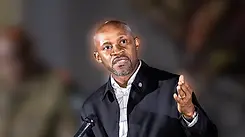
KINSHASA, October 6, 2026, Congolese government spokesperson and Communication and Media Minister Patrick Muyaya has called for stronger international sanctions against Rwanda, arguing that diplomatic pressure must be backed by measures capable of enforcing commitments on the conflict in eastern Democratic Republic of the Congo.
Speaking in an interview on TV5MONDE's Journal Afrique, Muyaya said Kinshasa's priority remains ending the fighting, easing the humanitarian crisis and securing the implementation of existing peace commitments rather than producing additional agreements that are not enforced.
Muyaya Says Stronger Measures Are Needed
Muyaya argued that international institutions risk losing credibility if decisions already adopted on the eastern DRC conflict are not implemented.
When there is an aggressor, it is not enough just to condemn; measures must be taken, stronger measures that can compel Rwanda to leave the Democratic Republic of the Congo."
He specifically called for what he described as "more robust sanctions" against Rwanda and President Paul Kagame.
I think stronger sanctions are still needed so that President Kagame, his troops and his sons fully subscribe to what all the diplomatic processes you mentioned recommend."
Muyaya's wording reflects the Congolese government's position that Rwanda is directly involved in the conflict alongside AFC/M23. Rwanda rejects Kinshasa's characterization of the conflict and has argued that its security concerns are tied to the presence of the FDLR in eastern Congo.
"It Takes Two to Dance the Rumba"
During the interview, Muyaya also defended the DRC's record under the Washington peace process, saying Kinshasa is carrying out its own commitments.
JUSTICE & CRIME
Patrick Muyaya Calls for Stronger Sanctions Against Rwanda

Oct 6, 2026
Oct 6, 2026
6 min read
Published
Updated:
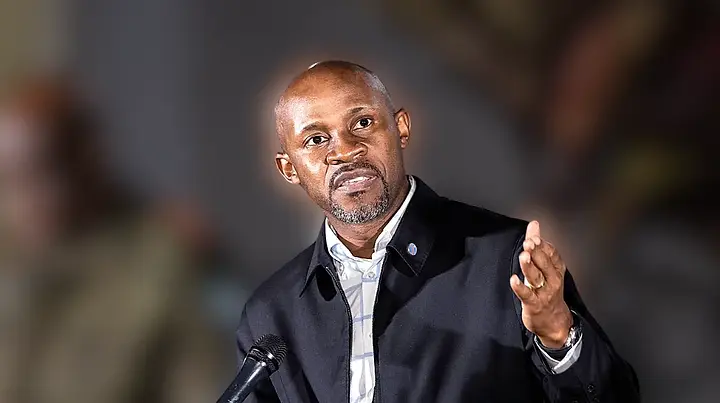
KINSHASA, October 6, 2026, Congolese government spokesperson and Communication and Media Minister Patrick Muyaya has called for stronger international sanctions against Rwanda, arguing that diplomatic pressure must be backed by measures capable of enforcing commitments on the conflict in eastern Democratic Republic of the Congo.
Speaking in an interview on TV5MONDE's Journal Afrique, Muyaya said Kinshasa's priority remains ending the fighting, easing the humanitarian crisis and securing the implementation of existing peace commitments rather than producing additional agreements that are not enforced.
Muyaya Says Stronger Measures Are Needed
Muyaya argued that international institutions risk losing credibility if decisions already adopted on the eastern DRC conflict are not implemented.
When there is an aggressor, it is not enough just to condemn; measures must be taken, stronger measures that can compel Rwanda to leave the Democratic Republic of the Congo."
He specifically called for what he described as "more robust sanctions" against Rwanda and President Paul Kagame.
I think stronger sanctions are still needed so that President Kagame, his troops and his sons fully subscribe to what all the diplomatic processes you mentioned recommend."
Muyaya's wording reflects the Congolese government's position that Rwanda is directly involved in the conflict alongside AFC/M23. Rwanda rejects Kinshasa's characterization of the conflict and has argued that its security concerns are tied to the presence of the FDLR in eastern Congo.
"It Takes Two to Dance the Rumba"
During the interview, Muyaya also defended the DRC's record under the Washington peace process, saying Kinshasa is carrying out its own commitments.
We, as the Democratic Republic of the Congo, within the framework of the Washington Accords, are fulfilling our part, but it takes two to dance the rumba."
He accused Rwanda of being responsible for continued obstacles in the peace process and linked Kigali's conduct to the continued fighting in eastern DRC.
ADVERTISEMENT
The United Nations Security Council's Resolution 2773, adopted in February 2025, condemned M23's offensives in North and South Kivu and called on the Rwanda Defence Force to cease support to M23 and withdraw from DRC territory without preconditions. The resolution also called for the DRC to end support to armed groups, particularly the FDLR.
Read UN Security Council Resolution 2773
Muyaya Points to International Sanctions Already Imposed
Muyaya said measures already taken by international partners demonstrate that responsibility for obstructing the peace process has been identified internationally.
When you read all the decisions that have been taken, whether by the European Union or by the American government, there is an aggressor who is known, and that is Rwanda.
That statement is Muyaya's interpretation of international measures. The United States has, however, imposed significant sanctions connected to Rwanda's role in eastern DRC.
In March 2026, the U.S. Treasury sanctioned the Rwanda Defence Force and four senior RDF officials, saying the RDF was supporting, training and fighting alongside M23 and accusing Rwanda of violating commitments under the Washington Accords.
Read the U.S. Treasury sanctions announcement
ADVERTISEMENT
The United States later imposed additional sanctions in June 2026 targeting networks it said were involved in trafficking minerals from M23-controlled areas of eastern DRC into Rwanda.
Read the June 2026 U.S. Treasury action
FDLR Disarmament at the Center of Kinshasa's Argument
Muyaya also addressed Rwanda's longstanding argument that the FDLR represents a security threat to Rwanda.
He said the DRC is working to remove what he described as Rwanda's recurring justification for its security posture in eastern Congo.
The recurring pretext for three decades has been the FDLR. Today, there is a plan that has been approved, including by the United Nations Security Council. We have presented a clear plan and strategy.
Kinshasa has recently highlighted a voluntary surrender and disarmament process involving FDLR factions as evidence that it is acting on its obligations.
At a September 29, 2026 Security Council meeting, the DRC said it had taken steps toward disarmament, demobilization, cantonment and repatriation of FDLR elements and asked international partners to verify implementation.
TRENDING NOW


POPULAR TODAY


ADVERTISEMENT
Read the September 29 UN Security Council transcript
African Union Facilitators Meet AFC/M23 in Goma
Muyaya's remarks came as members of an African Union panel of facilitators travelled to Goma and met AFC/M23 representatives as part of efforts to advance a political settlement.
TV5MONDE reported that the October 5 interview covered the Goma meeting, the AFC/M23 conflict, the national dialogue process and the Ebola outbreak in the DRC.
Muyaya said Kinshasa expects diplomatic initiatives to ultimately reduce pressure on civilians living under the conflict.
Our main objective is to reach the end of these processes so that we can respond to the humanitarian emergencies facing our populations on the ground."
Peace Agreements Face the Test of Implementation
Muyaya's central argument was that the eastern DRC crisis no longer suffers from a shortage of diplomatic frameworks. Washington, Doha, African Union mediation and other initiatives have created multiple channels for negotiation, but fighting has continued in parts of eastern Congo.
For Kinshasa, the next phase is therefore about enforcement. Muyaya wants international partners to move beyond statements of concern and use stronger sanctions to pressure Rwanda to comply with international demands concerning M23 and the presence of Rwandan forces in the DRC.
ADVERTISEMENT
RELATED ARTICLE