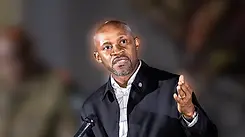
By taking an FDLR disarmament initiative to regional presidents and the United Nations, Félix Tshisekedi has strengthened Congo's diplomatic hand. His campaign connects the removal of armed threats to the defense of Congolese sovereignty—and makes Rwanda's own commitments harder to leave outside the debate.
In 2013, a proposal from Tanzania provoked an angry response from Rwanda. President Jakaya Kikwete suggested that Kigali consider dialogue with the Democratic Forces for the Liberation of Rwanda, the FDLR. Paul Kagame rejected the advice with unmistakable contempt.
Speaking at a military graduation on June 10, Rwanda's president called the proposal “utter nonsense.” He explained: “I kept quiet about this because of the contempt I have for it.”
Thirteen years later, Tanzania is again part of the diplomatic conversation about the FDLR. This time, the initiative comes from Kinshasa, under President Félix Tshisekedi, and its declared purpose is disarmament, demobilization and the eventual dissolution of the armed organization.
On October 6, 2026, Regional Integration Minister Floribert Anzuluni met Tanzanian President Samia Suluhu Hassan in Dar es Salaam as Tshisekedi's envoy. He presented Congo's roadmap and sought regional assistance for its implementation, according to ACP's account of the meeting.
That meeting captures the diplomatic gain Tshisekedi has secured. Congo has put forward a response to the security accusation that Kigali repeatedly places at the center of the conflict. It is bringing that response before presidents, mediators and international institutions, alongside its demand that Rwanda respect Congolese territory.
The significance is already political. Tshisekedi has made Congo's proposed solution part of the regional agenda. He is giving Kinshasa a stronger position from which to defend sovereignty, press for foreign-force withdrawal and pursue the restoration of peace in the east.
From Kigali's rejection to Congo's initiative
Kikwete's original intervention came on May 26, 2013, during a Great Lakes leaders' meeting in Addis Ababa alongside the African Union summit. He proposed dialogue across the region: Congo with M23, Uganda with the ADF and NALU, and Rwanda with the FDLR. explains his belief that military operations alone would not resolve the political crisis.
Rwanda's government responded by placing the proposal within the memory of the 1994 Rwandan Genocide, According to Rwandan Government, Some FDLR leaders were connected to the genocide, and Kigali rejected negotiating with the organization as a legitimate political opponent.
JUSTICE & CRIME
Tshisekedi's FDLR Diplomacy Challenges Rwanda's Security Case

Oct 8, 2026
Oct 8, 2026
14 min read

Published
Updated:
By taking an FDLR disarmament initiative to regional presidents and the United Nations, Félix Tshisekedi has strengthened Congo's diplomatic hand. His campaign connects the removal of armed threats to the defense of Congolese sovereignty—and makes Rwanda's own commitments harder to leave outside the debate.
In 2013, a proposal from Tanzania provoked an angry response from Rwanda. President Jakaya Kikwete suggested that Kigali consider dialogue with the Democratic Forces for the Liberation of Rwanda, the FDLR. Paul Kagame rejected the advice with unmistakable contempt.
Speaking at a military graduation on June 10, Rwanda's president called the proposal “utter nonsense.” He explained: “I kept quiet about this because of the contempt I have for it.”
Thirteen years later, Tanzania is again part of the diplomatic conversation about the FDLR. This time, the initiative comes from Kinshasa, under President Félix Tshisekedi, and its declared purpose is disarmament, demobilization and the eventual dissolution of the armed organization.
On October 6, 2026, Regional Integration Minister Floribert Anzuluni met Tanzanian President Samia Suluhu Hassan in Dar es Salaam as Tshisekedi's envoy. He presented Congo's roadmap and sought regional assistance for its implementation, according to ACP's account of the meeting.
That meeting captures the diplomatic gain Tshisekedi has secured. Congo has put forward a response to the security accusation that Kigali repeatedly places at the center of the conflict. It is bringing that response before presidents, mediators and international institutions, alongside its demand that Rwanda respect Congolese territory.
The significance is already political. Tshisekedi has made Congo's proposed solution part of the regional agenda. He is giving Kinshasa a stronger position from which to defend sovereignty, press for foreign-force withdrawal and pursue the restoration of peace in the east.
From Kigali's rejection to Congo's initiative
Kikwete's original intervention came on May 26, 2013, during a Great Lakes leaders' meeting in Addis Ababa alongside the African Union summit. He proposed dialogue across the region: Congo with M23, Uganda with the ADF and NALU, and Rwanda with the FDLR. explains his belief that military operations alone would not resolve the political crisis.
Rwanda's government responded by placing the proposal within the memory of the 1994 Rwandan Genocide, According to Rwandan Government, Some FDLR leaders were connected to the genocide, and Kigali rejected negotiating with the organization as a legitimate political opponent.
Foreign Minister Louise Mushikiwabo described Kikwete's suggestion as “abhorrent” and “shocking,” according to The New Times. The confrontation demonstrated how forcefully Rwanda could challenge a neighboring president's approach to the FDLR. Tanzania nevertheless defended its position: Foreign Minister Bernard Membe refused to apologize, and Kikwete publicly acknowledged the dispute.
The historical record also shows Tanzania supporting action against the FDLR after a later surrender deadline expired. Relations with Rwanda subsequently improved through reciprocal presidential visits in March 2015.
Tshisekedi's approach draws political strength from addressing the problem through Congo's responsibilities as a sovereign state. Political dialogue over Rwanda's internal order and practical arrangements for fighters to surrender are different matters. Congo is advancing a process intended to remove an armed threat from its territory.
This gives Kinshasa a clear diplomatic argument: the DRC can confront the FDLR question while insisting that its own borders, institutions and population receive the protection international law requires.
Tshisekedi puts a Congolese solution on the table
The initiative became public in late July 2026. Congolese officials later identified May 30 as the signing date of the initial protocol. Its announced provisions cover disarmament, demobilization, cantonment, repatriation or relocation, and eventual dissolution. Radio Okapi described arrangements for protected reception and voluntary return.
According to Kinshasa, the principal initial commitment involved FDLR-FOCA. Congo's UN representative subsequently reported that CNRD, FPP and RUD had accepted the voluntary process on August 29.
ADVERTISEMENT
The importance for Congo is the existence of a stated route out of armed activity. A process that brings fighters into cantonment, separates them from weapons and addresses their eventual destination can serve both national security and civilian protection.
Kinshasa also says the protocol preserves prosecution for serious crimes. Disarmament therefore need not mean impunity. Nor does discussing surrender elevate the FDLR into a recognized political authority. The government's announced objective is the removal of its military organization.
For Tshisekedi, this changes the content of Congo's diplomacy. Ministers can now present a proposed response to the FDLR issue alongside the demand for Rwandan disengagement. The campaign connects responsibility at home with accountability across the border.
That is a persuasive position for a government seeking to restore authority over its territory. It gives regional partners a concrete policy to discuss and gives Congo's sovereignty demand a practical security component.
It also gives Congolese citizens a national objective around which diplomacy can be judged. The removal of an armed group should serve the people living where that group operates: families seeking safety, communities seeking freedom from recruitment and coercion, and local authorities seeking to restore lawful administration. That is the public purpose of disarmament.
For a country defending its territorial integrity, the ability to propose solutions matters. It enables its representatives to put national priorities into negotiations and to identify the actions expected from other parties. Tshisekedi's government has used the FDLR initiative to do precisely that. Congo's policy is being presented alongside the security demands it has faced.
Regional diplomacy extends Congo's reach
Anzuluni's missions show the breadth of Tshisekedi's effort. The minister took the initiative to Togo, Angola, Congo-Brazzaville, Burundi and Uganda before his meeting with Samia in Tanzania.
Published accounts cover the discussions with AU mediator Faure Gnassingbé in Lomé, the meeting with João Lourenço in Luanda, and the reception by Denis Sassou Nguesso in Brazzaville.
The tour also included Évariste Ndayishimiye in Burundi and Yoweri Museveni in Entebbe on October 5. These engagements brought Congo's approach before actors with direct interests in the Great Lakes security order.
The October 6 meeting in Dar es Salaam continued that effort. Anzuluni presented the roadmap and asked Tanzania to accompany the process through implementation. The published Congolese readout documents diplomatic engagement and a request for assistance.
For Congo, the gain lies in sustained access and the opportunity to organize regional attention around its own proposal. Diplomacy develops through such engagement: governments explain their objectives, identify shared interests and build the relationships needed to turn commitments into coordinated action.
Tanzania is especially significant. An August presidential communiqué, had already affirmed Congolese sovereignty and called for foreign-force withdrawal. Tshisekedi's envoy was building on that relationship.
Congo's voice is consequently being carried through several regional capitals and mediation channels. That broadens the audience for its security policy and for its insistence that the obligations of peace apply to Rwanda as well as the DRC.
Washington strengthens Kinshasa's argument
The June 27, 2025 Washington peace agreement supplies the framework for this diplomatic campaign. Congo and Rwanda committed to territorial integrity, ending support to armed groups and coordinated implementation of FDLR neutralization and Rwandan disengagement or the lifting of Rwanda's defensive measures.
ADVERTISEMENT
The agreement's full text and annex incorporate the concept of operations developed through the Luanda process. They establish joint security coordination, verification and an operational timetable for reciprocal measures.
Tshisekedi's diplomatic case follows directly from that reciprocity. Congo's responsibilities are defined; Rwanda's are also defined. Security cooperation must lead toward the restoration of peace and respect for Congolese territory.
By advancing a surrender process, Kinshasa is seeking to implement the obligation most frequently emphasized by Kigali. It can then insist that discussions of implementation also address the location of Rwandan forces, their disengagement and support to M23.
This gives the FDLR initiative importance beyond the group itself. It is part of a strategy to bring the entire agreement into the diplomatic conversation, including the provisions central to Congo's sovereignty.
The principle has historical roots. The 2002 Pretoria agreement, welcomed by UNHCR, linked action against ex-FAR and Interahamwe forces to Rwandan withdrawal.
Tshisekedi's contribution is to pursue that security relationship through today's regional missions and international commitments.
The political objective is clear: a peace process in which Congo's action against an armed threat reinforces, rather than postpones, respect for its borders.
Congo brings the issue before the United Nations
Kinshasa has also brought its campaign to the UN. Prime Minister Judith Suminwa used her September General Assembly address to present the protocol and argue that the FDLR issue should no longer serve as a justification for maintaining a foreign military presence in Congo. Actualite.cd reported her intervention on September 24.
Her argument gives Congo a clear international message: the government is addressing the security issue and expects the other party to honor the same peace framework.
There is also a measurable repatriation result. At the September 29 Security Council meeting, MONUSCO chief James Swan reported the return to Rwanda of 122 former FDLR members and dependants from the mission's Sake transit camp since September began. UNifeed's account records the operation and cooperation with both governments.
These returns demonstrate that practical cooperation is possible. The figure includes family members and should be reported as a count of people. It is not a weapons inventory or certification that the entire group has been neutralized.
Congo separately highlighted a September 8 return of 120 people. Security Council Report's account says that group had been in the transit camp since May 14. The operation used an established repatriation mechanism; its full result cannot be attributed solely to the new protocol. The 120 and 122 figures must not be added together.
Swan also described MONUSCO as considering support within its existing mandate and resources. The Secretary-General's September report records Congo's plan and Rwanda's rejection. UN acknowledgment, assistance with returns and prospective support are distinct levels of involvement.
For Tshisekedi, the diplomatic value is that Congo's policy is now being discussed alongside practical operations and treaty implementation. International institutions provide a forum in which both governments can be asked to account for their commitments.
Verification serves Congo's campaign by turning its policy into evidence that partners can assess. Published progress would strengthen Kinshasa's demand for equally transparent information about Rwandan disengagement.
TRENDING NOW


POPULAR TODAY


ADVERTISEMENT
Rwanda's security argument faces a concrete Congolese response
The FDLR has long occupied a central place in Kagame's public explanation of regional security. In February 2023, he described the matter in terms of Rwanda's survival, saying “it's about our lives,” according to KT Press.
The organization has a documented record of abuses. Formed in 2000, it included leaders connected to the 1994 genocide. The UN sanctions narrative records killings, sexual violence and child recruitment. Addressing this threat benefits Congolese communities as well as regional security.
Tshisekedi's initiative therefore targets a problem that has harmed Congo itself. Ending armed activity, recruitment and coercion can strengthen state authority and improve security for people who have lived under militia influence.
Rwanda has rejected the protocol as insufficient. Foreign Minister Olivier Nduhungirehe dismissed the announcement in July, while a government response to Suminwa's September address insists on controlled neutralization through Washington's mechanisms.
That objection makes the content of implementation important; it does not cancel Congo's sovereignty or Rwanda's commitments. A credible process that dismantles FDLR capacity would substantially weaken the factual basis for continued operations justified by that threat.
The campaign must also address inherited obstacles. The June UN experts' report documented FARDC–FDLR cooperation earlier in 2026. Le Monde and Critical Threats reported conditions attached to dissolution, including demands concerning Rwandan military operations and political space. Ending those military links and delivering disarmament through agreed mechanisms would protect the diplomatic ground Kinshasa has gained.
The central point remains firmly in Congo's favor: its government has advanced an approach to the security problem and placed reciprocal obligations before international partners. Kigali's answer must engage with that process and with Rwanda's own responsibilities.
Sovereignty remains the legal foundation
The strongest part of Congo's position is that an armed threat does not create an unrestricted right to operate on another country's territory. Rwanda's security concerns must be examined within international law.
Security Council Resolution 2773, adopted on February 21, 2025, called for Rwandan forces to cease support to M23 and withdraw from Congo without preconditions. The resolution also demanded action against support to the FDLR. Both matters belong in the discussion.
The UN Charter sets conditions for self-defense; necessity and proportionality also apply. The International Court of Justice's 2005 judgment on Uganda's intervention in Congo demonstrates that a security explanation can fail legal scrutiny. That judgment concerned Uganda, but the distinction between a claimed concern and lawful military action is directly relevant to the debate.
Tshisekedi's disarmament diplomacy strengthens the pursuit of a sovereign Congolese state capable of protecting its citizens, ending armed alliances and demanding the departure of foreign forces.
Defining victory in Congolese terms
For Congo, victory means restoring territorial sovereignty, protecting communities, enabling displaced families to return home, and ending the influence of armed groups and foreign forces. Tshisekedi's FDLR disarmament campaign advances these objectives by combining security initiatives, regional diplomacy and international accountability, strengthening Kinshasa's position while increasing scrutiny of Rwanda's military presence in eastern Congo.
Unlike in 2013, when former Tanzanian President Jakaya Kikwete's proposal for dialogue with the FDLR met strong opposition from Kigali, Tshisekedi has brought a Congolese disarmament initiative before regional leaders and the United Nations, linking it to existing peace commitments.
This represents a visible diplomatic gain for Kinshasa, although its lasting impact will depend on verified disarmament, safe repatriation and reciprocal military disengagement. By addressing Rwanda's longstanding security concerns while demanding respect for Congolese sovereignty, Tshisekedi has strengthened the diplomatic foundation for pursuing peace, territorial restoration and national stability.
ADVERTISEMENT
RELATED ARTICLE