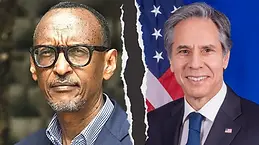
The Democratic Republic of Congo’s decision to create a paramilitary force to guard its mines is more than a domestic law‑and‑order move. Officials said in April that a $100 million programme will recruit about 2,500–3,000 guards by December and expand to more than 20,000 by 2028. The force will take over from regular troops at mine sites, escort mineral shipments, and protect foreign investments. Funded through partnerships with the United States and the United Arab Emirates, the initiative aims to improve transparency and signals a broader shift in the global contest for critical minerals.
Congo’s minerals and the energy transition
Congo plays an outsized role in global supply chains. It accounts for roughly 70 % of global cobalt production and is the world’s second‑largest copper supplier. These minerals are essential for electric‑vehicle batteries, renewable‑energy storage, and the wiring needed for clean‑energy infrastructure, and Congo also holds significant reserves of lithium, coltan, and gold. With demand soaring, governments and companies want sources that meet environmental and governance standards. Congolese authorities hope that a dedicated security force will stabilise supply chains disrupted by armed groups and smuggling and reassure investors who view secure, traceable supply chains as non‑negotiable.
Washington’s calculus: economic security and geopolitical competition
For the United States, support for the mining guard is tied to a broader push to reduce dependence on China for critical minerals. Beijing‑linked firms dominate refining and processing, and Chinese companies hold sizeable stakes in Congolese mines. The U.S.–Congo minerals partnership signed in 2025 aims to strengthen supply chains and build local processing capacity. The State Department frames its involvement as a blend of economic security and geopolitics: Washington seeks to convert peace and investment deals into influence over Congo’s supply chain and ensure that U.S. investors have regulatory clarity. By backing the guard, the U.S. hopes improved security and traceability will attract American capital and blunt China’s dominance.
Why the UAE is interested
The United Arab Emirates’ support reflects its ambition to be a global commodities and logistics hub. Dubai has emerged as a major trading and refining centre for precious metals. A 2026 gold‑supply deal between Congo and UAE‑based Paradigm Holdings underscored this role: the UAE’s infrastructure, regulatory environment, and status as a commodities hub make it a powerful platform for cross‑border trade. Paradigm’s founder said being based in the UAE enables the company to build long‑term supply networks that link African producers to international buyers. By co‑financing Congo’s mining guard, the UAE strengthens its access to Congolese metals and cements its role as a regional logistics centre.
Tackling illegal mining and smuggling
A major driver behind the security plan is the scale of illegal mining and smuggling. Congo’s mines inspectorate said the new unit aims to curb smuggling and insecurity in the sector and to boost investor confidence. Years of weak oversight and conflict have allowed armed groups and informal networks to siphon minerals across borders. A 2025 audit found that companies underreported $16.8 billion in revenue between 2018 and 2023, depriving community development funds of more than $50 million; auditors urged suspending non‑compliant firms and tightening oversight. Investors tell U.S. officials they need fiscal and regulatory clarity before committing capital. By professionalising security and improving traceability, authorities hope to curb illicit networks and recover revenue.
Eastern Congo’s fragile security landscape
MINING AND MINERALS
Why the US and UAE Are Backing Congo’s Mining Security Plan

28 avr. 2026
15 mai 2026
5 min read

Publié
Mis à jour:
The Democratic Republic of Congo’s decision to create a paramilitary force to guard its mines is more than a domestic law‑and‑order move. Officials said in April that a $100 million programme will recruit about 2,500–3,000 guards by December and expand to more than 20,000 by 2028. The force will take over from regular troops at mine sites, escort mineral shipments, and protect foreign investments. Funded through partnerships with the United States and the United Arab Emirates, the initiative aims to improve transparency and signals a broader shift in the global contest for critical minerals.
Congo’s minerals and the energy transition
Congo plays an outsized role in global supply chains. It accounts for roughly 70 % of global cobalt production and is the world’s second‑largest copper supplier. These minerals are essential for electric‑vehicle batteries, renewable‑energy storage, and the wiring needed for clean‑energy infrastructure, and Congo also holds significant reserves of lithium, coltan, and gold. With demand soaring, governments and companies want sources that meet environmental and governance standards. Congolese authorities hope that a dedicated security force will stabilise supply chains disrupted by armed groups and smuggling and reassure investors who view secure, traceable supply chains as non‑negotiable.
Washington’s calculus: economic security and geopolitical competition
For the United States, support for the mining guard is tied to a broader push to reduce dependence on China for critical minerals. Beijing‑linked firms dominate refining and processing, and Chinese companies hold sizeable stakes in Congolese mines. The U.S.–Congo minerals partnership signed in 2025 aims to strengthen supply chains and build local processing capacity. The State Department frames its involvement as a blend of economic security and geopolitics: Washington seeks to convert peace and investment deals into influence over Congo’s supply chain and ensure that U.S. investors have regulatory clarity. By backing the guard, the U.S. hopes improved security and traceability will attract American capital and blunt China’s dominance.
PUBLICITÉ
Why the UAE is interested
The United Arab Emirates’ support reflects its ambition to be a global commodities and logistics hub. Dubai has emerged as a major trading and refining centre for precious metals. A 2026 gold‑supply deal between Congo and UAE‑based Paradigm Holdings underscored this role: the UAE’s infrastructure, regulatory environment, and status as a commodities hub make it a powerful platform for cross‑border trade. Paradigm’s founder said being based in the UAE enables the company to build long‑term supply networks that link African producers to international buyers. By co‑financing Congo’s mining guard, the UAE strengthens its access to Congolese metals and cements its role as a regional logistics centre.
Tackling illegal mining and smuggling
A major driver behind the security plan is the scale of illegal mining and smuggling. Congo’s mines inspectorate said the new unit aims to curb smuggling and insecurity in the sector and to boost investor confidence. Years of weak oversight and conflict have allowed armed groups and informal networks to siphon minerals across borders. A 2025 audit found that companies underreported $16.8 billion in revenue between 2018 and 2023, depriving community development funds of more than $50 million; auditors urged suspending non‑compliant firms and tightening oversight. Investors tell U.S. officials they need fiscal and regulatory clarity before committing capital. By professionalising security and improving traceability, authorities hope to curb illicit networks and recover revenue.
PUBLICITÉ
Eastern Congo’s fragile security landscape
Success will depend on conditions in eastern Congo, where conflict and illicit trade are intertwined. Fighting involving the Rwanda‑backed M23 rebel group has killed thousands and displaced hundreds of thousands. U.N. experts report that minerals from M23‑controlled areas are smuggled across borders, fueling insurgents and destabilising the region. A U.S.-brokered peace deal aims to link security commitments to legitimate mineral exports. Still, the continued presence of armed groups means that securing mines will require more than guards and will depend on progress in negotiations and disarmament.
Tshisekedi’s governance reforms
President Félix Tshisekedi has tied the security initiative to a broader anti‑corruption drive. At an April 2026 meeting, he stressed the urgent need to combat mining fraud and illegal exploitation and to reinforce governance. He condemned large‑scale unregulated operations that extract billions without benefiting the treasury and ordered the seizure of illegal equipment, prosecution of perpetrators, and strengthening of the General Inspectorate of Mines. These reforms seek to dismantle informal networks and restore state authority.
Economic ramifications and investor confidence
Beyond security, the mining guard is part of a shift from resource extraction to resource management. Smuggling, misreporting, and illicit trade have eroded state revenues and deterred legitimate investment. To regain control, Congo has set up a strategic cobalt reserve, reserving 10 % of export volumes for state use to influence prices, and has tightened audits and enforcement. Analysts say secure and traceable supply chains could encourage companies to process minerals domestically rather than exporting raw ore. U.S. companies have expressed strong interest in Congolese assets, and the inspectorate says boosting investor confidence and recovering revenue are core goals. The plan’s success, however, hinges on its ability to operate impartially, avoid abuses, and support broader peacebuilding measures.
Tendances actuelles


Populaire aujourd'hui


PUBLICITÉ
Conclusion
Congo’s mining security plan signals a shift in how critical minerals are managed. By creating a dedicated force, Kinshasa aims to regain control of its resources, reduce smuggling, and attract more stable investment.
Support from the US and UAE reflects broader interests. Washington is seeking more secure supply chains beyond China, while the UAE is positioning itself in the global commodities trade
PUBLICITÉ
Articles connexes