The Democratic Republic of Congo is preparing to strengthen control over its mining sector through the creation of a dedicated security force, backed by support from the United States and the United Arab Emirates, according to a Bloomberg report.
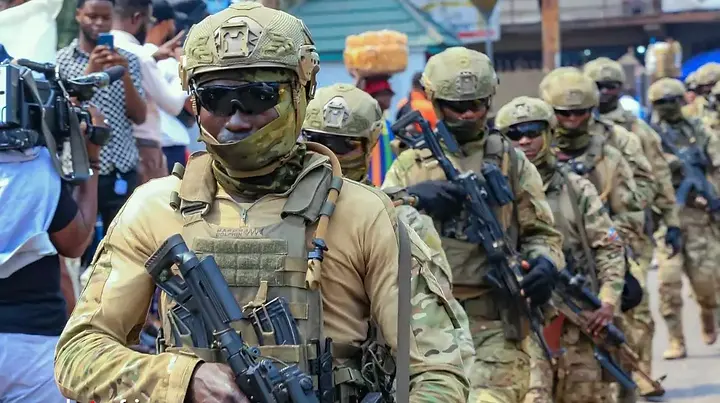
The General Inspectorate of Mines (IGM) said the initiative will involve an initial investment of $100 million and the deployment of up to 3,000 armed recruits by December. The program is expected to expand to 20,000 mining guards nationwide by 2028.
According to the IGM, the new unit will be responsible for securing mining sites, ensuring the traceable transport of minerals, and gradually replacing security forces currently operating in mining zones.
At present, police oversee most mining operations, although military and presidential guard personnel are also deployed in some areas, often outside the framework of the country’s mining regulations. The new force is expected to standardize oversight and bring operations in line with existing legal provisions.
The initiative comes as Congo seeks to reinforce governance in a sector that remains central to both its economy and global supply chains. The country is the world’s largest producer of cobalt and the second-largest source of copper, two minerals critical to the energy transition.
While large-scale industrial projects dominate exports, much of Congo’s mining activity is still carried out by artisanal miners, creating ongoing challenges around regulation, security, and traceability.
The first deployments are expected in the mineral-rich Katanga region in the southeast, where copper and cobalt production is concentrated, alongside reserves of zinc, lithium, gold, tin, and tantalum.
The IGM did not specify whether funding from the United States and the United Arab Emirates would come from public or private sources.
The move follows a broader shift in Congo’s economic positioning. In December, Kinshasa signed a strategic partnership with Washington aimed at strengthening cooperation in mining and infrastructure, including commitments to improve transparency, reduce corruption, and address insecurity in the sector.
Efforts to tighten control over mining activity also align with directives from President Félix Tshisekedi, who has called for an end to illegal mining operations. Authorities estimate that illicit activities have cost the state billions of dollars in lost revenue, while also contributing to environmental damage.
MINING AND MINERALS
DRC to Deploy 20,000 Mining Guards in $100M Plan Backed by US and UAE

Apr 27, 2026
May 15, 2026
3 min read
Published
Updated:
The Democratic Republic of Congo is preparing to strengthen control over its mining sector through the creation of a dedicated security force, backed by support from the United States and the United Arab Emirates, according to a Bloomberg report.
The General Inspectorate of Mines (IGM) said the initiative will involve an initial investment of $100 million and the deployment of up to 3,000 armed recruits by December. The program is expected to expand to 20,000 mining guards nationwide by 2028.
According to the IGM, the new unit will be responsible for securing mining sites, ensuring the traceable transport of minerals, and gradually replacing security forces currently operating in mining zones.
ADVERTISEMENT
At present, police oversee most mining operations, although military and presidential guard personnel are also deployed in some areas, often outside the framework of the country’s mining regulations. The new force is expected to standardize oversight and bring operations in line with existing legal provisions.
The initiative comes as Congo seeks to reinforce governance in a sector that remains central to both its economy and global supply chains. The country is the world’s largest producer of cobalt and the second-largest source of copper, two minerals critical to the energy transition.
While large-scale industrial projects dominate exports, much of Congo’s mining activity is still carried out by artisanal miners, creating ongoing challenges around regulation, security, and traceability.
ADVERTISEMENT
The first deployments are expected in the mineral-rich Katanga region in the southeast, where copper and cobalt production is concentrated, alongside reserves of zinc, lithium, gold, tin, and tantalum.
The IGM did not specify whether funding from the United States and the United Arab Emirates would come from public or private sources.
The move follows a broader shift in Congo’s economic positioning. In December, Kinshasa signed a strategic partnership with Washington aimed at strengthening cooperation in mining and infrastructure, including commitments to improve transparency, reduce corruption, and address insecurity in the sector.


POPULAR TODAY


ADVERTISEMENT
Efforts to tighten control over mining activity also align with directives from President Félix Tshisekedi, who has called for an end to illegal mining operations. Authorities estimate that illicit activities have cost the state billions of dollars in lost revenue, while also contributing to environmental damage.
Under the new approach, the government plans to prosecute those involved in illegal mining, confiscate equipment, and redistribute resources to compliant operators.
The creation of a dedicated mining security force reflects a broader attempt to move from fragmented oversight toward a more structured system, as Congo looks to secure its strategic resources and strengthen confidence in its mining sector.
ADVERTISEMENT
RELATED ARTICLE


