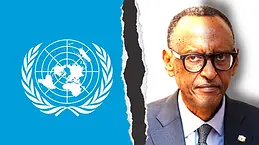
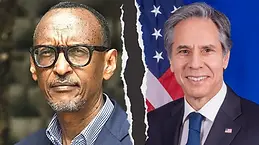
The UN Security Council has formally recorded Front pour la Refondation de la Nation as another name for the already-sanctioned Alliance Fleuve Congo. The update follows Joseph Kabila's announcement of the FRN and comes as DR Congo's foreign minister tells France 24 that Paul Kagame is the rebel front's real leader.
The United Nations Security Council's sanctions committee for the Democratic Republic of the Congo has updated its records to identify the Front pour la Refondation de la Nation (FRN) as an alternative name for the Alliance Fleuve Congo (AFC), an armed-political coalition already subject to UN sanctions.
The change, announced by the UN on November 11, comes roughly a month after former Congolese president Joseph Kabila publicly assumed leadership of the newly announced FRN, which brings together figures associated with the AFC and the Rwanda-backed M23 rebellion.
The UN decision is consequential because it establishes FRN as an alias of the existing sanctioned entity AFC in the official sanctions record.
The update also follows striking remarks by DRC Foreign Minister Thérèse Kayikwamba Wagner, who told France 24 in an interview published on November 11 that, in her government's assessment, Kagame—not Kabila—is the real leader of the front.
What exactly did the UN change?
In press release SC/16506, the Security Council Committee established under Resolution 1533 (2004) announced an amendment to a single entity on its DRC sanctions list. The record reads:
CDe.010 — ALLIANCE FLEUVE CONGO (AFC) Also known as: Front pour la Refondation de la Nation (FRN) Initially listed: July 14, 2026 Entry amended: November 11, 2026
The entry still identifies AFC as the principal listed name. FRN now appears in its also known as field, which helps authorities, banks and other implementing bodies recognize the designated organization even when a different name is used.
That distinction is essential. The United Nations has amended the identifying information for a previously designated group, rather than announcing that the Security Council passed an entirely new sanctions package on November 11.
UN SANCTIONS
UN Adds Kabila's FRN to Existing AFC Sanctions Listing

Nov 12, 2026
Nov 12, 2026
7 min read

Published
Updated:
The UN Security Council has formally recorded Front pour la Refondation de la Nation as another name for the already-sanctioned Alliance Fleuve Congo. The update follows Joseph Kabila's announcement of the FRN and comes as DR Congo's foreign minister tells France 24 that Paul Kagame is the rebel front's real leader.
The United Nations Security Council's sanctions committee for the Democratic Republic of the Congo has updated its records to identify the Front pour la Refondation de la Nation (FRN) as an alternative name for the Alliance Fleuve Congo (AFC), an armed-political coalition already subject to UN sanctions.
The change, announced by the UN on November 11, comes roughly a month after former Congolese president Joseph Kabila publicly assumed leadership of the newly announced FRN, which brings together figures associated with the AFC and the Rwanda-backed M23 rebellion.
The UN decision is consequential because it establishes FRN as an alias of the existing sanctioned entity AFC in the official sanctions record.
The update also follows striking remarks by DRC Foreign Minister Thérèse Kayikwamba Wagner, who told France 24 in an interview published on November 11 that, in her government's assessment, Kagame—not Kabila—is the real leader of the front.
What exactly did the UN change?
In press release SC/16506, the Security Council Committee established under Resolution 1533 (2004) announced an amendment to a single entity on its DRC sanctions list. The record reads:
CDe.010 — ALLIANCE FLEUVE CONGO (AFC) Also known as: Front pour la Refondation de la Nation (FRN) Initially listed: July 14, 2026 Entry amended: November 11, 2026
The entry still identifies AFC as the principal listed name. FRN now appears in its also known as field, which helps authorities, banks and other implementing bodies recognize the designated organization even when a different name is used.
ADVERTISEMENT
That distinction is essential. The United Nations has amended the identifying information for a previously designated group, rather than announcing that the Security Council passed an entirely new sanctions package on November 11.
Why was AFC already sanctioned?
The UN's published explanation for AFC's July 14 designation describes the organization as a political-military movement in eastern Congo allied with the already-sanctioned March 23 Movement/Congolese Revolutionary Army (M23/ARC).
According to that UN narrative summary, AFC has provided political, logistical and operational support to M23 and other armed groups engaged in destabilizing activities. The UN also records AFC's calls for the overthrow of the Congolese government and cites serious abuses attributed to M23, including attacks on civilians, killings, displacement and recruitment of children.
The UN separately listed AFC political leader Corneille Nangaa in July 2026, describing his role in coordinating the movement's activities with M23. This older listing gives context to the new FRN alias but is not proof that every person associated with the later front is individually designated.
How does Joseph Kabila fit into the new FRN?
On October 12, 2026, former president Joseph Kabila announced his leadership of the Front pour la Refondation de la Nation, a front associated with AFC/M23 figures, according to France 24's account of the development.
For Kinshasa, the emergence of the FRN has sharpened an argument it has long made: that changes in the rebellion's name or political leadership do not necessarily change its military structure, foreign support or activities on Congolese territory.
ADVERTISEMENT


Popular Today


The UN's alias amendment addresses the identity of the sanctioned organization, not the personal legal responsibility of Kabila. The November 11 announcement does not state that Kabila has been individually added to the UN sanctions list. Neither does it identify him as the subject of a new asset freeze or travel ban under this particular amendment.
Kayikwamba on France 24: 'It's Paul Kagame, the real leader'
During a France 24 interview broadcast on November 11, journalist Marc Perelman asked Kayikwamba a direct question: did she consider Joseph Kabila or Paul Kagame to be the real leader of the FRN?
Her answer in French was categorical: “C'est Paul Kagame. Le véritable chef.” In English: “It's Paul Kagame. The real leader.”
Kayikwamba characterized the FRN's appearance as “a reconfiguration, a change of choreography.” In her analysis, Kabila's prominent role gives a new Congolese political face to a conflict she says continues to be driven, funded and sustained by Rwanda.
The minister further alleged that Rwandan troop numbers in eastern DRC had increased despite Washington peace commitments. She argued that minerals extracted in rebel-controlled areas were being transported toward Kigali, and said that the country's conflict should not be portrayed solely as an internal disagreement between Congolese political factions.
ADVERTISEMENT
Those are statements and allegations by Congo's foreign minister. The UN's November 11 administrative amendment does not itself make a finding that Kagame personally commands the FRN, and it should not be presented as independent confirmation of Kayikwamba's assertion.
The distinction matters even as UN records already document the AFC's links to M23, and UN investigations have previously examined the involvement of Rwandan military forces in the eastern Congo conflict.
What does the sanctions amendment mean in practice?
The UN's DRC sanctions regime includes a targeted asset freeze for designated entities and individuals, a travel ban for designated individuals, and an arms embargo applicable to non-governmental armed groups and individuals operating in the DRC. Humanitarian exemptions and other applicable conditions remain part of the legal framework.
Adding an alias can help prevent confusion over the name of a group that is already listed. In practical terms, member states and institutions implementing the sanctions can now see FRN explicitly associated with AFC's existing UN designation.
It does not mean the UN is imposing a personal travel ban on everyone who publicly associates with the FRN. Individuals are subject to individual restrictions when the relevant legal criteria and listings apply; the November 11 press release does not make those additional designations.
For observers of the Congolese conflict, the update is nonetheless notable: the designation of AFC remains in place, and the Security Council committee now recognizes the FRN label in the same entry.
ADVERTISEMENT
Related Articles