At COP31 in Antalya, President Félix Tshisekedi presented DR Congo's forests, the Kivu-Kinshasa Green Corridor, Grand Inga, the Lobito Corridor and a new vision for Kinshasa as parts of a climate agenda linking clean energy, industrial jobs, fair partnerships and lasting peace.
ANTALYA, Türkiye - President Félix-Antoine Tshisekedi has urged world leaders to move beyond climate pledges and finance projects that protect nature while producing electricity, employment and economic opportunities for the people who live alongside Africa's most important ecosystems.
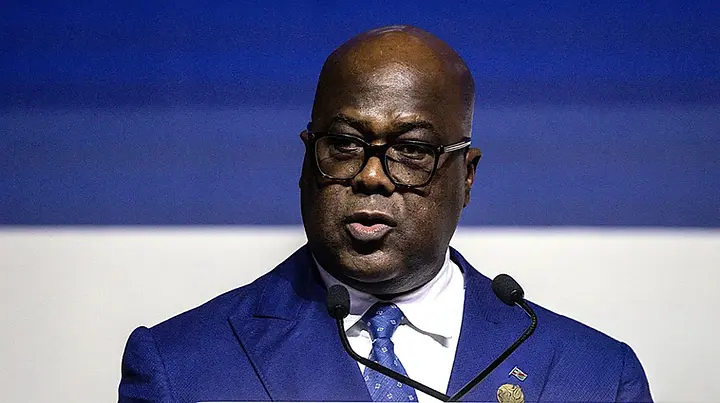
Speaking on November 11 at the COP31 Leaders' Summit in Antalya, Türkiye, the president put the Democratic Republic of the Congo at the centre of his argument: a country that safeguards much of the Congo Basin rainforest, possesses vast hydropower potential and supplies minerals needed for the global energy transition should not remain on the margins of the industries and prosperity that transition creates.
The address linked several strands of his government's development programme: the vast Kivu-Kinshasa Green Corridor, sustainable agriculture, electricity access, Grand Inga, the Lobito Corridor, mineral processing, planned urban expansion in Kinshasa and an end to the war economy in eastern Congo. His remarks were also published by the DRC presidency.
From the Paris Agreement to a demand for proof
Tshisekedi began by thanking Turkish President Recep Tayyip Erdoğan, the Turkish government and people for their welcome and recognizing Australia's role in the negotiations. COP31 is taking place from November 9 to 20, 2026, with the heads-of-state summit held on November 11 and 12.
He recalled the central promise of the Paris Agreement: holding global temperature increases well below 2 degrees Celsius and pursuing efforts to limit them to 1.5 degrees. The Paris Agreement entered into force on November 4, 2016, making the Antalya gathering a moment to assess what a decade of commitments has achieved.
In the president's words, translated from French: "The time for announcements is ending. The time for proof must follow."
He said COP31 should be judged by implementation: whether commitments become investments, proposed solutions become functioning projects, and climate action produces shared prosperity. For the DRC, that means not only protecting forests for the world's benefit but also improving the lives of Congolese citizens.
The Congo Basin: a global asset with local responsibilities
ENVIRONMENT
Tshisekedi: The World Cannot Go Green Without Africa

Nov 12, 2026
Nov 12, 2026
11 min read
Published
Updated:
At COP31 in Antalya, President Félix Tshisekedi presented DR Congo's forests, the Kivu-Kinshasa Green Corridor, Grand Inga, the Lobito Corridor and a new vision for Kinshasa as parts of a climate agenda linking clean energy, industrial jobs, fair partnerships and lasting peace.
ANTALYA, Türkiye - President Félix-Antoine Tshisekedi has urged world leaders to move beyond climate pledges and finance projects that protect nature while producing electricity, employment and economic opportunities for the people who live alongside Africa's most important ecosystems.
Speaking on November 11 at the COP31 Leaders' Summit in Antalya, Türkiye, the president put the Democratic Republic of the Congo at the centre of his argument: a country that safeguards much of the Congo Basin rainforest, possesses vast hydropower potential and supplies minerals needed for the global energy transition should not remain on the margins of the industries and prosperity that transition creates.
The address linked several strands of his government's development programme: the vast Kivu-Kinshasa Green Corridor, sustainable agriculture, electricity access, Grand Inga, the Lobito Corridor, mineral processing, planned urban expansion in Kinshasa and an end to the war economy in eastern Congo. His remarks were also published by the DRC presidency.
From the Paris Agreement to a demand for proof
Tshisekedi began by thanking Turkish President Recep Tayyip Erdoğan, the Turkish government and people for their welcome and recognizing Australia's role in the negotiations. COP31 is taking place from November 9 to 20, 2026, with the heads-of-state summit held on November 11 and 12.
He recalled the central promise of the Paris Agreement: holding global temperature increases well below 2 degrees Celsius and pursuing efforts to limit them to 1.5 degrees. The Paris Agreement entered into force on November 4, 2016, making the Antalya gathering a moment to assess what a decade of commitments has achieved.
In the president's words, translated from French: "The time for announcements is ending. The time for proof must follow."
He said COP31 should be judged by implementation: whether commitments become investments, proposed solutions become functioning projects, and climate action produces shared prosperity. For the DRC, that means not only protecting forests for the world's benefit but also improving the lives of Congolese citizens.
The Congo Basin: a global asset with local responsibilities
Tshisekedi told delegates that the DRC contains more than 60% of the forests of the Congo Basin, the world's second-largest tropical rainforest region and one of its major carbon reservoirs. He also highlighted the Congo River, second globally by water discharge, and the exceptional biodiversity supported by the country's forests and waterways.
Those resources make the DRC important to global climate policy. Standing forests store carbon, sustain wildlife and support the livelihoods of forest-dependent communities. But the president's argument went beyond international recognition: preserving this environmental wealth must also improve opportunities for local and Indigenous populations.
The Congolese presidency's account of the speech stressed the link between conservation, economic inclusion and better living conditions.
ADVERTISEMENT
Kivu-Kinshasa Green Corridor: conservation tied to livelihoods
At the heart of the address was the Kivu-Kinshasa Green Corridor, an initiative that Tshisekedi described as covering more than 540,000 square kilometres. Its stated aim is to reconcile biodiversity conservation with sustainable agriculture, access to clean energy and better connections for isolated territories.
In practical terms, the vision is to make forest protection compatible with economic activity rather than presenting conservation and development as opposing choices.
Agricultural practices that maintain productive land, cleaner sources of household energy and transport links for producers could help reduce pressure to clear additional forest.
Tshisekedi framed the corridor as an opportunity for forest protection to create lasting prosperity for local communities and Indigenous peoples. Radio Okapi's November 12 coverage likewise highlighted the initiative's intended combination of agriculture, biodiversity and clean energy.
The 540,000-square-kilometre figure describes the stated initiative's scale, not proof that every part has already been restored, protected or developed. Its long-term impact will depend on implementation, local participation, land rights, monitoring and sustainable financing.
Electricity as a development priority and climate justice issue
A central theme of the speech was that electrification is both a development emergency and a matter of climate justice. Congo's renewable power resources could supply homes, schools, healthcare facilities and industry while reducing dependence on more polluting or damaging energy sources.
Tshisekedi cited a national digital inventory identifying 3,349 potential hydropower sites with a combined estimated resource exceeding 160 gigawatts. An October report on the government's HYDRO RDC mapping initiative put that estimate at 167.25 GW across the same number of sites.
These numbers describe estimated potential, not electricity already generated. There is also a methodological difference among official sources: the Ministry of Water Resources and Electricity's public site separately displays 3,348 sites and approximately 94 GW of identified potential. Clear, comparable technical inventories will matter as projects move toward feasibility studies and financing.
For the president, the central policy goal is unmistakable: turn renewable energy potential into actual electricity supply and use that power to support jobs and productive activity within the DRC.
Grand Inga and the US strategic partnership
Tshisekedi described Grand Inga as a cornerstone of the country's clean-power ambitions, referring to a possible long-term capacity of 42,000 megawatts. At that scale, a fully developed project could become a major source of electricity for Congo and regional markets.
He said that, within the strategic partnership with the United States, the two countries had made decisions necessary to advance the project and begun a joint governance approach. The wider DRC-US strategic partnership agreement, signed in December 2025, establishes a framework for cooperation on infrastructure, investment and critical minerals.
ADVERTISEMENT


The announcement does not mean that 42,000 MW has been built or financed. Grand Inga's ultimate scope remains an ambition requiring detailed technical planning, commercial arrangements, environmental and social safeguards, and major investment. The difference between a development framework and operational power generation is fundamental.
For Congolese households and businesses, the measure of progress will be whether new power projects lead to reliable, affordable electricity and whether industrial demand can grow without leaving ordinary consumers behind.
Lobito Corridor: moving from raw-material exports to integration
Tshisekedi linked Grand Inga to the Lobito Corridor, presenting transport and energy connectivity as complementary foundations of regional integration.
The corridor aims to connect mineral- and agriculture-producing areas in the DRC and Zambia with Angola's Atlantic coast, lowering transport barriers and supporting trade. In the president's vision, better routes should help create an African economic network that can move goods, support businesses and attract investment.
The opportunity is larger than shipping raw materials abroad. Rail links, reliable electricity and cross-border infrastructure could also make it more feasible for Congolese enterprises to process materials, manufacture products and participate in regional supply chains. Yet the eventual distribution of benefits will depend on how investments are structured, whether Congolese firms can compete and what local value is created.
Congo wants to process its minerals and create its own jobs
Tshisekedi emphasized that the DRC intends to contribute to the global energy transition not only by providing strategic minerals and renewable resources but also by industrializing at home.
That means expanding domestic processing, developing technical skills, encouraging investment in value-added industries and creating employment, especially for young Congolese people. The argument reflects a recurring challenge for mineral-rich economies: supplying indispensable raw materials to global industries while capturing only a limited share of the finished products' value.
For the president, a fair green transition requires stronger domestic industries and practical technology transfers, not simply increased demand for Congolese copper, cobalt or other minerals.
Kinshasa Kia Mona: a greener plan for a growing capital
Turning from forests and energy to urban development, Tshisekedi warned that many African cities are expanding rapidly and must become more resilient and energy-efficient. He called for urban systems that treat waste as a resource and incorporate environmental protection from the planning stage.
He highlighted Kinshasa Kia Mona, a proposed expansion of the capital covering 43,300 hectares at Maluku. According to the DRC presidency, the project's concept integrates urban planning, environmental preservation and multimodal transport.
ADVERTISEMENT
The emphasis on planning matters in a fast-growing city where road access, waste management, flood resilience, housing and utility services are interconnected. A development of this scale would need to translate its urban vision into workable transport links, infrastructure, services and safeguards for residents.
Kinshasa Kia Mona is a project presented as a vision for expansion, not a completed new city. Its delivery, affordability and environmental performance will determine how much it changes everyday life in Kinshasa.
No lasting climate protection without peace in eastern Congo
The most political part of Tshisekedi's address connected the climate agenda to the ongoing conflict in eastern DRC. He said that fighting driven by the competition for natural resources had cost lives, displaced millions and damaged ecosystems.
His argument was that forests and landscapes cannot be protected effectively when armed groups control territory, communities are displaced, and illicit resource networks benefit from insecurity. He said Congo had chosen dialogue and negotiations with the support of international partners, but argued that lasting peace must also be built on the ground.
That requires traceability in mineral supply chains, an end to illicit trafficking and sustainable livelihoods for communities. In his formulation, protecting forests also means dismantling the economic incentives that sustain conflict.
The security backdrop is documented internationally. UN Security Council Resolution 2773, adopted in February 2025, condemned the Rwanda-backed M23 offensive, demanded that M23 withdraw from occupied areas and called for Rwandan forces to stop supporting M23 and leave Congolese territory without preconditions.
The speech's broader point was that climate policy cannot be separated from civilian security, transparent mineral trade and the conditions that allow families to rebuild their lives.
Fair partnerships, predictable finance and technology transfer
Tshisekedi concluded by arguing that Africa cannot remain on the sidelines of the global ecological transition. Congo's forests, water resources, minerals, agriculture and young population are all part of the planet's climate future, he said, but international cooperation must produce concrete benefits for African societies.
He called for equitable partnerships, accessible and predictable climate financing, and effective technology transfer. For forest conservation, this could include funding that reaches protection programmes and forest-dependent communities. For energy and industry, it means investment, skills and technology that help convert potential into functioning facilities and lasting jobs.
His closing message returned to the ten-year anniversary of the Paris Agreement: governments had already agreed on the direction of travel; Antalya should help provide the means to follow it.
