Luanda isn’t just about bustling markets and oceanfront lounges it also hides some truly special libraries if you know where to look. From grand institutions guarding centuries of history to trendy media hubs buzzing with students, here are six public libraries in and around Luanda that every book lover (or Wi-Fi seeker) should check out. (Yes, libraries can be cool – read on!)
1. Biblioteca Nacional de Angola (National Library)
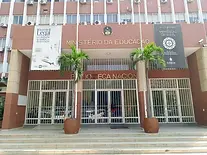
The National Library is the big kahuna of Angolan libraries an imposing building in the Alvalade/Maculusso area of central Luanda, not far from the Ministries. Inside, it’s all scholarly quiet and old-school charm. Tall shelves hold rare Angolan books and archives, making it more of a research temple than a casual hangout.
Don’t expect a café or kids running around; do expect to feel the weight of history (and maybe a whiff of that old-book smell). The architecture itself is worth a look a mix of sober 1970s design and traditional motifs, often admired by locals in passing.
Price:
Free (no kwanza needed!). That said, this isn’t a grab-and-go kind of place – security might ask you to register and lockers are provided for bags.
Local tip:
Call ahead to verify opening hours, as they can be a bit unpredictable. Casual visitors are welcome to browse the general collections, but if you’re hunting specific historical documents, be prepared for some paperwork researchers often need to request access in advance.
The National Library may not be a typical tourist stop, but for culture geeks it’s a quiet oasis of literature in the middle of Luanda’s chaos and hey, it’s air-conditioned.
2. Mediateca de Luanda (Media Library)
FOOD AND TRAVEL
Top 6 Public Libraries in Luanda (City & Suburbs) 2026

Dec 19, 2025
May 15, 2026
18 min read

Published
Updated:
Luanda isn’t just about bustling markets and oceanfront lounges it also hides some truly special libraries if you know where to look. From grand institutions guarding centuries of history to trendy media hubs buzzing with students, here are six public libraries in and around Luanda that every book lover (or Wi-Fi seeker) should check out. (Yes, libraries can be cool – read on!)
1. Biblioteca Nacional de Angola (National Library)

The National Library is the big kahuna of Angolan libraries an imposing building in the Alvalade/Maculusso area of central Luanda, not far from the Ministries. Inside, it’s all scholarly quiet and old-school charm. Tall shelves hold rare Angolan books and archives, making it more of a research temple than a casual hangout.
Don’t expect a café or kids running around; do expect to feel the weight of history (and maybe a whiff of that old-book smell). The architecture itself is worth a look a mix of sober 1970s design and traditional motifs, often admired by locals in passing.
Price:
Free (no kwanza needed!). That said, this isn’t a grab-and-go kind of place – security might ask you to register and lockers are provided for bags.
Local tip:
Call ahead to verify opening hours, as they can be a bit unpredictable. Casual visitors are welcome to browse the general collections, but if you’re hunting specific historical documents, be prepared for some paperwork researchers often need to request access in advance.
The National Library may not be a typical tourist stop, but for culture geeks it’s a quiet oasis of literature in the middle of Luanda’s chaos and hey, it’s air-conditioned.
2. Mediateca de Luanda (Media Library)

Welcome to the 21st-century library. The Mediateca de Luanda sits in the Maianga district (Largo das Escolas) and feels more like a high-tech knowledge mall than a dusty library. Walk in and you’ll see university students typing away on computers, teens jacked into free Wi-Fi, and even kids giggling over educational games on tablets. This sleek, glassy space is divided into zones: there’s a conference hall, a multimedia hub, an Internet cafe area, a dedicated kids’ corner even a gaming room for when you need a study break.
The vibe is bright, busy, and surprisingly fun not words people usually use for libraries, but this one has made learning “something pleasurable and accessible to all”. Think of it as Luanda’s brainy hangout spot, where grabbing a book or an online article is as normal as grabbing a snack.
Price:
Basically free a one-time membership is about 1,000 AOA (roughly $1 USD) for the whole year, which covers access to all mediatecas in Angola. That token fee unlocks 260+ free internet stations and over 170 digital classrooms across the network (yes, they’re that decked out).
Local tip:
Go early if you want a computer by midday, every screen can be occupied by a student doing last-minute research (or sneaking in a YouTube video, no judgment). The mediateca also hosts cool events and workshops from entrepreneurship talks to language classes so keep an eye on their notice board.
In fact, they recently ran an entrepreneurial coffee chat series check it out on Instagram, and you’ll see how this place doubles as a community hub. Don’t be shy to stroll in; the staff are friendly and used to curious visitors.
ADVERTISEMENT
Pro tip: if you’re traveling with kids, bring them here on a hot afternoon the children’s section has storytelling sessions and free educational fun that locals love .
3. Mediateca Zé Dú (Cazenga)
In the suburb of Cazenga, about 20 minutes from downtown (traffic gods permitting), looms Angola’s largest library the Mediateca “Zé Dú.” Inaugurated in 2016 and named after former president José Eduardo dos Santos (Zé Dú), this mega-media-library is 15,000 square meters of pure knowledge power. It’s a modern, two-story complex with sleek white architecture and a landscaped garden quite the beacon in this dense part of town.
Inside, you’ll find everything the main Mediateca has and more: expansive reading rooms, rows of computers, multimedia labs, and even an auditorium for community events. On any given day, you’ll see uniformed school kids, university students, and adults all hunched over books or screens the place serves one of Luanda’s most populous areas, and it buzzes with activity. If the downtown mediateca is a hotspot, Zé Dú is a supernova for Cazenga’s learners.
Price:
Free with your mediateca membership (if you signed up in Luanda, it works here too one card to rule them all). If not, you can register on the spot for ~1,000 AOA ($1), same deal as in town.
Local tip:
Don’t be put off by the distance Zé Dú is worth the trip, especially if you want to experience a slice of everyday Luandan life. Peak hours are after school (mid-afternoon) when hordes of students descend to do homework or use the free Wi-Fi, so mornings can be quieter if you prefer elbow room. Also, take a moment to enjoy the small garden around the building; it’s a rare bit of green in Cazenga where you can read outdoors.
The community pride here is palpable locals often refer to this mediateca as a “knowledge factory” and indeed, it’s transforming Cazenga’s study culture
Bonus: there’s usually an exhibition or community event on the schedule, so you might catch a photography show or a public lecture. (If a diplomat or two wanders by don’t be surprised; recently the Indian Embassy held a cultural day here, Instagram has the proof.) In short, Zé Dú is big, bold, and beloved a must-see if you want to brag that you visited Africa’s most grandiose digital library.
4. Biblioteca Municipal de Luanda (Municipal Library)
Location & Vibe: Stepping into Luanda’s Municipal Library is like stepping back in time in the best way. Tucked in the downtown area (near Mutamba), this library was founded in 1873, making it one of the oldest public libraries in sub-Saharan Africa.
A digital training program held at “a biblioteca mais antiga da África Subsaariana”, which refers to the Municipal Library, founded in 1873.
The building itself has that colonial-era aura: high ceilings, wooden bookshelves, and possibly a portrait or two of 19th-century patrons watching over the readers. It’s quieter than the mediatecas you might even find you’re one of only a few visitors, aside from a couple of diligent researchers. The historical vibe is strong here. They hold tens of thousands of volumes, including aging newspapers, colonial maps, and literature that predates independence.
Sure, it’s not glossy or techy but it’s dripping with heritage. In fact, Angolan intellectuals from Mário Pinto de Andrade to Viriato da Cruz have walked these halls, and some have cited the Municipal Library as a formative place in old Luanda. If walls could talk, these would recite poetry.
ADVERTISEMENT
Price:
Free to enter and use. Don’t expect a fancy check-out system this is more a reference library, so most materials stay on-site (think of it like a museum of books).
Local tip:
Take advantage of the knowledgeable staff. The librarians here are often veteran caretakers of the collection and can help you find obscure documents or tell you stories behind some antique books (try asking about the original 1850s Bible or 19th-century Angolan newspapers on display – they love that).
The library has been investing in digitizing its archives in recent years, so you might find some resources on a computer if you ask. Keep in mind the hours align with the government workday (closed by late afternoon and not open on Sundays).
And while it might look a bit faded, this library is very much cared for recently the Provincial Government even hosted ceremonies here, and the Brazilian ambassador was reportedly “enchanted” by its historic collection (as shared on Instagram). In a city racing toward the future, the Municipal Library stands as a gentle reminder of Luanda’s rich past definitely worth a visit for history buffs or anyone craving a moment of old-world tranquility amid the urban hustle.
5. Instituto Guimarães Rosa Library (Brazilian Cultural Center)

Nestled in the heart of downtown Luanda is the Instituto Guimarães Rosa, home to one of the city’s best international libraries. This is the cultural center run by the Brazilian government (formerly known as Centro Cultural Brasil-Angola), and its library is a hit among students, expats, and literature lovers alike.
Walk in and you might momentarily forget you’re in Luanda the air-conditioned reading room, bright walls adorned with Brazilian art, and the melodious mix of Portuguese accents (Brazilian and Angolan) will transport you. The shelves are stocked with Brazilian and Lusophone literature, from Machado de Assis classics to contemporary Angolan novels, plus a solid collection of history, arts, and language learning materials.
There’s even a children’s section and a few comfy armchairs that practically beg you to plop down with a book. The vibe is welcoming and cosmopolitan – on any given day you might find an Angolan university student reading Paulo Coelho, a Brazilian expat prepping a presentation, and a curious traveler flipping through a guidebook. In short, it’s cozy, cultured, and a bit hipster (in a bookish way). And yes, entry is completely free they literally “have the world in a library at your disposal,” as they boast on their socials.
Price:
Free (just sign the guest book or get a library card if you plan to borrow books).
Local tip:
This library often flies under the radar, so it’s usually quiet perfect if you need a peaceful place to study or want to browse Lusophone literature without interruption. They also organize monthly book clubs and occasional poetry slams (in Portuguese) that are open to all a great way to mingle with Luanda’s literary community. If you’re interested, ask the staff about upcoming events, or follow their notices they regularly announce book club reads on Instagram, and anyone can join the discussions.
Also, check their bulletin for free Portuguese language workshops; being a cultural center, they frequently have language courses and film screenings on-site. Hours are typically business hours on weekdays and Saturday mornings. It’s located near other downtown attractions, so you can pair a visit here with a stroll along Marginal or a coffee at a nearby café. Many locals refer to the IGR Library as a hidden gem for bookworms it’s safe, welcoming, and you might walk out not only with a good read but also a new friend or two.


POPULAR TODAY


ADVERTISEMENT
6. Biblioteca “Despadronizada” (Viana Community Library)
Location & Vibe: Now for something completely different and utterly inspiring. In the suburb of Viana, beneath an elevated bridge at the busy Robaldina stop, you’ll find the Biblioteca Despadronizada.
Yes, you read that right: a library under a bridge! What started in 2020 as a grassroots project by local volunteers has blossomed into a beloved community oasis. The setting is quirky think open-air reading benches and shelves tucked under concrete pillars but the atmosphere is pure magic. Kids from the neighborhood, teenagers, and adults all gather here daily to read and learn, unfazed by the rumble of traffic overhead.
In fact, on an average day 150+ readers flock to this humble spot to devour books.
The collection (around 2,700 books and growing) comes entirely from donations, ranging from children’s storybooks to high school textbooks and the occasional novel. What it lacks in polish it makes up in heart: murals and hand-painted signs give it a cheerful vibe, volunteers run storytelling circles, and you’ll often see youngsters doing homework in the afternoons.
Biblioteca Despadronizada proves that literacy can flourish anywhere even under a noisy overpass. It’s scrappy, lively, and full of community spirit. Rumor has it a few renowned Angolan writers have even popped in the celebrated author Ondjaki chose this very library to launch one of his books, turning the under-bridge spot into the literary place to be (at least for a day). Talk about street cred!
Price:
Absolutely free. In fact, the library often gives you things like a warm welcome and maybe a free bookmark crafted by local kids.
Local tip:
If you visit, consider bringing a couple of books to donate (any language, any genre they’ll find them a reader!). The library runs on generosity; even the benches and shelves were built by volunteers. It’s open-air, so it operates only during daylight hours roughly 8am to 5pm. Don’t expect pin-drop silence (honestly, the honking from the road is part of the charm) but you will find focus and camaraderie.
Pro tip:
strike up a conversation with the folks in charge (usually found sorting books on the makeshift front desk); they can share incredible stories of how this place came to be and the impact it’s had. You might even time your visit for a special event they’ve hosted everything from youth poetry readings to impromptu science lessons. One Instagram post by a local NGO showed a crowd of kids here, eyes glued to a volunteer reading a story aloud heart-melting content alert.
This library may be unconventional, but it’s a shining example of Angolan creativity and determination. Visiting is not just about seeing a library it’s about experiencing a community’s love for learning against all odds.
More Than Books
Luanda’s public libraries are as diverse as the city itself each with its own flavor. From the grand halls of the National Library to the high-tech buzz of the mediatecas, and from cultural havens stocked with global literature to a humble bridge-turn-library, these spots prove that knowledge finds a home everywhere. Whether you’re a researcher chasing rare archives, a student needing Wi-Fi, or a traveler seeking a quiet corner away from the heat (and yes, free AC is a thing), Luanda’s libraries have you covered.
Insider tip:
libraries here often double as cultural centers, so you might walk in for a book and stumble out having attended a mini art exhibit or a community event keep your eyes open for posters and announcements. In a city famed for its energy and hustle, don’t miss out on its quieter sanctuaries of learning. After all, in Luanda even the libraries have stories to tell and you’ll want to be there to read them (or at least brag that you did, with photographic evidence on your socials!). So go ahead: explore, enjoy the calma, and happy reading!
ADVERTISEMENT
RELATED ARTICLE