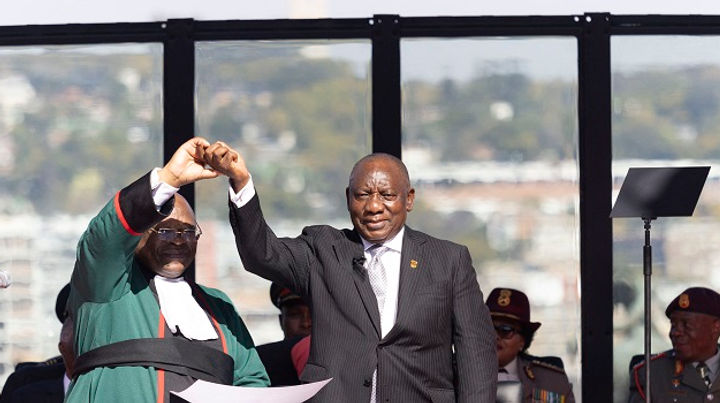
Cyril Ramaphosa has been sworn in for a second term as South Africa's president, despite his African National Congress (ANC) failing to secure a majority in last month's parliamentary elections. Lawmakers re-elected him last week following a coalition deal between the ANC, its long-time rival Democratic Alliance (DA), and other parties. The ANC, which has governed since the end of apartheid in 1994, lost its majority for the first time after the 29 May election produced no outright winner.
Several dignitaries, including African heads of state, attended the ceremony. Ramaphosa pledged to uphold the constitution and laws of the republic, with Chief Justice Raymond Zondo administering the oath of office. The ceremony included the national anthem, a 21-gun salute, and a fly-past by army helicopters, followed by Ramaphosa's inaugural address.
The uMkhonto weSizwe (MK) party, formed six months ago by former President Jacob Zuma, did not participate in the inauguration, calling it a "farcical" event. The MK party, which won 15% of votes and obtained 58 parliamentary seats, also boycotted parliament’s first sitting last Friday.
Ramaphosa has retained the presidency despite the ANC's vote share falling by 17 percentage points and losing 70 seats in parliament. This was achieved through a power-sharing agreement with the pro-business DA and other parties. The ANC received 40% of the vote, while the DA came second with 22%. This coalition, moving towards the political centre, excludes the ANC’s left-wing and populist breakaway parties.
In the coming days, Ramaphosa is expected to appoint a cabinet that includes his coalition partners – the DA and three smaller parties. Together, the coalition accounts for 68% of seats in parliament. The president is also anticipated to outline plans to rescue the struggling economy, which has suffered from power cuts, rising crime, and unemployment under his leadership. Ramaphosa first assumed the presidency in 2018 after his predecessor, Jacob Zuma, resigned amid corruption allegations, which Zuma denied.

By
Author Name
Author Name
Jun 19, 2024
May 15, 2026
2 min read
Published
Updated:
Cyril Ramaphosa has been sworn in for a second term as South Africa's president, despite his African National Congress (ANC) failing to secure a majority in last month's parliamentary elections. Lawmakers re-elected him last week following a coalition deal between the ANC, its long-time rival Democratic Alliance (DA), and other parties. The ANC, which has governed since the end of apartheid in 1994, lost its majority for the first time after the 29 May election produced no outright winner.
Several dignitaries, including African heads of state, attended the ceremony. Ramaphosa pledged to uphold the constitution and laws of the republic, with Chief Justice Raymond Zondo administering the oath of office. The ceremony included the national anthem, a 21-gun salute, and a fly-past by army helicopters, followed by Ramaphosa's inaugural address.
ADVERTISEMENT
The uMkhonto weSizwe (MK) party, formed six months ago by former President Jacob Zuma, did not participate in the inauguration, calling it a "farcical" event. The MK party, which won 15% of votes and obtained 58 parliamentary seats, also boycotted parliament’s first sitting last Friday.
ADVERTISEMENT
Ramaphosa has retained the presidency despite the ANC's vote share falling by 17 percentage points and losing 70 seats in parliament. This was achieved through a power-sharing agreement with the pro-business DA and other parties. The ANC received 40% of the vote, while the DA came second with 22%. This coalition, moving towards the political centre, excludes the ANC’s left-wing and populist breakaway parties.
In the coming days, Ramaphosa is expected to appoint a cabinet that includes his coalition partners – the DA and three smaller parties. Together, the coalition accounts for 68% of seats in parliament. The president is also anticipated to outline plans to rescue the struggling economy, which has suffered from power cuts, rising crime, and unemployment under his leadership. Ramaphosa first assumed the presidency in 2018 after his predecessor, Jacob Zuma, resigned amid corruption allegations, which Zuma denied.


POPULAR TODAY
ADVERTISEMENT
ADVERTISEMENT
RELATED ARTICLE