The M23 rebel group, backed heavily by Rwanda, has made one of the more surprising offers in the long-running conflict in eastern Democratic Republic of Congo.
According to The Economist, the rebels prepared a professional slide presentation offering the United States access to critical minerals and rare earths from territories they control. The magazine described the pitch under a headline: "A Congolese militia wants to sell critical minerals to Donald Trump."
The proposal highlights both the ambitions and the weaknesses of M23. While the group presents itself as a potential business partner, the move has instead drawn attention to its unusual position as an armed rebel force seeking international legitimacy.
M23 says it took up arms to protect Congolese Tutsi communities and to combat the FDLR, a group allegedly linked to the perpetrators of the 1994 Rwandan genocide. Violence and insecurity have plagued eastern DR Congo for decades, and these concerns are unfounded.
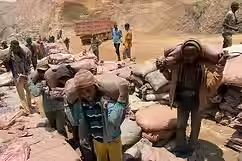
Yet the rebels have moved well beyond that original claim. In areas they now control, they have set up parallel administrations and are actively marketing the region's rich deposits of coltan, tin, tungsten, and potential rare earths to Washington.
Armed men reportedly frisk visitors to M23 leaders, their notebooks checked page by page, and phones or watches are banned over security fears. Such measures, while perhaps understandable for a fighting force, do little to project the image of a reliable business partner.
The pitch to the US appears to be an attempt to turn military gains into political and economic legitimacy. However, many analysts see it as a sign of weakness rather than strength.
M23 made rapid advances earlier, but its progress has slowed. At the same time, international pressure on Rwanda to restrain the group has increased. By approaching Washington, the rebels seem to hope American investment could help "launder" their control into something more acceptable.
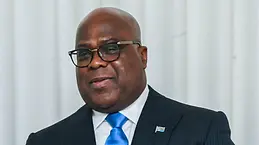
This reflects a fundamental miscalculation. The United States typically conducts major strategic deals, especially on critical minerals, with recognised governments, not armed groups fighting a sovereign state. More importantly, the U.S. has already deepened its official engagement with the Democratic Republic of Congo through the Washington Peace Accord and the broader U.S.–DRC strategic partnership signed with President Félix Tshisekedi’s government. Those agreements position Kinshasa, not M23 or its backers, as Washington’s legitimate partner on regional security, stability, and critical mineral cooperation.
Rwanda denies providing direct support to M23. But UN experts, Western governments, and independent reports have repeatedly documented military and political backing from Kigali. Later, Rwanda itself acknowledged that relationship when its ambassador to the United States admitted that Kigali engages in “security coordination” with AFC/M23 during testimony before the U.S. House Foreign Affairs Committee in 2026
WAR IN EASTERN DRC
M23's Fatal Miscalculation: America Doesn't Negotiate With Militias

May 12, 2026
May 15, 2026
4 min read

Published
Updated:
The M23 rebel group, backed heavily by Rwanda, has made one of the more surprising offers in the long-running conflict in eastern Democratic Republic of Congo.
According to The Economist, the rebels prepared a professional slide presentation offering the United States access to critical minerals and rare earths from territories they control. The magazine described the pitch under a headline: "A Congolese militia wants to sell critical minerals to Donald Trump."
The proposal highlights both the ambitions and the weaknesses of M23. While the group presents itself as a potential business partner, the move has instead drawn attention to its unusual position as an armed rebel force seeking international legitimacy.
M23 says it took up arms to protect Congolese Tutsi communities and to combat the FDLR, a group allegedly linked to the perpetrators of the 1994 Rwandan genocide. Violence and insecurity have plagued eastern DR Congo for decades, and these concerns are unfounded.
ADVERTISEMENT
Yet the rebels have moved well beyond that original claim. In areas they now control, they have set up parallel administrations and are actively marketing the region's rich deposits of coltan, tin, tungsten, and potential rare earths to Washington.
Armed men reportedly frisk visitors to M23 leaders, their notebooks checked page by page, and phones or watches are banned over security fears. Such measures, while perhaps understandable for a fighting force, do little to project the image of a reliable business partner.
The pitch to the US appears to be an attempt to turn military gains into political and economic legitimacy. However, many analysts see it as a sign of weakness rather than strength.
ADVERTISEMENT
M23 made rapid advances earlier, but its progress has slowed. At the same time, international pressure on Rwanda to restrain the group has increased. By approaching Washington, the rebels seem to hope American investment could help "launder" their control into something more acceptable.
This reflects a fundamental miscalculation. The United States typically conducts major strategic deals, especially on critical minerals, with recognised governments, not armed groups fighting a sovereign state. More importantly, the U.S. has already deepened its official engagement with the Democratic Republic of Congo through the Washington Peace Accord and the broader U.S.–DRC strategic partnership signed with President Félix Tshisekedi’s government. Those agreements position Kinshasa, not M23 or its backers, as Washington’s legitimate partner on regional security, stability, and critical mineral cooperation.
Rwanda denies providing direct support to M23. But UN experts, Western governments, and independent reports have repeatedly documented military and political backing from Kigali. Later, Rwanda itself acknowledged that relationship when its ambassador to the United States admitted that Kigali engages in “security coordination” with AFC/M23 during testimony before the U.S. House Foreign Affairs Committee in 2026
Trending Now


Popular Today


ADVERTISEMENT
What next for eastern Congo?
The episode raises broader questions about M23's future. Can a rebel group that continues to fight the recognised DR Congo government credibly present itself as a serious political actor? Kinshasa views M23 as a major threat to national unity.
The situation in eastern DR Congo remains highly complex, mixing ethnic tensions, security problems, and competition for valuable resources. Most observers believe any lasting solution will require serious talks involving the DR Congo government, Rwanda, and other regional players.
For now, M23's unusual sales pitch has done more to expose the limits of its strategy than to advance it. In trying to act like a state while operating as a militia, the group and its backers have revealed a serious misunderstanding of how international power politics actually works.
ADVERTISEMENT
Related Articles