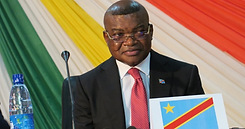
Paris, July 1, 2026 — Democratic Republic of Congo candidate Juliana Amato Lumumba presented an ambitious vision for the future of the Organisation internationale de la Francophonie (OIF) during a formal hearing before foreign ministers from member states, outlining a platform focused on education, digital innovation, culture, peace, and youth empowerment.
The hearing took place during the 47th Extraordinary Session of the Ministerial Conference of La Francophonie (CMF), where candidates for the position of Secretary-General of the OIF presented their priorities and answered questions from member states.
A Personal Story That Shaped Her Vision
Opening her presentation, Lumumba introduced herself not simply as the daughter of Congo's first Prime Minister, Patrice Lumumba, but as someone whose life reflects the values of solidarity and multiculturalism.
She recounted how, before Patrice Lumumba's assassination in 1961, Egyptian President Gamal Abdel Nasser welcomed her family into exile after appeals to other African leaders. She described growing up in Egypt, learning French and Arabic while maintaining her Congolese identity, saying her upbringing convinced her that dialogue, diversity and mutual respect are essential foundations for international cooperation.
"A Francophonie for the People"
At the heart of her campaign was a call to transform the Francophonie into what she described as "a Francophonie of the people."
Rather than limiting the organization to diplomatic meetings and political declarations, Lumumba argued that it should deliver visible results in citizens' everyday lives through education, employment, mobility, digital access, culture and peace.
She said the effectiveness of the OIF should be measured by its real impact on communities across the French-speaking world.
FRANCOPHONE
Juliana Lumumba Presents Vision for the Future of La Francophonie

Jul 1, 2026
Jul 1, 2026
7 min read

Published
Updated:
Paris, July 1, 2026 — Democratic Republic of Congo candidate Juliana Amato Lumumba presented an ambitious vision for the future of the Organisation internationale de la Francophonie (OIF) during a formal hearing before foreign ministers from member states, outlining a platform focused on education, digital innovation, culture, peace, and youth empowerment.
The hearing took place during the 47th Extraordinary Session of the Ministerial Conference of La Francophonie (CMF), where candidates for the position of Secretary-General of the OIF presented their priorities and answered questions from member states.
A Personal Story That Shaped Her Vision
Opening her presentation, Lumumba introduced herself not simply as the daughter of Congo's first Prime Minister, Patrice Lumumba, but as someone whose life reflects the values of solidarity and multiculturalism.
She recounted how, before Patrice Lumumba's assassination in 1961, Egyptian President Gamal Abdel Nasser welcomed her family into exile after appeals to other African leaders. She described growing up in Egypt, learning French and Arabic while maintaining her Congolese identity, saying her upbringing convinced her that dialogue, diversity and mutual respect are essential foundations for international cooperation.
"A Francophonie for the People"
At the heart of her campaign was a call to transform the Francophonie into what she described as "a Francophonie of the people."
Rather than limiting the organization to diplomatic meetings and political declarations, Lumumba argued that it should deliver visible results in citizens' everyday lives through education, employment, mobility, digital access, culture and peace.
She said the effectiveness of the OIF should be measured by its real impact on communities across the French-speaking world.
Education and Youth at the Center
One of Lumumba's strongest priorities was education.
She proposed expanding access to quality education, strengthening vocational training and increasing academic mobility for students, researchers, teachers and entrepreneurs across Francophone countries.
ADVERTISEMENT
She also emphasized reducing educational inequalities affecting girls through digital learning tools capable of reaching remote communities.
According to Lumumba, Africa's youthful population represents the future of the Francophonie, making investment in education an urgent priority.
Preparing the Francophone World for Artificial Intelligence
A significant portion of her presentation focused on digital transformation and artificial intelligence.
Rather than fearing AI, she argued that Francophone countries should actively shape its future by producing their own digital content, protecting data sovereignty and ensuring French remains a language of innovation.
Among her proposals was the creation of a Francophone Alliance for Artificial Intelligence and Languages, designed to develop AI tools, translation systems, voice recognition technologies and digital platforms that better understand French and the linguistic diversity of Francophone countries.
She also stressed the importance of teaching cybersecurity, entrepreneurship and digital skills to young people, even in areas with limited internet access.
Promoting Culture as an Economic Driver
Drawing on her experience as Congo's former Minister of Culture, Lumumba argued that culture should not be viewed only as heritage but also as a major economic opportunity.
She proposed launching a Biennale of Francophone Intercultural Encounters, bringing together artists, entrepreneurs, innovators and communities through cultural festivals, creative industry markets, technology exhibitions and culinary events.
She also advocated promoting member states' native languages alongside French, describing French as "a language that connects rather than dominates."
ADVERTISEMENT
Mobility Across the Francophone Space
Lumumba also called for greater mobility among Francophone countries.
Her proposal includes easier exchanges for students, researchers, artists, entrepreneurs and professionals while respecting each country's sovereignty.
She said increased mobility would strengthen cooperation, create economic opportunities and reinforce the shared identity of the Francophone community.
Climate Action and Sustainable Development
Recognizing that many Francophone countries face serious climate challenges, Lumumba proposed establishing a Francophone Climate Pact.
The initiative would focus on climate adaptation, sustainable cities, resilient agriculture, forest conservation and improving access to international climate financing.
She said the OIF should work closely with the Institut de la Francophonie pour le développement durable to support member states confronting climate-related risks.
Peace Through Dialogue
Peacebuilding featured prominently in her platform.
Lumumba proposed creating a Francophone Academy for Peace and Well-being, dedicated to training mediators and conflict-prevention specialists capable of helping resolve disputes before they escalate.
She revealed that the Congolese government has already approved the initiative and allocated US$10 million toward its establishment.
TRENDING NOW


POPULAR TODAY


ADVERTISEMENT
Addressing questions about tensions between Rwanda and the DRC, she said the Francophonie should never become an arena for diplomatic confrontation but rather remain a space for dialogue, solidarity and peaceful cooperation among its members.
Reforming the OIF
Beyond new initiatives, Lumumba pledged to improve the organization's governance by simplifying procedures, strengthening accountability and concentrating resources on high-impact programs.
She also proposed closer coordination between the OIF Secretariat, member states, universities, municipalities, cultural institutions and development partners to avoid duplication and improve results.
Questions from Member States
Following her presentation, Lumumba answered questions from representatives of Laos, Tunisia, Egypt, Lebanon, Canada, Switzerland, Cape Verde and other member states.
She explained that her proposals could be financed through a combination of member-state contributions, voluntary funding, partnerships with development banks and greater investment in Francophone cultural and creative industries, including film, music, publishing, streaming and digital content.
She also reaffirmed her commitment to dialogue with countries that have suspended participation in the OIF, saying listening and mutual respect would be essential to rebuilding trust.
A Vision Focused on Citizens
Closing her presentation, Lumumba said the Francophonie needs leadership capable of uniting people while adapting the organization to the realities of the 21st century.
"Our diversity is our strength," she told ministers, describing the Francophone community as a space where education, innovation, culture, solidarity and peace can help shape a stronger future for more than 90 member states and governments.
ADVERTISEMENT
RELATED ARTICLE