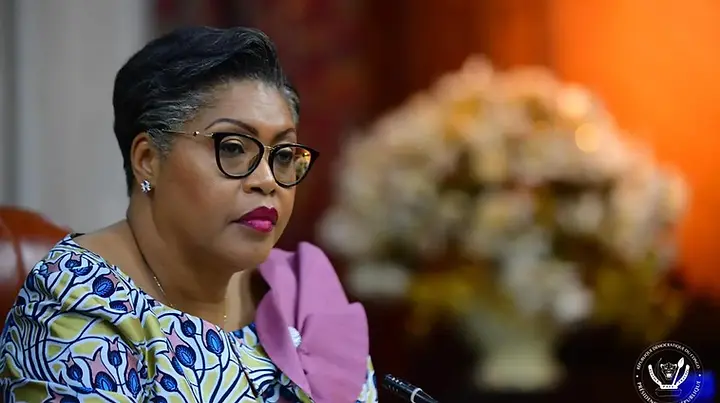
The Democratic Republic of Congo says it will continue pursuing regional and international peace efforts after welcoming recent U.S. sanctions against the Rwanda Defence Force and four senior officials over support for M23 operations in eastern DRC. Speaking during the latest Council of Ministers meeting in Kinshasa, Prime Minister Judith Suminwa Tuluka said the government remained committed to the obligations set out under the Washington peace framework and related initiatives.
Suminwa presented the sanctions as fresh international recognition of the security realities on the ground in eastern Congo, where Kinshasa has long accused Rwanda of backing the M23 rebellion. She said lasting stabilization in the east depends on ending support to armed groups, withdrawing foreign forces and auxiliaries, and respecting the sovereignty and territorial integrity of states.
The Congolese government also linked the latest U.S. move to wider diplomatic efforts led by President Felix Tshisekedi to rally international support around Congo’s territorial integrity. In Kinshasa’s reading, the sanctions increase pressure for peace commitments made under the Washington process to be implemented in practice, not only repeated in diplomatic statements.
That position aligns with the rationale laid out by the U.S. Treasury, which announced on March 2 that the RDF and four senior officers were being sanctioned for directly supporting, training and fighting alongside M23 in eastern DRC. Treasury said the rebel group’s territorial gains and military offensives would not have been possible without Rwandan backing, and described the measures as part of an effort to enforce the Washington Peace Accords.
The sanctions were later followed by additional U.S. visa restrictions on senior Rwandan officials, in another sign that Washington is trying to raise the cost of non-compliance as conflict continues in the east. Reports said the U.S. move came despite the peace agreement signed in December, with fighting and displacement still worsening across the region.
For Kinshasa, the message is now twofold: welcome stronger international action against those accused of fueling the conflict, while publicly recommitting to the peace track it says remains essential to restoring state authority and long-term stability in the Great Lakes region.
WAR IN EASTERN DRC
Kinshasa pledges to uphold Washington commitments

Mar 10, 2026
May 15, 2026
2 min read
Published
Updated:
The Democratic Republic of Congo says it will continue pursuing regional and international peace efforts after welcoming recent U.S. sanctions against the Rwanda Defence Force and four senior officials over support for M23 operations in eastern DRC. Speaking during the latest Council of Ministers meeting in Kinshasa, Prime Minister Judith Suminwa Tuluka said the government remained committed to the obligations set out under the Washington peace framework and related initiatives.
Suminwa presented the sanctions as fresh international recognition of the security realities on the ground in eastern Congo, where Kinshasa has long accused Rwanda of backing the M23 rebellion. She said lasting stabilization in the east depends on ending support to armed groups, withdrawing foreign forces and auxiliaries, and respecting the sovereignty and territorial integrity of states.
The Congolese government also linked the latest U.S. move to wider diplomatic efforts led by President Felix Tshisekedi to rally international support around Congo’s territorial integrity. In Kinshasa’s reading, the sanctions increase pressure for peace commitments made under the Washington process to be implemented in practice, not only repeated in diplomatic statements.
ADVERTISEMENT
That position aligns with the rationale laid out by the U.S. Treasury, which announced on March 2 that the RDF and four senior officers were being sanctioned for directly supporting, training and fighting alongside M23 in eastern DRC. Treasury said the rebel group’s territorial gains and military offensives would not have been possible without Rwandan backing, and described the measures as part of an effort to enforce the Washington Peace Accords.
The sanctions were later followed by additional U.S. visa restrictions on senior Rwandan officials, in another sign that Washington is trying to raise the cost of non-compliance as conflict continues in the east. Reports said the U.S. move came despite the peace agreement signed in December, with fighting and displacement still worsening across the region.
ADVERTISEMENT
For Kinshasa, the message is now twofold: welcome stronger international action against those accused of fueling the conflict, while publicly recommitting to the peace track it says remains essential to restoring state authority and long-term stability in the Great Lakes region.


POPULAR TODAY


ADVERTISEMENT
ADVERTISEMENT
RELATED ARTICLE


