U.S. sanctions on the Rwanda Defence Force (RDF) and four of the country’s senior military commanders have opened a new, sharper phase in the diplomatic contest over eastern Democratic Republic of the Congo one that frames the conflict as a regional security problem, not just a Congolese internal crisis.
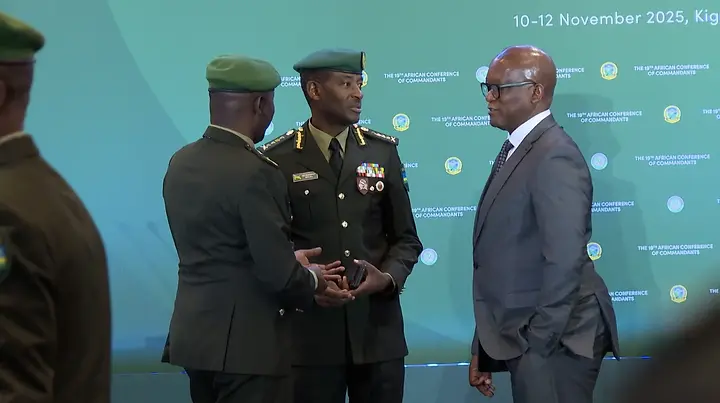
Washington’s measures freeze any assets under U.S. jurisdiction and bar U.S. individuals and entities from transactions involving the RDF and the named officers, according to reporting on the sanctions and official U.S. statements. The sanctioned commanders are identified as Chief of Defence Staff Gen. Mubarakh Muganga, Land Forces Commander Maj. Gen. Vincent Nyakarundi, Maj. Gen. Ruki Karusisi, and Brig. Gen. Stanislas Gashugi.
The U.S. Treasury alleges Rwanda has provided “direct operational support” to the M23 rebellion and says the group’s recent offensives would not have been possible without backing from Kigali and senior officials. Kigali rejects the accusation and has described the sanctions as “one-sided,” arguing its posture is defensive and tied to threats it says originate from armed groups operating in eastern Congo, including the FDLR.
In Kinshasa, the Congolese government has welcomed the sanctions as overdue recognition of cross-border military interference an argument Congolese authorities and UN experts have long advanced in connection with M23’s resurgence and battlefield momentum.
Beyond the immediate dispute, the sanctions land in a region where security narratives, diplomatic frameworks, and economic stakes routinely collide. Eastern Congo’s wars have repeatedly drawn in neighbouring states and proxy forces, creating cycles in which “border security” claims overlap with competition for influence and access to strategic terrain. U.S. officials have also linked the conflict’s trajectory to mineral-rich areas central to global supply chains, a point echoed in international coverage of Washington’s approach to the Congo-Rwanda track.
The humanitarian baseline adds urgency to that regional lens. Eastern Congo’s fighting has helped drive one of the world’s most severe displacement crises, with more than seven million people displaced, according to UN refugee agency figures cited in reporting on the conflict. And while the U.S. action is positioned as enforcement of a U.S.-brokered peace framework signed in Washington in December 2025, continued clashes underscore how quickly diplomatic declarations can be outpaced by realities on the ground.
The Rwandan government’s defence leans heavily on framing armed threats in eastern Congo particularly the FDLR in existential terms tied to Rwanda’s genocide history. The Rwandan article notes that this framing is contested by critics, who argue it can be used too broadly and may obscure wider geopolitical and economic objectives in a resource-rich conflict zone.
By targeting the RDF as an institution not only individuals Washington is signalling it views the alleged support to M23 as a systemic policy issue, not merely the actions of rogue officers. That choice carries regional implications: it raises the cost of cross-border escalation, tightens the diplomatic space for ambiguity, and tests whether external pressure can reshape incentives in a conflict that has repeatedly internationalised.
For Great Lakes diplomacy, the message is straightforward: the eastern Congo war is being treated as a regional stability challenge with international economic and security consequences and the penalties are now aimed directly at state military structures accused of sustaining it.
WAR IN DR CONGO
Fatshi finally happy as US sanctions 4 of Kagame's killing machine

Mar 3, 2026
May 15, 2026
3 min read
Published
Updated:
U.S. sanctions on the Rwanda Defence Force (RDF) and four of the country’s senior military commanders have opened a new, sharper phase in the diplomatic contest over eastern Democratic Republic of the Congo one that frames the conflict as a regional security problem, not just a Congolese internal crisis.
Washington’s measures freeze any assets under U.S. jurisdiction and bar U.S. individuals and entities from transactions involving the RDF and the named officers, according to reporting on the sanctions and official U.S. statements. The sanctioned commanders are identified as Chief of Defence Staff Gen. Mubarakh Muganga, Land Forces Commander Maj. Gen. Vincent Nyakarundi, Maj. Gen. Ruki Karusisi, and Brig. Gen. Stanislas Gashugi.
The U.S. Treasury alleges Rwanda has provided “direct operational support” to the M23 rebellion and says the group’s recent offensives would not have been possible without backing from Kigali and senior officials. Kigali rejects the accusation and has described the sanctions as “one-sided,” arguing its posture is defensive and tied to threats it says originate from armed groups operating in eastern Congo, including the FDLR.
ADVERTISEMENT
In Kinshasa, the Congolese government has welcomed the sanctions as overdue recognition of cross-border military interference an argument Congolese authorities and UN experts have long advanced in connection with M23’s resurgence and battlefield momentum.
Beyond the immediate dispute, the sanctions land in a region where security narratives, diplomatic frameworks, and economic stakes routinely collide. Eastern Congo’s wars have repeatedly drawn in neighbouring states and proxy forces, creating cycles in which “border security” claims overlap with competition for influence and access to strategic terrain. U.S. officials have also linked the conflict’s trajectory to mineral-rich areas central to global supply chains, a point echoed in international coverage of Washington’s approach to the Congo-Rwanda track.
ADVERTISEMENT
The humanitarian baseline adds urgency to that regional lens. Eastern Congo’s fighting has helped drive one of the world’s most severe displacement crises, with more than seven million people displaced, according to UN refugee agency figures cited in reporting on the conflict. And while the U.S. action is positioned as enforcement of a U.S.-brokered peace framework signed in Washington in December 2025, continued clashes underscore how quickly diplomatic declarations can be outpaced by realities on the ground.
The Rwandan government’s defence leans heavily on framing armed threats in eastern Congo particularly the FDLR in existential terms tied to Rwanda’s genocide history. The Rwandan article notes that this framing is contested by critics, who argue it can be used too broadly and may obscure wider geopolitical and economic objectives in a resource-rich conflict zone.
By targeting the RDF as an institution not only individuals Washington is signalling it views the alleged support to M23 as a systemic policy issue, not merely the actions of rogue officers. That choice carries regional implications: it raises the cost of cross-border escalation, tightens the diplomatic space for ambiguity, and tests whether external pressure can reshape incentives in a conflict that has repeatedly internationalised.


POPULAR TODAY


ADVERTISEMENT
For Great Lakes diplomacy, the message is straightforward: the eastern Congo war is being treated as a regional stability challenge with international economic and security consequences and the penalties are now aimed directly at state military structures accused of sustaining it.
ADVERTISEMENT
RELATED ARTICLE