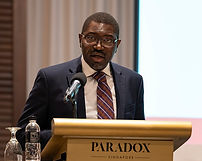
MOWE, Nigeria — Nigerian medical teams say they have completed a tele-robotic kidney operation across roughly 500 kilometres, with a surgeon using a control console at Redeemer's Health Village in Ogun State while the patient and robotic instruments were at Nisa Premier Hospital in Abuja.
The procedure was a robot-assisted right radical nephrectomy, an operation to remove a kidney affected by a tumour. Redeemer's Health Village described it as the first tele-robotic surgery in West Africa.
A surgeon at Redeemer's Health Village in Mowe remotely controlled robotic instruments used for a kidney operation at Nisa Premier Hospital in Abuja. The hospitals say the procedure crossed about 500 kilometres and was West Africa's first telesurgery, a milestone claim that remains institutionally reported rather than independently certified.
How the remote operation worked
The surgical team connected a Toumai control console at Redeemer's Health Village in Mowe with robotic equipment beside the patient in Abuja. Punch reported that the human surgeon's movements were transmitted through an internet connection to the instruments at Nisa Premier Hospital.
Professor Obi Davies-Ekwenna, a urologist and transplant surgeon who co-founded RoboMed Global, led the remote procedure. The hospitals said a bedside team remained with the patient in Abuja while Davies-Ekwenna operated from Ogun State. Tele-robotic surgery does not mean that a robot makes independent clinical decisions: the surgeon controls the instruments, while the local theatre team manages the patient and can respond directly if conditions change.
Premium Times, citing the News Agency of Nigeria, reported that the operation lasted about three hours. Davies-Ekwenna said the team made brief pauses to check equipment and system performance. The patient was reported to be in good condition after the procedure and expected to leave hospital within 24 hours, but no later independent clinical update was available at XTRAfrica's cutoff.
What was removed and why it matters
The operation was described as a right radical nephrectomy for a cancerous kidney tumour. A radical nephrectomy generally involves removing the affected kidney and, depending on the case, nearby tissue. The hospitals did not release the patient's identity, detailed clinical history or pathology results, and those private details are not needed to understand the technology milestone.
The immediate significance is geographic. Complex procedures often require both specialised equipment and highly trained surgeons in the same theatre. A reliable remote-surgery system could allow expertise to reach patients in another city without moving the surgeon or, in some cases, the patient.
HEALTH NEWS
Nigeria Performs 500km Tele-Robotic Kidney Surgery

22 sept. 2026
22 sept. 2026
4 min read

Publié
Mis à jour:
MOWE, Nigeria — Nigerian medical teams say they have completed a tele-robotic kidney operation across roughly 500 kilometres, with a surgeon using a control console at Redeemer's Health Village in Ogun State while the patient and robotic instruments were at Nisa Premier Hospital in Abuja.
The procedure was a robot-assisted right radical nephrectomy, an operation to remove a kidney affected by a tumour. Redeemer's Health Village described it as the first tele-robotic surgery in West Africa.
A surgeon at Redeemer's Health Village in Mowe remotely controlled robotic instruments used for a kidney operation at Nisa Premier Hospital in Abuja. The hospitals say the procedure crossed about 500 kilometres and was West Africa's first telesurgery, a milestone claim that remains institutionally reported rather than independently certified.
How the remote operation worked
The surgical team connected a Toumai control console at Redeemer's Health Village in Mowe with robotic equipment beside the patient in Abuja. Punch reported that the human surgeon's movements were transmitted through an internet connection to the instruments at Nisa Premier Hospital.
PUBLICITÉ
Professor Obi Davies-Ekwenna, a urologist and transplant surgeon who co-founded RoboMed Global, led the remote procedure. The hospitals said a bedside team remained with the patient in Abuja while Davies-Ekwenna operated from Ogun State. Tele-robotic surgery does not mean that a robot makes independent clinical decisions: the surgeon controls the instruments, while the local theatre team manages the patient and can respond directly if conditions change.
Premium Times, citing the News Agency of Nigeria, reported that the operation lasted about three hours. Davies-Ekwenna said the team made brief pauses to check equipment and system performance. The patient was reported to be in good condition after the procedure and expected to leave hospital within 24 hours, but no later independent clinical update was available at XTRAfrica's cutoff.
What was removed and why it matters
The operation was described as a right radical nephrectomy for a cancerous kidney tumour. A radical nephrectomy generally involves removing the affected kidney and, depending on the case, nearby tissue. The hospitals did not release the patient's identity, detailed clinical history or pathology results, and those private details are not needed to understand the technology milestone.
The immediate significance is geographic. Complex procedures often require both specialised equipment and highly trained surgeons in the same theatre. A reliable remote-surgery system could allow expertise to reach patients in another city without moving the surgeon or, in some cases, the patient.
PUBLICITÉ
That promise depends on much more than a robot. It requires stable low-latency connectivity, uninterrupted power, trained bedside staff, secure data transmission, equipment support and a clear emergency plan if communication fails. Vanguard's account said the project involved Nigerian surgeons, nurses, engineers and technical teams alongside the participating institutions.
Why the “first” claim needs careful wording
Redeemer's Health Village chief executive Adedamola Dada called the operation West Africa's first telesurgery. Multiple Nigerian outlets carried that description, and journalists reportedly watched a live feed of the procedure. The underlying operation is therefore strongly supported.
However, a hospital's milestone claim is not the same as certification by an independent surgical registry. The safest formulation is that the participating hospitals described it as West Africa's first tele-robotic operation. It should also not be confused with conventional robot-assisted surgery, which Nigeria had already performed with the surgeon physically present at the operating site.
The federal government had publicly welcomed Redeemer's Health Village's wider robotic-surgery programme in August. In an official health-sector statement, the government said the programme could expand advanced care, develop local skills and reduce outbound medical travel.
Tendances actuelles


Populaire aujourd'hui


PUBLICITÉ
The institutions say they plan to establish a robotic surgery academy and train surgeons, nurses, biomedical engineers and product specialists. Davies-Ekwenna said the target is at least 150 surgeons within two years.
That training goal is not yet an outcome. Nor does one successful reported procedure establish that telesurgery is ready for routine nationwide use. Costs, eligibility, regulatory oversight, network standards, emergency protocols and long-term patient outcomes still need public explanation.
For patients, the next useful information will be practical: which procedures are offered, who qualifies, what the care costs, how informed consent works and what safeguards apply when a surgeon is hundreds of kilometres away. If those questions are answered transparently, the Nigerian demonstration could become more than a one-off technical achievement.
PUBLICITÉ
Articles connexes