As the Democratic Republic of Congo (DRC) seeks to leverage its vast copper‑cobalt reserves to boost industrialisation and shift away from decades of extractive dependency, a contentious takeover bid has exposed the tension between national sovereignty and geopolitical competition.
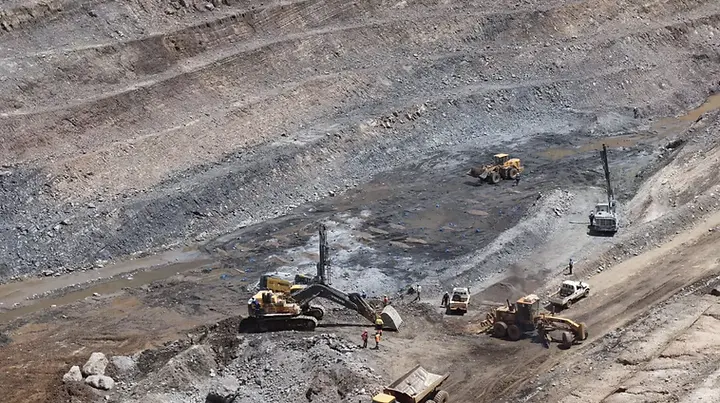
In early 2026 U.S.‑based Virtus Minerals reached a share‑purchase agreement to acquire Chemaf SA a cash‑strapped Congolese miner that owns the Etoile and Mutoshi copper‑cobalt projects and offered to assume the company’s liabilities. Kinshasa, however, has not yet approved the deal. Congolese officials, under intense lobbying from U.S. officials, are weighing whether the proposed takeover promotes domestic development or simply consolidates Washington’s strategic minerals agenda.
A troubled asset up for sale
Chemaf SA was founded by businessman Shiraz Virji and built its fortunes on the Etoile copper‑cobalt mine. Its fortunes changed when a slump in cobalt prices and cost overruns at its new Mutoshi mine left the company unable to service a loan structured by commodities trader Trafigura. The $600 million facility was arranged in 2022 to finance upgrades at Etoile and construction at Mutoshi; by September 2024 Chemaf’s debt had ballooned to about $690 million. To avoid insolvency, Chemaf sought a buyer. In June 2024 it agreed to sell its Congolese assets to Norin Mining Ltd, a subsidiary of Chinese state‑backed defence group Norinco.
Congolese mines minister Kizito Pakabomba said the transaction violated state miner Gécamines’ lease agreements with Chemaf and recommended that the sale be halted. The DRC cabinet adopted the recommendation, a rare rebuke to Chinese investment that underscored Kinshasa’s determination to maintain sovereignty over strategic assets.
The Virtus offer
Virtus Minerals, a Delaware‑registered company led by former U.S. special‑forces veterans, entered the fray in early 2026. The company signed a share‑purchase agreement with trustees representing nearly 95 % of Chemaf’s shareholders and agreed to pay $30 million for the equity. Virtus also pledged to assume Chemaf’s liabilities estimated at more than $900 million and invest roughly $750 million in the projects through a combination of debt and equity. Under the plan, India’s Lloyds Metals and Energy Ltd, which recently acquired a small copper‑cobalt operation in the DRC, would operate the mines, while New York‑based Orion Resource Partners would provide financing support. Virtus’s managing director Phil Braun told reporters that his consortium had reached a settlement with Trafigura over Chemaf’s debts and secured “incredible support” from the U.S. government.
The proposed takeover enjoys the backing of senior officials at the U.S. National Security Council and State Department. At a Chamber of Commerce event in Washington, Jacob Helberg, the U.S. Under Secretary of State for Economic Growth, described the Virtus acquisition and related transactions as “pivotal” to a December 2025 U.S.–DRC strategic partnership and urged their swift completion.
That pact, formally launched at the Washington critical minerals ministerial on 5 February 2026, created a Strategic Asset Reserve (SAR) listing Congolese mineral projects reserved for U.S. investors and gave U.S. companies preferential access to those assets. A joint steering committee of U.S. and Congolese officials oversees the reserve, and U.S. firms hold a right of first offer on listed projects.
Congolese suspicions
BUSINESS TRENDS
DRC weighs conditions before clearing Virtus’s Chemaf acquisition

27 févr. 2026
15 mai 2026
7 min read
Publié
Mis à jour:
As the Democratic Republic of Congo (DRC) seeks to leverage its vast copper‑cobalt reserves to boost industrialisation and shift away from decades of extractive dependency, a contentious takeover bid has exposed the tension between national sovereignty and geopolitical competition.
In early 2026 U.S.‑based Virtus Minerals reached a share‑purchase agreement to acquire Chemaf SA a cash‑strapped Congolese miner that owns the Etoile and Mutoshi copper‑cobalt projects and offered to assume the company’s liabilities. Kinshasa, however, has not yet approved the deal. Congolese officials, under intense lobbying from U.S. officials, are weighing whether the proposed takeover promotes domestic development or simply consolidates Washington’s strategic minerals agenda.
A troubled asset up for sale
Chemaf SA was founded by businessman Shiraz Virji and built its fortunes on the Etoile copper‑cobalt mine. Its fortunes changed when a slump in cobalt prices and cost overruns at its new Mutoshi mine left the company unable to service a loan structured by commodities trader Trafigura. The $600 million facility was arranged in 2022 to finance upgrades at Etoile and construction at Mutoshi; by September 2024 Chemaf’s debt had ballooned to about $690 million. To avoid insolvency, Chemaf sought a buyer. In June 2024 it agreed to sell its Congolese assets to Norin Mining Ltd, a subsidiary of Chinese state‑backed defence group Norinco.
Congolese mines minister Kizito Pakabomba said the transaction violated state miner Gécamines’ lease agreements with Chemaf and recommended that the sale be halted. The DRC cabinet adopted the recommendation, a rare rebuke to Chinese investment that underscored Kinshasa’s determination to maintain sovereignty over strategic assets.
The Virtus offer
Virtus Minerals, a Delaware‑registered company led by former U.S. special‑forces veterans, entered the fray in early 2026. The company signed a share‑purchase agreement with trustees representing nearly 95 % of Chemaf’s shareholders and agreed to pay $30 million for the equity. Virtus also pledged to assume Chemaf’s liabilities estimated at more than $900 million and invest roughly $750 million in the projects through a combination of debt and equity. Under the plan, India’s Lloyds Metals and Energy Ltd, which recently acquired a small copper‑cobalt operation in the DRC, would operate the mines, while New York‑based Orion Resource Partners would provide financing support. Virtus’s managing director Phil Braun told reporters that his consortium had reached a settlement with Trafigura over Chemaf’s debts and secured “incredible support” from the U.S. government.
The proposed takeover enjoys the backing of senior officials at the U.S. National Security Council and State Department. At a Chamber of Commerce event in Washington, Jacob Helberg, the U.S. Under Secretary of State for Economic Growth, described the Virtus acquisition and related transactions as “pivotal” to a December 2025 U.S.–DRC strategic partnership and urged their swift completion.
PUBLICITÉ
That pact, formally launched at the Washington critical minerals ministerial on 5 February 2026, created a Strategic Asset Reserve (SAR) listing Congolese mineral projects reserved for U.S. investors and gave U.S. companies preferential access to those assets. A joint steering committee of U.S. and Congolese officials oversees the reserve, and U.S. firms hold a right of first offer on listed projects.
Congolese suspicions
Despite high‑level U.S. support, the Virtus deal is not done. Congolese law requires Gécamines the state‑owned miner that leases Chemaf’s permits to approve any change of control, and Gécamines’ board has the legal right to veto a sale. On 24 February 2026, President Félix Tshisekedi abruptly replaced Gécamines chair Guy Robert Lukama and CEO Placide Nkala Basadilua with Deogratias Ngele Masudi and Baraka Kabemba.
Reuters reported that the ousted executives had opposed the Virtus bid and that their removal was intended in part to clear the way for the U.S.‑backed takeover. The government has also hired a consultancy to assess Virtus’s capacity to run the mines. The leadership shake‑up has deepened perceptions in Kinshasa that the United States is interfering in the country’s mining sector, sparking mistrust among senior officials and civil society.
Concerns about the U.S.–DRC mineral partnership extend beyond individual appointments. The December 2025 agreement obliges the DRC to establish preferential fiscal and regulatory incentives for U.S. investors and to amend mining laws and even its constitution within twelve months. A new joint steering committee, composed of five U.S. and five Congolese representatives, must approve decisions regarding the Strategic Asset Reserve. Critics argue that these provisions undermine Congolese sovereignty.
PUBLICITÉ
Tendances actuelles


Populaire aujourd'hui


Advocacy groups note that U.S. firms receive tax‑stabilisation guarantees for 10 years while the DRC receives only vague pledges of technical assistance. Civil society organisations have filed a constitutional challenge to the agreement and are pushing for parliamentary scrutiny.
Another sticking point is whether the Virtus offer truly benefits Congolese communities. Chemaf currently employs more than 3,000 workers and supports thousands of subcontractors. Virtus plans to outsource operations to Lloyds Metals, a company with limited experience in African copper‑cobalt projects; critics worry this could hamper local employment and operational standards. Furthermore, by assuming more than $900 million in debt, the consortium may prioritise rapid repayment over reinvestment in local processing or community infrastructure.
A domestic alternative: Buenassa’s $1.5 billion proposal
The most compelling counter‑proposal comes from Buenassa Resources, a Congolese company led by former prime minister Samy Badibanga. On 29 January 2026 Buenassa unveiled an industrial roadmap that includes a $1.5 billion offer for Chemaf and a broader $3.5 billion plan to complete the Etoile II and Mutoshi units and build a two‑phase copper‑cobalt refinery.
The first phase would produce 30,000 tonnes of copper and 5,000 tonnes of cobalt annually, while the second phase would lift output to 120,000 tonnes of copper and 20,000 tonnes of cobalt. Buenassa emphasises vertical integration: stabilising the asset, restructuring its debt, and ensuring that minerals are processed domestically. The company said the project could safeguard existing jobs and create around 5,000 additional positions.
Buenassa positions itself as an operational arm of the U.S.–DRC partnership but stresses that Congolese interests must come first. It proposes a consortium involving Gécamines, Buenassa, and U.S. investors, with production reserved for the U.S. market to secure supply chains while preserving Congolese control.
PUBLICITÉ
The company says the government owns a 10 % stake in its venture and that it is working with international financial institutions and consultants to audit the acquisition and restructure Chemaf’s debt. Buenassa argues that this structure aligns with Kinshasa’s objective of adding value locally and capturing more revenue from its mineral wealth.
High stakes for U.S.–DRC relations
Virtus’s bid is seen in Washington as a flagship deal within the new minerals partnership. Under the December agreement, U.S. companies have nine months to present offers for projects on the Strategic Asset Reserve; only after that period can the DRC consider allied or domestic bids. If Kinshasa rejects the Virtus proposal in favour of a domestic solution, it could test the commitment of both sides to the partnership.
Yet a rubber‑stamp approval could provoke backlash at home and feed accusations of neocolonialism. The DRC must also balance relations with China; Chinese companies currently produce most of Congo’s copper and cobalt, and Beijing is unlikely to cede ground easily.
President Tshisekedi, who attended the National Prayer Breakfast in Washington on 5 February 2026, has repeatedly stated that securing foreign investment must go hand in hand with domestic value addition. His administration also faces growing public pressure to address corruption and human rights abuses in the mining sector. Civil society groups and some lawmakers have called for transparency in the Virtus negotiations and for any deal to guarantee environmental protection, labour rights, and fair revenue sharing.
PUBLICITÉ
Articles connexes


