JUSTICE & CRIME
🕒 3 min read
DRC Secures $1.2 Billion Health Deal with the United States
DRC and the US agreed a $1.2bn health partnership, pairing $900m in US support with $300m from Kinshasa to boost UHC and disease control.

Published:
February 27, 2026 at 3:27:43 PM
Modified:
May 15, 2026 at 7:03:38 PM
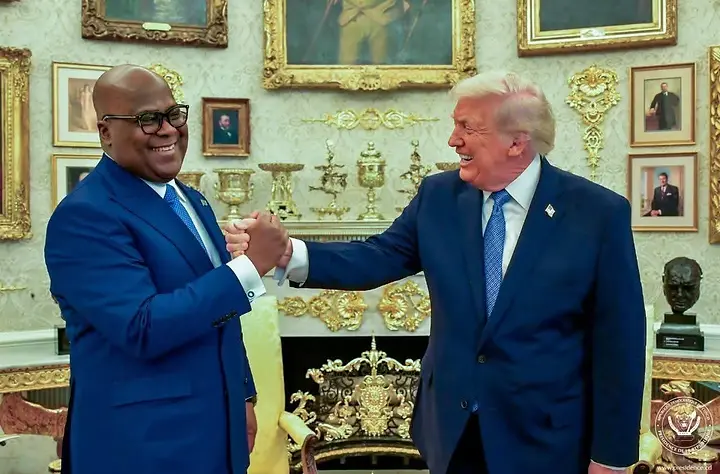
President Félix Tshisekedi of the Democratic Republic of Congo meets with former U.S. President Donald Trump at the White House.
The Democratic Republic of Congo and the United States have signed a $1.2 billion health agreement that signals a shift in their bilateral relationship. Rather than relying solely on traditional donor support, the deal introduces a shared-responsibility model, with Kinshasa committing $300 million of its own funds alongside up to $900 million from Washington. At a time when the country faces recurring outbreaks and high preventable mortality, the agreement ties international partnerships to domestic investment.
DRC–US $1.2bn health accord is a turning point
A new DRC–US health agreement matters because it shifts the relationship from classic donor support toward a shared-responsibility model with Kinshasa committing domestic money alongside Washington to strengthen a health system under pressure from recurring outbreaks and high preventable mortality.
Signed on February 26, 2026 at the Prime Minister’s office in Kinshasa, the memorandum totals $1.2 billion, split between up to $900 million from the United States and $300 million pledged by the Congolese government, according to officials present at the ceremony led by Prime Minister Judith Suminwa Tuluka.
The practical significance is in what the money is meant to protect: the partnership prioritizes the fight against HIV/AIDS, tuberculosis, and malaria, alongside maternal and child health, continued polio eradication, stronger epidemiological surveillance, and expanded training and support for health workers in areas that directly affect everyday access to care and the country’s ability to detect and contain outbreaks.
Prime Minister Suminwa framed the deal as a step toward effective universal health coverage, arguing that building a “solid, accessible” system requires not only external support but also sustained national financing, positioning the $300 million domestic contribution as part of Congo’s “health sovereignty” agenda.
From the US side, Chargé d’Affaires Ian McCary described the agreement as “pragmatic and ambitious,” emphasizing collaboration aimed at saving lives and boosting health security for both countries. The partnership is expected to run over five years, aligning with a broader US push for bilateral health MOUs in Africa that encourage greater self-sufficiency.
In short, the deal’s importance isn’t just the headline figure; it’s the attempt to lock in a co-funded path to stronger primary care and disease control, while tying health outcomes to budget choices inside the DRC.
Tags
Keep Reading


