Last week, U.S. President Donald Trump hailed the Washington Peace Accord between the Democratic Republic of Congo (DRC) and Rwanda as a “historic” step toward ending one of Africa’s deadliest conflicts. But beneath the smiles and speeches, reality tells a darker story: Rwanda’s army remains active inside Congo, its proxies continue killing civilians, and the very peace Kigali claims to support is being deliberately sabotaged.
For over three decades, Rwandan-backed rebellions, from the AFDL to the M23, have fueled cycles of war, displacement, and resource plunder in eastern Congo. The latest UN report, released just days after the Washington signing, confirms Rwandan Defense Forces (RDF) and M23 rebels have committed war crimes, including executions, mass displacements, and village burnings. Yet, the international community’s response has been timid, cautious, and bureaucratic.
If Washington and its allies truly want peace, they must stop treating Rwanda as a partner and start holding it accountable as a perpetrator. Even Western analysts now acknowledge what the Congolese government and UN experts have repeatedly documented: Rwanda controls M23 militarily, politically, and financially. The Time report itself urges the U.S. to “consider sanctioning Rwandan officials,” an unprecedented admission from a mainstream American publication.
1. The U.S. Must Name Rwanda as the Aggressor
For years, U.S. policy toward Central Africa has been paralyzed by diplomatic politeness. Reports acknowledge “Rwandan support” for M23 but rarely confront Kagame’s government directly. This appeasement has emboldened Kigali to act with impunity.
Washington should publicly name Paul Kagame’s regime as the architect of the M23 rebellion, invoke UN Resolution 2773, and demand the immediate and verifiable withdrawal of Rwandan troops from Congolese soil.
2. Sanctions and Aid Suspensions Must Follow
Rwanda’s economy is heavily dependent on external aid and U.S. security assistance. The U.S. and EU should freeze non-humanitarian aid and impose targeted sanctions on Rwandan officials, officers, and businesses implicated in illegal mineral trafficking or human rights abuses.
Kagame’s regime has built an economy on stolen Congolese gold, coltan, and cobalt, minerals that feed Western tech industries. Cutting these illicit flows would not only weaken M23’s funding but also help stabilize Congo’s legitimate mining sector.
3. The ICC and UN Should Open Rwanda War Crimes Inquiry
WASHINGTON PEACE ACCORD
U.S. Must Act to Stop Rwanda’s Ongoing War in Eastern Congo

Dec 9, 2025
May 15, 2026
4 min read
Published
Updated:
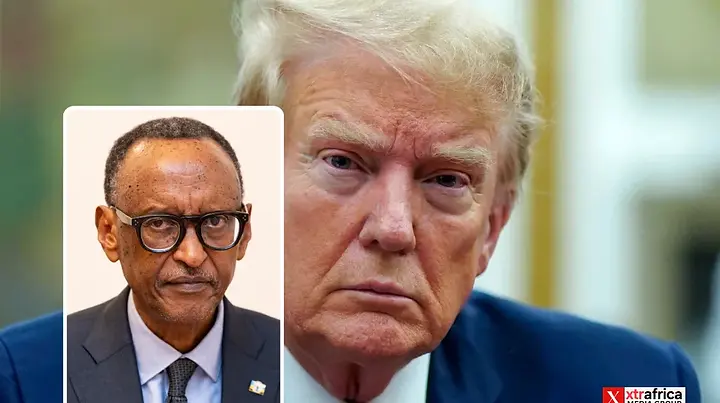
Last week, U.S. President Donald Trump hailed the Washington Peace Accord between the Democratic Republic of Congo (DRC) and Rwanda as a “historic” step toward ending one of Africa’s deadliest conflicts. But beneath the smiles and speeches, reality tells a darker story: Rwanda’s army remains active inside Congo, its proxies continue killing civilians, and the very peace Kigali claims to support is being deliberately sabotaged.
For over three decades, Rwandan-backed rebellions, from the AFDL to the M23, have fueled cycles of war, displacement, and resource plunder in eastern Congo. The latest UN report, released just days after the Washington signing, confirms Rwandan Defense Forces (RDF) and M23 rebels have committed war crimes, including executions, mass displacements, and village burnings. Yet, the international community’s response has been timid, cautious, and bureaucratic.
If Washington and its allies truly want peace, they must stop treating Rwanda as a partner and start holding it accountable as a perpetrator. Even Western analysts now acknowledge what the Congolese government and UN experts have repeatedly documented: Rwanda controls M23 militarily, politically, and financially. The Time report itself urges the U.S. to “consider sanctioning Rwandan officials,” an unprecedented admission from a mainstream American publication.
1. The U.S. Must Name Rwanda as the Aggressor
For years, U.S. policy toward Central Africa has been paralyzed by diplomatic politeness. Reports acknowledge “Rwandan support” for M23 but rarely confront Kagame’s government directly. This appeasement has emboldened Kigali to act with impunity.
ADVERTISEMENT
Washington should publicly name Paul Kagame’s regime as the architect of the M23 rebellion, invoke UN Resolution 2773, and demand the immediate and verifiable withdrawal of Rwandan troops from Congolese soil.
2. Sanctions and Aid Suspensions Must Follow
Rwanda’s economy is heavily dependent on external aid and U.S. security assistance. The U.S. and EU should freeze non-humanitarian aid and impose targeted sanctions on Rwandan officials, officers, and businesses implicated in illegal mineral trafficking or human rights abuses.
Kagame’s regime has built an economy on stolen Congolese gold, coltan, and cobalt, minerals that feed Western tech industries. Cutting these illicit flows would not only weaken M23’s funding but also help stabilize Congo’s legitimate mining sector.
ADVERTISEMENT
3. The ICC and UN Should Open Rwanda War Crimes Inquiry
The latest UN Group of Experts report is not just documentation, it’s evidence. Washington, the EU, and the AU should jointly refer Rwanda’s military actions in eastern Congo to the International Criminal Court (ICC) for investigation under Chapter VII of the UN Charter.
For decades, Rwanda has escaped scrutiny by framing its interventions as “security operations” against the FDLR. Yet the evidence now shows systematic attacks against civilians, not combatants. Accountability, not another dialogue, is what this moment demands.
5. Build a Regional Security Architecture Without Rwanda
The U.S. should help strengthen the SADC-EAC regional mechanism to neutralize all foreign forces in the DRC. This means empowering Angola’s mediation and South Africa’s regional influence, while sidelining Kigali from regional decision-making until it complies with international law.
True peace in Central Africa will come not from Kagame’s presence, but from his absence in Congo’s affairs.
TRENDING NOW


POPULAR TODAY


ADVERTISEMENT
Peace With Accountability
President Félix Tshisekedi has made Congo’s position clear: “The darkness will not reign forever.” His government has signed a peace, not a surrender. But diplomacy alone cannot end a war fueled by cross-border greed and international hypocrisy.
Now it falls on Washington and its partners to turn words into action, to use their leverage not to appease Rwanda, but to stop it.
Only when the aggressor is restrained will peace in the Great Lakes region finally become more than a photo opportunity.
ADVERTISEMENT
RELATED ARTICLE


