In the hot lowlands of southwest Ethiopia, healing has long begun close to the ground: in bark, roots, leaves, fruit, stones, water gourds, and the knowledge of people who know where to find them.
The Natural Doctors: How the Suri Tribe Uses Plants to Treat Illnesses
Among the Suri, plants are not just scenery. They are medicine, memory, identity, and practical survival. Academic research by anthropologist Jon Abbink shows that Suri plant knowledge is part of a wider ethnobotanical tradition shared and compared with neighboring Dizi and Me’en communities. His study, “Medicinal and ritual plants of the Ethiopian southwest”, records plants used for malaria, stomach pain, burns, wounds, childbirth, snakebite, water purification, and body strengthening.
Abbink writes that plants in these rural cultures may carry “medicinal and ritual or magical value” (Abbink, 1995, p. 1). That phrase matters. It warns readers not to reduce Suri healing to a list of ingredients. A plant may treat a wound, but it may also carry social meaning, ritual force, or group identity.
Who Are the Suri?
The Suri are an agropastoral people of southwest Ethiopia. Abbink describes them as living in a hot lowland area at about 800 to 1,000 meters above sea level, and as one of three groups in his study, alongside the Dizi and Me’en (Abbink, 1995, p. 2).
In language studies, Suri is closely connected with Chai and Tirmaga speech varieties. Glottolog lists Tirma-Chai under ISO 639-3 code suq, while Meaghan Smith’s linguistic thesis explains that Suri is used for Chai and Tirmaga dialects in the Chai-Tirmaga-Mursi cluster.
The Suri live in a landscape where cattle, fields, water sources, bush plants, seasonal illness, and distance from clinics shape daily life. Abbink noted that, among the groups he studied, the Suri were especially remote, writing that they were “the most isolated” (Abbink, 1995, p. 2).
Plant Knowledge as Healthcare
Abbink’s research began with anthropological fieldwork in 1990. He worked through observation, indirect questioning, interviews with plant specialists, local assistants, and plant-gathering trips. His project collected local plant names, uses, altitude, distribution, and cultural context.
AFRICAN CULTURE
The Suri Tribe’s Plant Medicine Traditions

Jul 10, 2026
Jul 10, 2026
14 min read

Published
Updated:
In the hot lowlands of southwest Ethiopia, healing has long begun close to the ground: in bark, roots, leaves, fruit, stones, water gourds, and the knowledge of people who know where to find them.
The Natural Doctors: How the Suri Tribe Uses Plants to Treat Illnesses
Among the Suri, plants are not just scenery. They are medicine, memory, identity, and practical survival. Academic research by anthropologist Jon Abbink shows that Suri plant knowledge is part of a wider ethnobotanical tradition shared and compared with neighboring Dizi and Me’en communities. His study, “Medicinal and ritual plants of the Ethiopian southwest”, records plants used for malaria, stomach pain, burns, wounds, childbirth, snakebite, water purification, and body strengthening.
Abbink writes that plants in these rural cultures may carry “medicinal and ritual or magical value” (Abbink, 1995, p. 1). That phrase matters. It warns readers not to reduce Suri healing to a list of ingredients. A plant may treat a wound, but it may also carry social meaning, ritual force, or group identity.
Who Are the Suri?

The Suri are an agropastoral people of southwest Ethiopia. Abbink describes them as living in a hot lowland area at about 800 to 1,000 meters above sea level, and as one of three groups in his study, alongside the Dizi and Me’en (Abbink, 1995, p. 2).
In language studies, Suri is closely connected with Chai and Tirmaga speech varieties. Glottolog lists Tirma-Chai under ISO 639-3 code suq, while Meaghan Smith’s linguistic thesis explains that Suri is used for Chai and Tirmaga dialects in the Chai-Tirmaga-Mursi cluster.
The Suri live in a landscape where cattle, fields, water sources, bush plants, seasonal illness, and distance from clinics shape daily life. Abbink noted that, among the groups he studied, the Suri were especially remote, writing that they were “the most isolated” (Abbink, 1995, p. 2).
Plant Knowledge as Healthcare
Abbink’s research began with anthropological fieldwork in 1990. He worked through observation, indirect questioning, interviews with plant specialists, local assistants, and plant-gathering trips. His project collected local plant names, uses, altitude, distribution, and cultural context.
The scale of the work was significant. Abbink records that “some 280 plant names were collected” across the Suri, Dizi, and Me’en study communities (Abbink, 1995, p. 4).
For the Suri, this knowledge was not simply a substitute for clinics. It was part of a local health system shaped by distance, trust, ecology, and inherited expertise. Abbink found that the most common afflictions for which people sought cures included malaria, gastrointestinal problems, cuts, burns, infections, and snakebite poisoning (Abbink, 1995, p. 4).
Further Reading
Jon Abbink (1995)
Medicinal and ritual plants of the Ethiopian southwest: an account of recent research
Relevant pages: 1-7
ADVERTISEMENT
Treating Malaria with Wild Olive Bark
One of the clearest remedies in Abbink’s table is the use of wild olive bark for malaria.
The plant is Olea europaea L. subsp. cuspidata, known in Suri as girari. According to Abbink, the bark is crushed and drunk with water to combat malaria (Abbink, 1995, p. 6).

This is not a clinical claim that the remedy has been proven in modern trials. It is a documented ethnobotanical claim: Suri people reported this use as part of their own medicinal knowledge. That distinction is important for responsible reporting.
Malaria remains a serious modern health issue in Surma woreda. Ethiopia’s National Disaster Risk Management Commission recorded malaria as the leading reported sickness in the population sickness category, at 71.24%, and among children, at 63.04% (NDRMC, 2020, p. 161).
Plants for Stomach Pain
For persistent stomach pain, Abbink records the use of Tamarindus indica, the tamarind tree. In Suri, the plant is called ragay. A concentration of crushed fruits is mixed with water and drunk to ease persistent stomach pains (Abbink, 1995, p. 6).
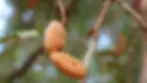
This remedy shows how food plants and medicinal plants can overlap. Tamarind is widely known in many regions as a sour fruit used in drinks and cooking, but in this Suri context, Abbink records a specific medicinal preparation.
The detail matters: the fruit is crushed, concentrated, mixed with water, and drunk. That is the kind of page-level evidence a journalist can use without exaggerating.
Healing Burns in the Home
Burns were a common danger for young Suri children, according to Abbink’s research. In dark Suri huts, children could fall into the central fire. For fresh burns, the Suri used Evolvulus alsinoides, called keya-guy in Suri. Its leaves were crushed and applied directly to the burn (Abbink, 1995, p. 6).

This example shows how plant medicine responds to ordinary domestic risk. The remedy is not presented as distant ritual. It belongs to the urgent reality of a child, a fire, a wound, and the nearest available treatment.
Wounds, Piercing, and Bone Surgery
Suri plant medicine also appears in the treatment of cuts and wounds linked to daily life and body practices.
Abbink records Ximenia americana, called lomay in Suri. The stone of the plant contains an oily substance used on skin cuts, including cuts after ear and lip piercing. The same oil was also applied after bone surgery to prevent infections (Abbink, 1995, p. 7).
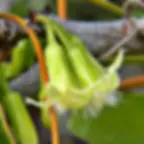
The mention of bone surgery is striking. Abbink writes that the Suri retained knowledge of traditional surgical techniques used for serious bone fractures and battle wounds, though he also says these areas needed more detailed research (Abbink, 1995, p. 5).
ADVERTISEMENT
Another wound remedy is Rhus natalensis, called keyay in Suri. Its leaves were chewed, mixed with saliva, and applied to bleeding wounds (Abbink, 1995, p. 7). This is a vivid example of medicine as immediate action: the healer’s mouth, the plant, and the wound become part of one practical treatment.
Snakebite and Emergency Knowledge
Snakebite poisoning is one of the common afflictions Abbink lists for the groups he studied (Abbink, 1995, p. 4). For snakebites, the Suri used Thunbergia ruspolli, called zibu-a-kono. The crushed leaves were applied to snakebites (Abbink, 1995, p. 7).

Again, this should not be written as proof of antivenom effect. It is evidence of a documented local response to snakebite. In remote areas, where clinics may be distant or difficult to reach, emergency plant knowledge can carry enormous practical importance.
Childbirth and Secret Knowledge
Some Suri plant knowledge is connected to childbirth. Abbink records Carissa edulis, called mirgari in Suri. Its crushed root, mixed with water, was given to pregnant women to ease or shorten delivery (Abbink, 1995, p. 6).
Carissa edulis
But Abbink also warns that reproductive-health knowledge was not always openly shared. Information about plants used to induce abortion, speed delivery, and stop postnatal bleeding was usually kept secret among the groups he studied (Abbink, 1995, p. 4).
This secrecy is part of the story. Healing knowledge is not always public information. It may be held by specialists, elders, women, families, or trusted people. Abbink noted that the Suri were “least forthcoming with information” among the groups studied (Abbink, 1995, p. 4).
That does not mean they lacked knowledge. In fact, he writes that they were reputed to have some of the most elaborate traditional knowledge still in use.
Purifying Water with Branches
Medicine is not only about treating illness after it appears. It can also be about prevention.
Abbink records Euclea divinorum, called kolyongi in Suri. Its branches were placed in gourds or pots of water and left for several hours to purify drinking water (Abbink, 1995, p. 7).

Modern health data gives this practice added context. The Surma Woreda Disaster Risk Profile reports that 67.88% of surveyed households used rivers or streams as their main drinking-water source, and 89.38% reported no water treatment method (NDRMC, 2020, pp. 164-165).
That does not prove how widely Euclea divinorum is used today. But it shows why water purification knowledge matters in this environment.
Strengthening the Body
Not every plant in Suri healing fits neatly into Western categories of medicine. Abbink records Harrisonia abyssinica, called dokay in Suri, as a plant used by young Suri men who herd cattle. Its crushed bark was drunk with water to purify and strengthen the body (Abbink, 1995, p. 7).
Trending Now


Popular Today


ADVERTISEMENT
Abbink is careful here: he says this plant is “not strictly speaking a medicine” (Abbink, 1995, p. 7). It is better understood as a body-strengthening and purifying plant, connected to youth, cattle herding, and identity.
The same plant also carried a boundary-making meaning. Abbink reports that Suri people said others were not fit or were too weak to use it. He describes this as part of a “cultural language” of plants, where plants become more than remedies: they mark difference, strength, and belonging (Abbink, 1995, p. 4).
Traditional Healers and Modern Clinics
Suri plant medicine exists today alongside clinics, government health structures, and changing public health needs.
The 2020 government profile for Surma woreda reports that 40.09% of surveyed households went to a district or municipal hospital, health centre, or clinic for healthcare. Another 18.53% reported going to a traditional healer (NDRMC, 2020, p. 157). The same page lists barriers to adequate healthcare, including treatment costs, distance, shortage of health professionals, and lack of awareness about facilities.
This mixed pattern matters. It shows that traditional healing is not simply a relic of the past. It remains part of a wider health landscape where people make choices based on access, trust, money, distance, illness type, and local knowledge.
Why This Knowledge Must Be Handled Carefully
Suri plant medicine deserves respect, but also careful language. It should not be romanticized as miracle medicine, and it should not be dismissed as superstition.
Abbink’s work shows a deep system of observation, naming, preparation, secrecy, and cultural meaning. It also shows limits. Some claims were not fully confirmed. For example, he mentions vague indications that women may use pressed Ximenia americana oil as a contraceptive, but says there was no confirmation (Abbink, 1995, p. 7). That claim should not be understood as fact.
The strongest way to present Suri healing is to stay close to the evidence: which plant, which Suri name, which preparation, which reported use, and which source.
The Suri are sometimes described through dramatic images of body painting, cattle culture, or remote landscapes. But their plant medicine reveals a quieter and more practical story: a people reading their environment with precision.
A bark becomes a malaria remedy. A fruit becomes stomach medicine. A crushed leaf is placed on a burn. Oil is pressed into a wound. Branches sit in water until the water is ready to drink. A plant strengthens young cattle herders and marks Suri identity.
These are not random acts. They are learned practices, carried through memory, observation, secrecy, and trust. In a region where clinics may be distant and illness is part of daily risk, Suri plant knowledge remains one of the community’s most important forms of intelligence.
Reference
Abbink (1995, pp. 1-7): Main source for Suri medicinal plants, illness categories, preparation methods, secrecy, identity meanings, and cautions.
NDRMC (2020, pp. 157-165): Modern health access, malaria prevalence, sanitation, and water-source context.
Glottolog and Smith (2021): Suri / Tirma-Chai language context.
ADVERTISEMENT
Related Articles


