A space dedicated to preserving, transmitting, and discovering part of Congo's cultural memory.
Introduction
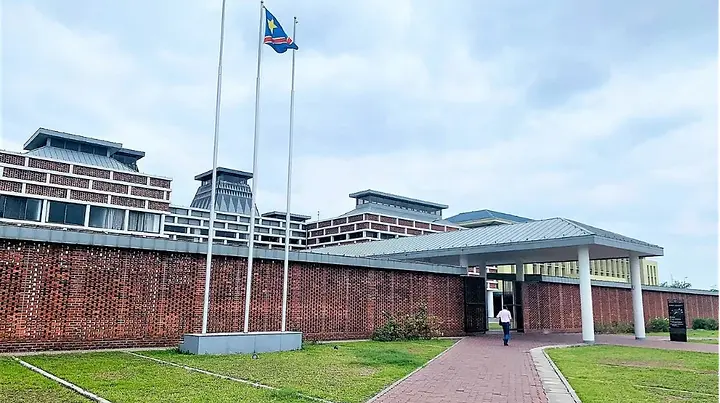
In the heart of Kinshasa, capital of the Democratic Republic of the Congo, stands a place dedicated to preserving and transmitting the country's cultural memory: the National Museum of the Democratic Republic of the Congo (MNRDC).
Located at 4422 Boulevard Triomphal in the Lingwala commune, the museum is one of the capital's main cultural institutions. It allows the public to discover part of the DRC's historical and artistic wealth through objects, works of art, instruments, documents, and various testimonies connected to the country's peoples and different periods of Congolese history.
Beyond being simply an exhibition venue, the museum plays an educational role. In particular, it enables younger generations to better understand the cultures that make up the DRC and the importance of preserving the national heritage.
1. Where Is the National Museum of the DRC Located?
The National Museum of the DRC is located in Kinshasa, in the Lingwala commune, at 4422 Boulevard Triomphal. It is near the Protestant Centenary Cathedral and the Palais du Peuple.
This location gives it a relatively central position in the capital and makes it accessible to residents, students, researchers, tourists, and visitors interested in Congolese history.
The building covers approximately 6,000 square meters. It was specifically designed to house and preserve collections connected to Congolese cultural heritage.
Hours listed by the IMNC: Tuesday to Sunday, 9:00 a.m. to 4:00 p.m.; closed Monday. On public holidays, visitors are advised to check the calendar before traveling.
CULTURE & TOURISM
National Museum of the DRC: Inside Congo’s Cultural Heritage

Sep 20, 2026
Sep 20, 2026
14 min read
Published
Updated:
A space dedicated to preserving, transmitting, and discovering part of Congo's cultural memory.
Introduction
In the heart of Kinshasa, capital of the Democratic Republic of the Congo, stands a place dedicated to preserving and transmitting the country's cultural memory: the National Museum of the Democratic Republic of the Congo (MNRDC).
Located at 4422 Boulevard Triomphal in the Lingwala commune, the museum is one of the capital's main cultural institutions. It allows the public to discover part of the DRC's historical and artistic wealth through objects, works of art, instruments, documents, and various testimonies connected to the country's peoples and different periods of Congolese history.
Beyond being simply an exhibition venue, the museum plays an educational role. In particular, it enables younger generations to better understand the cultures that make up the DRC and the importance of preserving the national heritage.
1. Where Is the National Museum of the DRC Located?

The National Museum of the DRC is located in Kinshasa, in the Lingwala commune, at 4422 Boulevard Triomphal. It is near the Protestant Centenary Cathedral and the Palais du Peuple.
This location gives it a relatively central position in the capital and makes it accessible to residents, students, researchers, tourists, and visitors interested in Congolese history.
The building covers approximately 6,000 square meters. It was specifically designed to house and preserve collections connected to Congolese cultural heritage.
Hours listed by the IMNC: Tuesday to Sunday, 9:00 a.m. to 4:00 p.m.; closed Monday. On public holidays, visitors are advised to check the calendar before traveling.
2. A History Going Back Several Decades
The history of the National Museum did not begin with the current building. The idea of creating a major institution dedicated to preserving Congolese cultural heritage dates back to the 1970s. At the time, when the country was known as Zaire, efforts were already underway to establish an institution capable of collecting, preserving, and presenting material evidence of its history and diverse cultures.
The early collections passed through several locations and difficult periods. The museum was housed in different spaces in Kinshasa before the construction of the current building.
In 2016, the project to construct the present building was launched. The foundation stone was laid in July 2016, and construction continued for approximately three years. The building was officially handed over to the Congolese government on June 14, 2019, before being inaugurated on November 23, 2019.
3. Cooperation Between the DRC and South Korea

The construction of the new building resulted from cooperation between the Democratic Republic of the Congo and the Republic of Korea. Funding was provided by South Korea through its international cooperation agency, KOICA. The announced construction cost was approximately US$21 million.
This cooperation was not limited to construction of the building. It also included a component aimed at strengthening skills in the conservation and management of works of art.
The project therefore aimed to provide the DRC with modern infrastructure capable of better protecting its cultural heritage and presenting it to the public.
4. What Can Visitors Discover in the Museum?

The National Museum brings together items originating from different regions and communities of the DRC. Its collections include:
ADVERTISEMENT
traditional masks;
sculptures;
objects used in everyday life;
traditional musical instruments;
objects connected to cultural practices;
archaeological pieces;
historical objects;
ethnographic documents and testimonies;
works of modern art.
The objects on display are not regarded merely as works of art. They also help visitors understand the lifestyles, beliefs, traditions, techniques, and social organization of different communities.
When the building was officially handed over in 2019, Radio Okapi reported that the collections included approximately 12,000 objects from Congolese cultural heritage, covering different periods from prehistory to the postcolonial era.
5. A Museum Dedicated to Congolese Memory

A national museum plays a particular role in a country as large and culturally diverse as the DRC. The Democratic Republic of the Congo is home to numerous communities, languages, traditions, and cultural practices.
In this context, the museum provides a space where part of this diversity can be brought together and presented. For a young Congolese person, visiting the museum can be an opportunity to discover objects and practices that may not necessarily be present in their everyday surroundings.
6. An Important Role in Education
The museum can also be regarded as a classroom outside school. Historical and cultural education does not come only from books. Objects preserved in a museum can make history more tangible.
A student observing an old musical instrument, a traditional sculpture, or an object used in the past can better understand certain aspects of the lives of previous generations.
At the museum's inauguration, authorities particularly emphasized its educational and cultural function. The museum was intended to help transmit knowledge and artistic and historical references to future generations.
Schools can therefore use the museum as a complement to classroom teaching.
7. A Destination for Tourists as Well
The National Museum can also contribute to the development of cultural tourism in Kinshasa. When a foreign visitor arrives in the DRC, they may be interested not only in discovering the country's natural landscapes but also in understanding the history and cultures of the Congolese people.
The museum can therefore serve as a gateway to this history. It allows visitors to discover different expressions of Congolese culture within a single space.
Developing this form of tourism can also help present the DRC from another perspective by highlighting its heritage and diverse cultures.
8. Museum Admission Fees
According to rates published in 2024, Congolese adult nationals were required to pay 3,500 Congolese francs, while the fee for Congolese children was 2,500 Congolese francs. For foreign visitors, the announced rates were US$10 for adults and US$5 for children.
Institutional information also indicates that online booking is available, with individual and group categories. Because admission rates and conditions may change, visitors are advised to verify official information before visiting.
ADVERTISEMENT
9. Visiting Hours
According to the website of the Institut des Musees Nationaux du Congo, the National Museum is currently open:
Tuesday-Sunday: 9:00 a.m.-4:00 p.m. Monday: Closed
For public holidays, the museum recommends checking the calendar before traveling. Anyone wishing to prepare a report or conduct university research may also find it useful to contact the museum directly before visiting.
Practical tip: A local guide, in French or English, can enrich the visit through explanations and anecdotes about the pieces on display.
10. A Building Designed for Multiple Activities

The National Museum is not limited to its exhibition halls. At its inauguration, several facilities were presented: exhibition rooms, storage areas, a restoration laboratory, a sound-recording room, a multipurpose room, a conference room, a seminar room, and a library. The building also has a surveillance system.
These facilities show that the museum was designed as a genuine cultural institution. In addition to displaying collections, it can host scientific, educational, and cultural activities.
11. Preserving Heritage: A Major Challenge
Preserving an old work does not simply mean placing it behind glass. Objects can be fragile and sensitive to humidity, heat, light, insects, and poor storage conditions.
This is why a modern museum needs suitable storage areas, specialists, and technical resources to protect its collections. The National Museum notably includes a laboratory dedicated to restoring works.
12. The Museum and the Question of Heritage Restitution

The question of Congolese cultural objects held abroad is also part of the major debates surrounding heritage. During the colonial period and in the decades that followed, many objects originating from Congo left the country and are now held in foreign collections.
When the National Museum was inaugurated in 2019, the question of returning Congolese cultural heritage was publicly raised. However, the return of these objects raises several issues: ownership, identification, transportation, restoration, security, and conservation.
The development of modern museum infrastructure in the DRC is therefore also an important element in this discussion.
13. Why Should Young People Visit the National Museum?
Young people make up a large share of Kinshasa's population. Yet many young people may sometimes know more about foreign cultures shared through the internet, television, and social media than about the history of the different communities in their own country.
A museum visit can help reconnect young people with their heritage. It can also help answer several questions:
How did our ancestors live?
What objects did they use?
How did they make their instruments?
What were their artistic practices?
How did the different communities evolve?
The museum therefore becomes a place where young people can discover that Congolese culture is not limited to modern music or fashion.


POPULAR TODAY


ADVERTISEMENT
14. The Museum as a Tool for Promoting Congolese Culture
Culture is an important part of a country's identity. In the case of the DRC, this identity is particularly rich because of the diversity of its peoples, languages, and traditions.
The National Museum presents this diversity within an organized space. It can also serve as a meeting point for researchers, artists, students, teachers, tourists, and the general public.
Through its collections and activities, it therefore helps make cultural heritage more visible.
15. A Heritage That Must Be Passed on to Future Generations
The true mission of a museum is not simply to display objects to the public. It must also ensure that these objects can be studied and preserved for future generations.
An old object can tell part of the history of a community. If it disappears, part of that memory may disappear as well.
The National Museum is therefore a place of preservation as well as transmission. This dimension gives cultural heritage its long-term value.
Conclusion
The National Museum of the Democratic Republic of the Congo, located on Boulevard Triomphal in the Lingwala commune of Kinshasa, is an important space for preserving and discovering Congolese heritage.
Its current building, constructed through cooperation between the DRC and South Korea, was handed over to the Congolese government in June 2019 and officially inaugurated on November 23 of the same year.
With its collections, exhibition halls, conservation spaces, laboratory, and infrastructure dedicated to cultural and scientific activities, the museum seeks to bring the public closer to the history and culture of Congo.
For school pupils, students, researchers, families, and tourists, a visit is above all an opportunity to discover part of the DRC's cultural memory.
Finally, the National Museum is a reminder that a country is not built only through modern infrastructure. It is also built by preserving its history, protecting its heritage, and passing its culture on to future generations.
Practical Information
Address: National Museum of the DRC, 4422 Boulevard Triomphal, Lingwala commune, Kinshasa.
Currently listed hours: Tuesday to Sunday, 9:00 a.m. to 4:00 p.m.; closed Monday. Admission: Published prices may change; verify official information before visiting. Tip: For an in-depth visit, a local guide can provide additional explanations about the collections.
Sources Mentioned in the Original Article
Institut des Musees Nationaux du Congo (IMNC), Radio Okapi, Actualite.cd, and the Presidency of the Democratic Republic of the Congo. Practical information should be verified with institutional sources before publication or a visit.
ADVERTISEMENT
RELATED ARTICLE