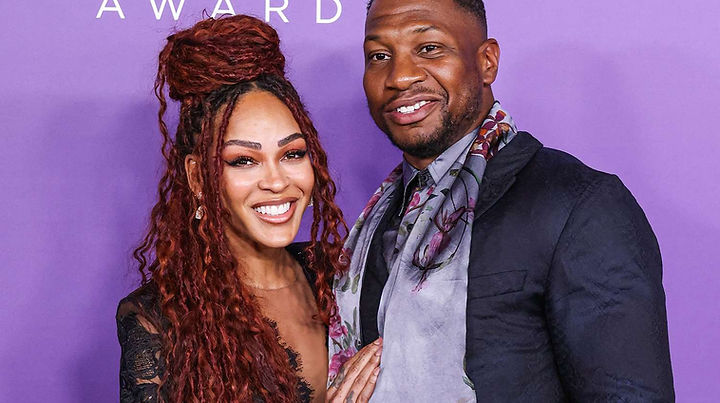
Conakry — Hollywood actors Meagan Good and Jonathan Majors have been granted citizenship of Guinea, following DNA tests that traced their ancestral roots to the West African nation, Guinean authorities have confirmed, according to the report by BBC News
The couple travelled to Guinea this week, where they were formally welcomed and presented with passports during an official ceremony organised by the country’s Ministry of Culture and Identity. The event took place at the Gbassi Kolo cultural centre on Friday and forms part of broader regional efforts to reconnect members of the African diaspora with the continent.
Jonathan Majors, known for his roles in Creed and Ant-Man, described the decision to acquire Guinean citizenship as both personal and symbolic, saying it represents a way to align their professional lives with their African heritage and strengthen ties between Africa and its global diaspora.
Meagan Good, best known for films such as Think Like a Man, expressed gratitude to Guinean authorities and said the visit marked her first time in the country. “There is nothing more we wish to say than thank you,” she said.
Official Reception in Conakry
The actors arrived at Conakry’s Gbessia International Airport on Friday morning, where they were greeted by government officials, traditional music, and cultural performers. During their stay, the couple are also expected to visit Boké, a coastal region historically associated with transatlantic slavery, where captives were once held before being transported overseas.
Guinea’s Minister of State and Secretary-General of the Presidency, Djiba Diakité, presented the citizenship documents on behalf of President Mamadi Doumbouya, telling the actors they were now considered ambassadors of Guinean identity on the global stage.
“We hope you will be among the sons and daughters who proudly represent Guinea and our flag around the world,” he said.
Long-Term Ties Under Consideration
Asked about their future plans, the couple told the BBC in an email exchange that they could envision establishing a home in Guinea and spending extended periods in the country.
ENTERTAINMENT BUZZ
Meagan Good and Jonathan Majors Granted Guinean Citizenship

Jan 12, 2026
May 15, 2026
5 min read
Published
Updated:
Conakry — Hollywood actors Meagan Good and Jonathan Majors have been granted citizenship of Guinea, following DNA tests that traced their ancestral roots to the West African nation, Guinean authorities have confirmed, according to the report by BBC News
The couple travelled to Guinea this week, where they were formally welcomed and presented with passports during an official ceremony organised by the country’s Ministry of Culture and Identity. The event took place at the Gbassi Kolo cultural centre on Friday and forms part of broader regional efforts to reconnect members of the African diaspora with the continent.
Jonathan Majors, known for his roles in Creed and Ant-Man, described the decision to acquire Guinean citizenship as both personal and symbolic, saying it represents a way to align their professional lives with their African heritage and strengthen ties between Africa and its global diaspora.
Meagan Good, best known for films such as Think Like a Man, expressed gratitude to Guinean authorities and said the visit marked her first time in the country. “There is nothing more we wish to say than thank you,” she said.
Official Reception in Conakry
The actors arrived at Conakry’s Gbessia International Airport on Friday morning, where they were greeted by government officials, traditional music, and cultural performers. During their stay, the couple are also expected to visit Boké, a coastal region historically associated with transatlantic slavery, where captives were once held before being transported overseas.
ADVERTISEMENT
Guinea’s Minister of State and Secretary-General of the Presidency, Djiba Diakité, presented the citizenship documents on behalf of President Mamadi Doumbouya, telling the actors they were now considered ambassadors of Guinean identity on the global stage.
“We hope you will be among the sons and daughters who proudly represent Guinea and our flag around the world,” he said.
Long-Term Ties Under Consideration
Asked about their future plans, the couple told the BBC in an email exchange that they could envision establishing a home in Guinea and spending extended periods in the country.
“This is not a short-term connection,” they said. “It’s something we see growing and lasting.”
ADVERTISEMENT
It remains unclear whether Good and Majors plan to make significant investments in Guinea or permanently relocate.
Part of a Wider Diaspora Movement
Their citizenship ceremony reflects a broader continental trend aimed at encouraging people of African descent to reconnect with their ancestral homelands. Similar initiatives gained prominence in 2019 when Ghana launched the ‘Year of Return’, inviting members of the African diaspora to visit, invest, and resettle. Among those who later responded to the call was American musician Stevie Wonder in 2024.
Other high-profile figures have also acquired African citizenship in recent years, including singer Ciara, who became a citizen of Benin, and Hollywood actor Samuel L. Jackson, who received Gabonese nationality in 2020.
Guinea’s Historical Role
Guinea has a long history of welcoming African-descended activists and cultural figures. In the 1960s, South African singer Miriam Makeba and her husband, US civil rights activist Stokely Carmichael (later known as Kwame Ture), settled in Guinea after facing political persecution abroad. Makeba was stripped of her South African citizenship for opposing apartheid, while Carmichael lost his US visa due to his activism.
Makeba later became a Guinean honorary citizen and cultural ambassador, while Carmichael remained in the country until his death in 1998.
TRENDING NOW


POPULAR TODAY


ADVERTISEMENT
Political Context
In recent years, Guinea has experienced political turbulence. The country has been under military-led rule since a coup in 2021, with authorities imposing restrictions on media and public demonstrations. A civilian government was installed following elections held last month, which were won by President Doumbouya with 87% of the vote.
Despite political tensions, Guinea has maintained close relations with Western partners, particularly France.
The country is rich in natural resources, including bauxite, gold, iron ore, diamonds, and uranium, yet a large portion of its population continues to live in poverty, making diaspora engagement and foreign investment a key focus of national policy.
Source of this article: BBC News
ADVERTISEMENT
RELATED ARTICLE