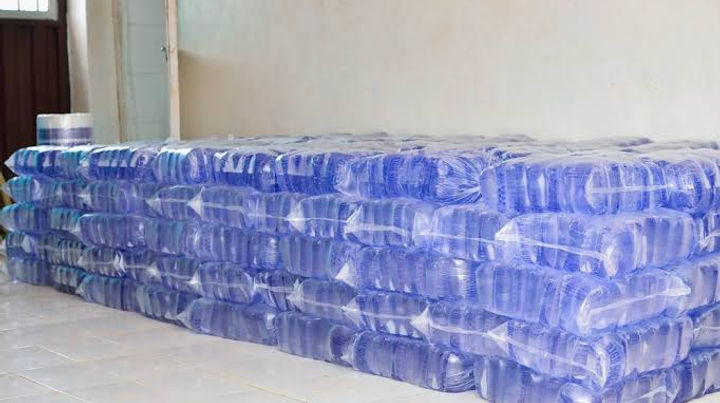
Lagos, Nigeria — 13 October 2026. Lagos table-water producers have denied a statewide strike. ATWAP’s state chairperson, Omolabake Mosaku, told Punch that selected zones were undertaking sanitation and inspections, with temporary production shutdowns.
Is there a statewide sachet-water strike in Lagos? ATWAP’s Lagos chairperson says the activity is selected-zone sanitation, not a statewide strike. Her supply assurance is an association statement, not a guarantee for every neighbourhood. Consumers should confirm local deliveries and check product details through the regulator’s official channels.
The affected zones and duration
In Punch’s direct interview, Mosaku identified Agege, Alimosho, Egbeda, Ifako-Ijaiye, AIT, Alagbado and Iyana Ipaja. She expected three days, subject to inspection progress and compliance. No calendar start or finishing date was given.
“We are not on strike,” she said. Producers elsewhere and distributors still had supplies, according to her account.
What a sanitation exercise can establish
NAFDAC’s packaged-water facility inspection guidelines require hygienic premises and written cleaning procedures. They also specify procedures for production, quality control, complaints and recalls.
These are continuing requirements for packaged-water facilities. They provide regulatory context for cleaning and inspection, but do not certify that a particular factory has passed the current exercise.
The same guidance requires products to be handled and transported in ways that prevent deterioration and contamination. Packaged water should be stored in a cool, dry place away from sunlight. Compliance therefore extends beyond cleaning a production building to how finished products reach consumers.
A sanitation announcement is not a substitute for a product-specific finding. Nor does temporary closure, by itself, establish that a brand’s water is contaminated. A claim about a particular product needs an identifiable regulatory or laboratory finding.
BUSINESS INTERVIEWS
Lagos Sachet-Water Strike Claim: What Producers Say About the Shutdown

Oct 13, 2026
Oct 13, 2026
5 min read
Published
Updated:
Lagos, Nigeria — 13 October 2026. Lagos table-water producers have denied a statewide strike. ATWAP’s state chairperson, Omolabake Mosaku, told Punch that selected zones were undertaking sanitation and inspections, with temporary production shutdowns.
Is there a statewide sachet-water strike in Lagos? ATWAP’s Lagos chairperson says the activity is selected-zone sanitation, not a statewide strike. Her supply assurance is an association statement, not a guarantee for every neighbourhood. Consumers should confirm local deliveries and check product details through the regulator’s official channels.
The affected zones and duration
In Punch’s direct interview, Mosaku identified Agege, Alimosho, Egbeda, Ifako-Ijaiye, AIT, Alagbado and Iyana Ipaja. She expected three days, subject to inspection progress and compliance. No calendar start or finishing date was given.
“We are not on strike,” she said. Producers elsewhere and distributors still had supplies, according to her account.
What a sanitation exercise can establish
NAFDAC’s packaged-water facility inspection guidelines require hygienic premises and written cleaning procedures. They also specify procedures for production, quality control, complaints and recalls.
These are continuing requirements for packaged-water facilities. They provide regulatory context for cleaning and inspection, but do not certify that a particular factory has passed the current exercise.
The same guidance requires products to be handled and transported in ways that prevent deterioration and contamination. Packaged water should be stored in a cool, dry place away from sunlight. Compliance therefore extends beyond cleaning a production building to how finished products reach consumers.
ADVERTISEMENT
A sanitation announcement is not a substitute for a product-specific finding. Nor does temporary closure, by itself, establish that a brand’s water is contaminated. A claim about a particular product needs an identifiable regulatory or laboratory finding.
Check the product rather than relying on a forwarded message
NAFDAC’s NAPAMS product-verification portal offers a water-product verification option using a NAFDAC number. The page invites users to enter the product’s certificate number and select Verify.
Use the details printed on the actual packaging when making the check. Record the brand and manufacturer as well as the number, so a question can be referred to the regulator with enough information to identify the product.
The portal is a registration-verification route, not a live map of shops or distributor stocks. It cannot answer whether a nearby retailer has deliveries available today. That question belongs with the retailer, supplier or producer concerned.
Registration information also serves a different purpose from checking the condition of a particular package. A database record should not be presented as proof that every individual sachet has been correctly stored or handled after production.
ADVERTISEMENT
Ask suppliers questions they can answer
Residents and retailers can make a more useful enquiry by asking about their specific order. Confirm whether a delivery is available, when the next consignment is expected and whether any quoted reopening date is provisional.
For traders, keep the supplier’s response alongside the order record. This helps distinguish a delayed consignment from a general statement about a citywide stoppage. Avoid accepting a substitute brand solely because someone says all familiar producers have closed.
For households, a neighbourhood stock check is more informative than a broad message forwarded from another area. Ask which brand and producer the message concerns, where the information came from and when it was issued.
These checks do not guarantee availability. They help establish the scope of a claim before it is repeated as a statement about the whole state.
Where product concerns can be reported
NAFDAC’s complaints-resolution guidance covers external complaints, including reports about unwholesome regulated products. It describes escalation to the appropriate technical directorate for investigation and lists reforms@nafdac.gov.ng as a complaints email address.
TRENDING NOW


POPULAR TODAY


ADVERTISEMENT
The guidance explains that complainants need to provide adequate information for an investigation. A useful report should identify the product, the concern and the relevant purchase details. Keep packaging information and any receipt rather than relying only on a general description such as “bad water”.
Reporting a concern starts a process; it is not confirmation that a producer has breached a rule. Likewise, an association’s inspection announcement should not be described as a regulator’s recall or closure order unless the relevant authority has issued one.
The next useful clarification would provide dated information on affected production facilities, inspection completion and local deliveries. Until that information is available, residents should treat broad shutdown messages cautiously and direct product concerns through identifiable official channels.
ADVERTISEMENT
RELATED ARTICLE


