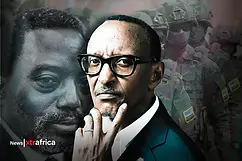
In a tense BBC Hard Talk interview, Rwandan President Paul Kagame directly addressed persistent questions over the 1994 assassination of President Juvénal Habyarimana, whose plane was shot down over Kigali on April 6, triggering the Rwandan Genocide.
When pressed by the interviewer on whether he believed he had the right to assassinate Habyarimana, Kagame responded defiantly:
“Well, I had the right to fight for my rights. But do you believe you had the right to assassinate him? No, but of course, Habyarimana, having been on the other side that I was fighting, it was possible that he could easily die. Imagine if I had died myself in the same process. Would the same judge be asking about my death, about who killed me?”
Kagame repeatedly insisted he bears no responsibility for Habyarimana’s death and expressed indifference to it.
“First of all, I'm not responsible for Habyarimana's death, and I don't care. [...] I wasn't responsible for his security. He wasn't responsible for mine, either, and he wouldn't have cared if I had died. I don't care that it happened to him.”
He framed the incident within the broader context of the civil war, stating that Habyarimana was an adversary in an armed struggle, and dismissed deeper scrutiny of the plane crash as irrelevant to his fight for Rwandan rights after years in exile.
The interviewer reminded Kagame that the RPF (Rwanda Patriotic Front), which he led, was engaged in peace negotiations with Habyarimana under the Arusha Accords at the time of the crash, and that the genocide unfolded afterward. Kagame brushed aside the allegations as “wild” while maintaining strong confidence in his position.
The exchange centered heavily on French anti-terrorism judge Jean-Louis Bruguière, who conducted a lengthy investigation into the downing of Habyarimana’s plane (which also killed the Burundian president and French crew members). In 2006, following years of inquiry involving witness testimonies, Bruguière concluded that Kagame and senior RPF figures ordered the missile attack from Masaka Hill. He issued international arrest warrants for nine of Kagame’s top aides and recommended that Kagame himself, then protected by head-of-state immunity, face the International Criminal Tribunal for Rwanda (ICTR).
Kagame rejected Bruguière’s authority outright, calling the investigation “nonsense” and arguing that a foreign judge had no right to intervene in Rwanda’s internal affairs or judge events from the Rwandan civil war.
“The French judge has no right to judge me in my own situation in Rwanda. [...] France, Bruguière have no right whatsoever to be making such a nonsense of our situation, and it is nonsense.”
KWIBUKA
Asked Why He Killed Habyarimana, “I Had the Right to Defend Myself."

Apr 7, 2026
May 15, 2026
4 min read

Published
Updated:
In a tense BBC Hard Talk interview, Rwandan President Paul Kagame directly addressed persistent questions over the 1994 assassination of President Juvénal Habyarimana, whose plane was shot down over Kigali on April 6, triggering the Rwandan Genocide.
When pressed by the interviewer on whether he believed he had the right to assassinate Habyarimana, Kagame responded defiantly:
“Well, I had the right to fight for my rights. But do you believe you had the right to assassinate him? No, but of course, Habyarimana, having been on the other side that I was fighting, it was possible that he could easily die. Imagine if I had died myself in the same process. Would the same judge be asking about my death, about who killed me?”
Kagame repeatedly insisted he bears no responsibility for Habyarimana’s death and expressed indifference to it.
ADVERTISEMENT
“First of all, I'm not responsible for Habyarimana's death, and I don't care. [...] I wasn't responsible for his security. He wasn't responsible for mine, either, and he wouldn't have cared if I had died. I don't care that it happened to him.”
He framed the incident within the broader context of the civil war, stating that Habyarimana was an adversary in an armed struggle, and dismissed deeper scrutiny of the plane crash as irrelevant to his fight for Rwandan rights after years in exile.
The interviewer reminded Kagame that the RPF (Rwanda Patriotic Front), which he led, was engaged in peace negotiations with Habyarimana under the Arusha Accords at the time of the crash, and that the genocide unfolded afterward. Kagame brushed aside the allegations as “wild” while maintaining strong confidence in his position.
ADVERTISEMENT
The exchange centered heavily on French anti-terrorism judge Jean-Louis Bruguière, who conducted a lengthy investigation into the downing of Habyarimana’s plane (which also killed the Burundian president and French crew members). In 2006, following years of inquiry involving witness testimonies, Bruguière concluded that Kagame and senior RPF figures ordered the missile attack from Masaka Hill. He issued international arrest warrants for nine of Kagame’s top aides and recommended that Kagame himself, then protected by head-of-state immunity, face the International Criminal Tribunal for Rwanda (ICTR).
Kagame rejected Bruguière’s authority outright, calling the investigation “nonsense” and arguing that a foreign judge had no right to intervene in Rwanda’s internal affairs or judge events from the Rwandan civil war.
“The French judge has no right to judge me in my own situation in Rwanda. [...] France, Bruguière have no right whatsoever to be making such a nonsense of our situation, and it is nonsense.”
When asked why he would not agree to have the case tested before an international court, Kagame cited principles of sovereignty and dismissed the push as fabricated stories that hinder Rwanda’s progress. He maintained that the real issues lie elsewhere and that he remains “very confident” of his innocence.
Trending Now


Popular Today


ADVERTISEMENT
The 2006 Bruguière warrants sparked major diplomatic fallout, including Rwanda cutting ties with France and large protests in Kigali. Subsequent French investigations under other judges later challenged Bruguière’s conclusions, with some forensic reviews pointing away from the RPF, though debates over the plane crash and its role in igniting the genocide continue among historians and legal experts.
Kagame’s unapologetic stance in the interview underscored his view of the events as part of a legitimate war of liberation, where casualties on the opposing side, including the head of state, were an expected risk, and external judicial interference was unwelcome. He emphasized that in war, “it was possible that he could easily die,” and questioned why the same scrutiny would not apply symmetrically if roles were reversed.
ADVERTISEMENT
Related Articles