LUSAKA, Zambia --- August 18, 2026 --- Zambia's President Hakainde Hichilema has been declared the winner of the country's presidential election, securing a second term after an election marked by political tensions, disruptions to vote counting and the arrest of opposition officials.
According to results from Zambia's electoral commission reported by the Associated Press, Hichilema secured around 60% of the presidential vote, while his main challenger, opposition leader Brian Mundubile, received around 38%.
The declaration settles a closely watched presidential contest in one of southern Africa's most politically stable democracies.
Hichilema Secures Second Term
Hichilema, 64, first came to power in 2021 and campaigned for another five-year term on his government's record of economic reform.
His administration has overseen Zambia's debt restructuring, efforts to control inflation and measures aimed at attracting additional investment into the country's mining industry.
Following the result, Hichilema said his government was humbled by the confidence voters had placed in it and pledged to govern for Zambians regardless of their political affiliation.
The president has also promised to continue pursuing economic development and dramatically increase Zambia's copper production, an increasingly important issue as global powers compete for access to critical minerals.
Election Followed Days of Tension
The presidential result follows several tense days after Zambians went to the polls.
ELECTIONS
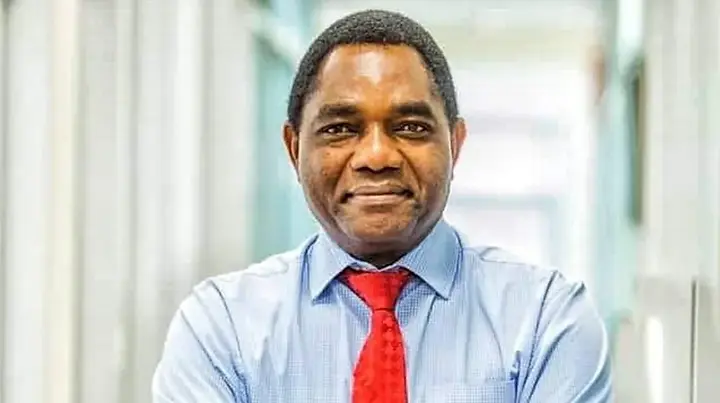
Hakainde Hichilema Wins Second Term in Zambia Election

Aug 18, 2026
Aug 24, 2026
4 min read
Published
Updated:
LUSAKA, Zambia --- August 18, 2026 --- Zambia's President Hakainde Hichilema has been declared the winner of the country's presidential election, securing a second term after an election marked by political tensions, disruptions to vote counting and the arrest of opposition officials.
According to results from Zambia's electoral commission reported by the Associated Press, Hichilema secured around 60% of the presidential vote, while his main challenger, opposition leader Brian Mundubile, received around 38%.
The declaration settles a closely watched presidential contest in one of southern Africa's most politically stable democracies.
Hichilema Secures Second Term
Hichilema, 64, first came to power in 2021 and campaigned for another five-year term on his government's record of economic reform.
His administration has overseen Zambia's debt restructuring, efforts to control inflation and measures aimed at attracting additional investment into the country's mining industry.
Following the result, Hichilema said his government was humbled by the confidence voters had placed in it and pledged to govern for Zambians regardless of their political affiliation.
ADVERTISEMENT
The president has also promised to continue pursuing economic development and dramatically increase Zambia's copper production, an increasingly important issue as global powers compete for access to critical minerals.
Election Followed Days of Tension
The presidential result follows several tense days after Zambians went to the polls.
Vote counting was temporarily suspended after the Electoral Commission reported attacks against election officials and the theft of ballot materials at some polling stations.
Security forces were subsequently deployed to parts of Lusaka before counting resumed.
Authorities also announced the detention of 11 opposition officials following a law-enforcement raid at a property where Mundubile was present. The government accused those detained of possessing military-grade weapons and materials intended for an armed insurrection.
Mundubile was not arrested and rejected allegations surrounding his supporters. He also criticized the raid and raised concerns about the credibility of the electoral process.
ADVERTISEMENT
EU Observers Raise Concerns
A preliminary assessment from European Union election observers said voting was largely peaceful but raised concerns about the wider political environment.
The mission cited restrictions on fundamental freedoms, legal uncertainty and unequal campaign conditions.
Those concerns are likely to remain part of the political debate even after Hichilema's victory has been declared.
Zambia's Economy Takes Centre Stage
Hichilema's victory comes as Zambia continues its recovery from the debt crisis that led the country to default on sovereign debt repayments in 2020.
Under his administration, Zambia has restructured billions of dollars in debt and made progress on inflation and currency stability.
However, many Zambians continue to face high living costs, unemployment and electricity shortages.


ADVERTISEMENT
The country's vast copper resources also make the election internationally significant.
China is already a major investor in Zambia's mining sector, while the United States has increased its interest in African critical minerals as global competition for copper and other strategic resources intensifies.
Hichilema has pledged to increase Zambia's annual copper production to 3 million tonnes by 2031.
His second term will therefore be closely watched not only inside Zambia but across Africa and by international governments and investors seeking greater access to the continent's critical minerals.
What Happens Next
With the presidential result declared, attention will now turn to Hichilema's second-term priorities, the opposition's response to the result and the final assessment of international election observers.
Economic conditions are also likely to remain central to his new mandate as voters look for improvements in household incomes, employment, electricity supply and the cost of living.