The National Assembly has declared the Government’s Grand Inga bill admissible and sent it to committee, advancing a proposed legal framework designed to protect Congo’s control of the strategic site, secure investment and place national development and local communities at the centre of the hydropower project.
KINSHASA, Democratic Republic of the Congo — November 13, 2026 — The Democratic Republic of the Congo has taken a major legislative step toward transforming Grand Inga from an immense natural potential into a state-governed programme for electricity, industrialisation and national development.
On November 11, Minister of Water Resources and Electricity Aimé Sakombi Molendo presented the Government’s Grand Inga implementation bill to the National Assembly. After debate and responses from the minister, deputies declared the text admissible and transferred it to committee for detailed examination.
The bill seeks to establish a legal and institutional framework tailored to a project whose scale exceeds that of an ordinary power facility. According to the Congolese Press Agency’s account, the proposed framework is intended to guarantee state sovereignty over the Inga site, strengthen investor security, address environmental and social responsibilities and organise the progressive development of the hydroelectric complex.
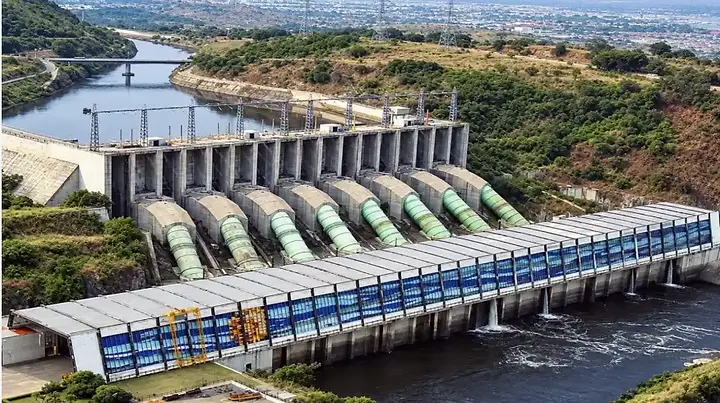
Grand Inga has an estimated potential of approximately 44,000 megawatts, more than one-quarter of the DRC’s hydroelectric potential, which the ministry estimates at 167,200 MW across 3,349 sites.
The vote does not represent final passage of the legislation. It confirms that the National Assembly has accepted the bill for continued parliamentary consideration. The next stage is its examination by the responsible commissions before it can return to the plenary for further legislative action.
What the National Assembly decided
The Government deposited the Grand Inga bill on November 2. Minister Sakombi Molendo presented and defended it before the National Assembly on November 11, explaining why a project of this magnitude requires legislation beyond the country’s general electricity framework.
At the end of the debate, the Assembly declared the bill admissible and referred it to the permanent Commission on Territorial Development, Infrastructure and New Information and Communication Technologies. The Economic and Financial Commission and the Political, Administrative and Legal Commission are expected to participate in the detailed review.
The parliamentary monitoring platform Talatala records the bill as under examination and confirms its transfer to the commission after the plenary debate.
ENERGY AND POWER
Grand Inga Bill Advances Toward DRC Energy Sovereignty

Nov 13, 2026
Nov 13, 2026
14 min read
Published
Updated:
The National Assembly has declared the Government’s Grand Inga bill admissible and sent it to committee, advancing a proposed legal framework designed to protect Congo’s control of the strategic site, secure investment and place national development and local communities at the centre of the hydropower project.
KINSHASA, Democratic Republic of the Congo — November 13, 2026 — The Democratic Republic of the Congo has taken a major legislative step toward transforming Grand Inga from an immense natural potential into a state-governed programme for electricity, industrialisation and national development.
On November 11, Minister of Water Resources and Electricity Aimé Sakombi Molendo presented the Government’s Grand Inga implementation bill to the National Assembly. After debate and responses from the minister, deputies declared the text admissible and transferred it to committee for detailed examination.
The bill seeks to establish a legal and institutional framework tailored to a project whose scale exceeds that of an ordinary power facility. According to the Congolese Press Agency’s account, the proposed framework is intended to guarantee state sovereignty over the Inga site, strengthen investor security, address environmental and social responsibilities and organise the progressive development of the hydroelectric complex.
Grand Inga has an estimated potential of approximately 44,000 megawatts, more than one-quarter of the DRC’s hydroelectric potential, which the ministry estimates at 167,200 MW across 3,349 sites.
The vote does not represent final passage of the legislation. It confirms that the National Assembly has accepted the bill for continued parliamentary consideration. The next stage is its examination by the responsible commissions before it can return to the plenary for further legislative action.
What the National Assembly decided
The Government deposited the Grand Inga bill on November 2. Minister Sakombi Molendo presented and defended it before the National Assembly on November 11, explaining why a project of this magnitude requires legislation beyond the country’s general electricity framework.
At the end of the debate, the Assembly declared the bill admissible and referred it to the permanent Commission on Territorial Development, Infrastructure and New Information and Communication Technologies. The Economic and Financial Commission and the Political, Administrative and Legal Commission are expected to participate in the detailed review.
The parliamentary monitoring platform Talatala records the bill as under examination and confirms its transfer to the commission after the plenary debate.
Committee review allows deputies to examine the proposed articles, governance arrangements, financial provisions, state protections and environmental and social measures in greater depth. The commission can propose changes before submitting its report to the full chamber.
This means the law is advancing through the legislative process while remaining open to parliamentary refinement. If ultimately adopted by Parliament and promulgated, it would become the specialised legal foundation governing Grand Inga’s development and management.
Why Grand Inga requires a dedicated law
The DRC’s general electricity law establishes the national framework for the energy sector, but the Government argues that Grand Inga’s strategic, financial and technical scale requires a specific legal instrument.
The project involves a globally significant hydropower site, multiple development phases, major transmission systems, international financing, industrial demand, regional energy markets and long-term responsibilities toward local communities.
Minister Sakombi told deputies that the country must resolve the paradox of possessing one of the world’s largest hydroelectric resources while many Congolese households and industries continue to face insufficient electricity.
“We must transform our natural potential into production capacity, investment and development opportunities,” the minister said, according to Actualite.cd’s detailed report on the parliamentary session.
ADVERTISEMENT
The proposed law is designed to provide the legal clarity required for that transformation. It would define the institutions responsible for the programme, establish the status of the site, organise relations with investors and set rules for the progressive development of the complex.
Protecting permanent Congolese sovereignty over Inga
The sovereignty provisions are among the bill’s most important elements.
The Government says the legislation would preserve the permanent, inalienable and imprescriptible ownership of the Congolese state over the Inga site. This principle is intended to ensure that international partnerships, investment agreements and project-development arrangements remain anchored in Congo’s ownership of the strategic national asset.
Grand Inga requires cooperation with financial institutions, technical partners and investors capable of supporting large infrastructure. The sovereignty framework establishes the national basis for those partnerships: external capital and expertise can contribute to development, but the site remains under the authority and ownership of the Congolese state.
The bill also refers to the DRC’s existing international obligations, including its 2013 energy treaty with South Africa and the agreement governing the Congo–Oubangui–Sangha basin. A specialised law can help the state coordinate those commitments while defending national strategic interests.
National Assembly President Aimé Boji Sangara reinforced this principle during the debate. He said Grand Inga must first serve Congolese citizens, expand electricity access across the provinces, create employment for young people and preserve the environment.
“Grand Inga must not be a project for others with crumbs for the Congolese. It must be a project for the Congolese,” he said, according to La Référence Plus.
That message places national benefit at the centre of the legislative review. Grand Inga is expected to have regional and international importance, but its first measure of success must be the electricity, jobs, skills and industrial opportunities created inside the DRC.
A proposed governance structure for the project
The bill is organised into eight titles and proposes a dedicated institutional architecture for Grand Inga.
According to the published parliamentary summary, the text would establish the Inga site as a special strategic-development zone and entrust implementation to two principal bodies:
a Supervisory Council responsible for strategic coordination and oversight; and
the Agency for the Development and Promotion of Grand Inga, known as ADPI-RDC, responsible for project development and promotion.
This structure is intended to bring decision-making, supervision, technical preparation and partner coordination into a clearly defined state framework.
Grand Inga is not a single construction contract. It is a long-term programme involving generation facilities, transmission infrastructure, community development, financing, industrial demand and multiple public institutions. A specialised governance structure can help align these components and provide a clear point of engagement for investors and development partners.
The proposed framework also includes an incentive-based fiscal regime intended to support investment while maintaining state oversight and protecting national interests. The exact provisions remain subject to parliamentary examination before final adoption.
Communities and environmental responsibilities inside the framework
The proposed law addresses environmental and social issues connected to Grand Inga’s development. These include the treatment of land requirements, resettlement, compensation and the rights of people affected by project activities.
This aspect is essential because energy sovereignty is not measured only by the number of megawatts generated. It is also measured by whether the Congolese people—especially communities closest to the project—participate in and benefit from development.
ADVERTISEMENT


President Félix Tshisekedi placed this issue at the centre of the Grand Inga strategic council held on October 8. The Presidency’s official report said the Head of State directed responsible institutions to protect the living conditions of local communities while advancing the project’s energy and economic objectives.
The World Bank-supported Inga 3 Development Program follows a similar approach. Its first phase begins with local investment and institutional preparation before any future decision on major hydropower construction.
The World Bank says the initial $250 million phase of a planned $1 billion programme is expected to improve clean water, distributed renewable electricity and rural roads for approximately 100 communities—around 1.2 million people—near the Inga site. It also includes technical studies, institutional strengthening and skills development.
Embedding environmental and social responsibilities in national legislation can help ensure that these protections continue across the project’s different phases and partnerships.
From hydropower potential to industrial power
Grand Inga’s strategic importance lies in what electricity can make possible throughout the Congolese economy.
Reliable large-scale power can support mineral processing, manufacturing, agro-industry, transport systems, digital infrastructure and growing cities. It can reduce the energy constraints facing businesses and help the DRC retain more value from its natural resources.
The Government therefore presents Grand Inga as more than an electricity-export project. It is intended to become an engine of Congolese industrialisation, employment and broader electricity access.
With approximately 44,000 MW of potential, the site could eventually support national needs while strengthening the DRC’s position within African energy markets.
Development is expected to proceed progressively, with each phase requiring technical studies, transmission planning, financing arrangements and regulatory approvals.
The proposed law would not itself construct the dams or complete project financing. Its purpose is to create the legal and governance foundation on which those future decisions, contracts and investments can be organised.
That sequencing is important. A clear national framework can reduce uncertainty, protect the state’s strategic position and help credible partners understand the rules governing their participation.
The bill completes another part of Grand Inga’s institutional structure
The parliamentary advance follows a series of national and international coordination steps taken during 2026.
In March, the Council of Ministers adopted the proposed legislation after President Tshisekedi called for the urgent completion of Grand Inga’s governance framework. The Government described the law as a sovereignty guarantee protecting a strategic national asset and organising state control.
In October, the President chaired the first meeting of the ADPI-RDC Strategic Council, which examined project structuring, environmental and social considerations and the 2026–2027 roadmap.
Later that month, the DRC and the United States activated the Grand Inga Coordination and Governance Committee in Paris, with the World Bank participating. XTRAfrica reported that the new DRC–US committee is intended to coordinate partners, organise technical and financial preparation and mobilise investment under the strategic partnership between Kinshasa and Washington.
ADVERTISEMENT
The proposed law now brings Parliament directly into this institutional construction. Together, the executive roadmap, national project agency, international coordination mechanism and legislative framework form different parts of the structure required to move Grand Inga forward.
Building the Congolese workforce for Inga
Energy sovereignty also requires Congolese technical capacity.
Grand Inga will need engineers, technicians, project managers, environmental specialists, researchers, construction workers and professionals capable of operating and maintaining complex power infrastructure.
The DRC has begun preparing that workforce through university, technical-training and international-cooperation programmes. In October, a Congolese delegation attended the Business Hydro 2026 gathering in Grenoble, France, to establish hydropower training and industrial partnerships.
As XTRAfrica reported in “Congolese Engineers Head to France to Prepare Grand Inga Workforce”, the mission connected Congolese institutions with companies, research centres and training organisations capable of supporting the development of specialised national skills.
The World Bank’s wider skills programme also includes plans for an Inga Academy of Excellence in Kongo Central. Connecting the legal framework with education and workforce preparation can help ensure that Congolese citizens participate not only as electricity consumers, but as designers, builders, operators and managers of the country’s energy future.
What happens next
The Grand Inga bill is now before the National Assembly’s specialist commissions for detailed review.
The committees can examine the state-ownership protections, governance bodies, strategic-zone status, fiscal framework, investment rules, community safeguards and environmental provisions. Their report will determine the text presented to the plenary for the next parliamentary stage.
If approved by the National Assembly, the bill will continue through the constitutional legislative process before it can be promulgated as law.
The immediate milestone is therefore significant but precise: Parliament has accepted the bill for substantive examination. The legal framework has advanced; final adoption remains ahead.
A national project governed in the national interest
Grand Inga has been discussed for decades because its scale can reshape electricity production in the DRC and across Africa. The latest parliamentary step is important because it moves the debate from ambition toward rules, institutions and national protections.
The proposed law seeks to answer several fundamental questions: Who owns and supervises the site? Which institutions will manage development? How will investment be protected? How will communities be treated? How will environmental responsibilities be enforced? And how will Congo ensure that the project’s first beneficiaries are its own people and industries?
By placing those questions before elected representatives, the Government is building a domestic legal foundation for international partnership.
President Tshisekedi’s stated ambition is to make Grand Inga a pillar of energy sovereignty, industrialisation, employment and wider access to electricity. The National Assembly’s decision moves that vision closer to a dedicated national law.
For the DRC, the meaning of Grand Inga is becoming clearer: Congo’s water, Congo’s strategic site and Congo’s development priorities—supported by partners, but governed in the national interest.
ADVERTISEMENT
Related Articles

