The Democratic Republic of Congo's government says its armed forces continue to repel AFC/M23 operations in eastern Congo despite the alleged use of tactical drones and military reinforcements by Rwanda.
The assessment was presented during a Council of Ministers meeting by Defence Minister Guy Kabombo Muadiamvita, according to a report published by Actualite.cd.
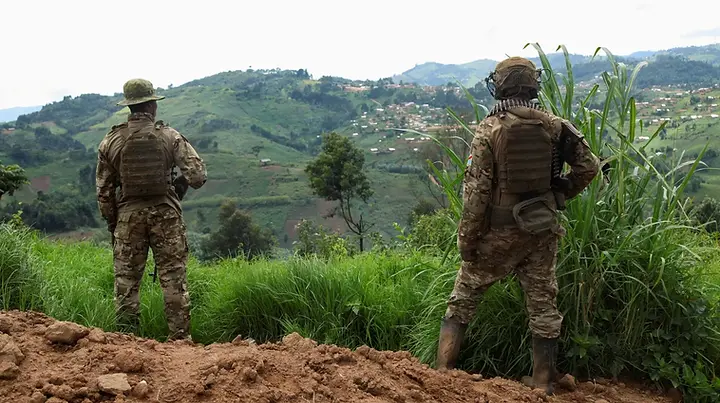
Briefing ministers on the security situation in North Kivu, South Kivu and Ituri provinces, Kabombo said FARDC units were continuing military operations against both the Allied Democratic Forces (ADF) and the AFC/M23 rebellion.
He stated that Congolese troops were "systematically thwarting and defeating enemy actions" despite what the government described as support from Rwanda through personnel, equipment and tactical drone deployments.
The minister also reported that military pressure exerted by FARDC forces in Mambasa territory had forced ADF fighters to disperse into smaller groups. According to the government, some elements moved toward Watsa territory in Haut-Uele Province and Beni territory in North Kivu, where attacks against civilians have continued. Authorities said operations to pursue the militants remain ongoing.
Eastern DRC has experienced years of insecurity involving dozens of armed groups. The ADF remains one of the deadliest insurgent movements operating in the region, while fighting involving the AFC/M23 rebellion has intensified regional tensions. The United Nations and several Western governments have repeatedly reported evidence of Rwandan support for M23, allegations Kigali has denied.
The government's latest assessment comes as the state of siege in North Kivu and Ituri enters its fifth year. Introduced in May 2021 to help restore security, the emergency measure has faced growing criticism from civil society groups and local political actors who argue that violence against civilians remains widespread despite military efforts.
Large areas of North Kivu and South Kivu remain affected by conflict, displacement and humanitarian challenges. Diplomatic initiatives involving regional actors, the United States and Qatar have sought to reduce tensions and encourage dialogue, but fighting between Congolese forces and the AFC/M23 coalition has continued in several areas.
Kinshasa maintains that its armed forces remain committed to defending the country's territorial integrity and protecting civilians despite the ongoing security challenges across eastern Congo.
WAR IN EASTERN DRC
FARDC Says It Is Thwarting M23 Advances Despite Rwandan Drone Support

Jun 15, 2026
Jun 15, 2026
2 min read
Published
Updated:
The Democratic Republic of Congo's government says its armed forces continue to repel AFC/M23 operations in eastern Congo despite the alleged use of tactical drones and military reinforcements by Rwanda.
The assessment was presented during a Council of Ministers meeting by Defence Minister Guy Kabombo Muadiamvita, according to a report published by Actualite.cd.
Briefing ministers on the security situation in North Kivu, South Kivu and Ituri provinces, Kabombo said FARDC units were continuing military operations against both the Allied Democratic Forces (ADF) and the AFC/M23 rebellion.
ADVERTISEMENT
He stated that Congolese troops were "systematically thwarting and defeating enemy actions" despite what the government described as support from Rwanda through personnel, equipment and tactical drone deployments.
The minister also reported that military pressure exerted by FARDC forces in Mambasa territory had forced ADF fighters to disperse into smaller groups. According to the government, some elements moved toward Watsa territory in Haut-Uele Province and Beni territory in North Kivu, where attacks against civilians have continued. Authorities said operations to pursue the militants remain ongoing.
ADVERTISEMENT
Eastern DRC has experienced years of insecurity involving dozens of armed groups. The ADF remains one of the deadliest insurgent movements operating in the region, while fighting involving the AFC/M23 rebellion has intensified regional tensions. The United Nations and several Western governments have repeatedly reported evidence of Rwandan support for M23, allegations Kigali has denied.
The government's latest assessment comes as the state of siege in North Kivu and Ituri enters its fifth year. Introduced in May 2021 to help restore security, the emergency measure has faced growing criticism from civil society groups and local political actors who argue that violence against civilians remains widespread despite military efforts.
Large areas of North Kivu and South Kivu remain affected by conflict, displacement and humanitarian challenges. Diplomatic initiatives involving regional actors, the United States and Qatar have sought to reduce tensions and encourage dialogue, but fighting between Congolese forces and the AFC/M23 coalition has continued in several areas.


POPULAR TODAY


ADVERTISEMENT
Kinshasa maintains that its armed forces remain committed to defending the country's territorial integrity and protecting civilians despite the ongoing security challenges across eastern Congo.
ADVERTISEMENT
RELATED ARTICLE


