The presidential spokesperson says the project is designed to go beyond mineral exports by creating jobs, expanding trade and supporting local economic development.
KINSHASA — Presidential spokesperson Tina Salama has outlined the Congolese government’s ambitions for the Lobito Corridor, describing the massive regional infrastructure project as an opportunity to transform the Democratic Republic of Congo’s economy rather than simply provide another route for exporting minerals.
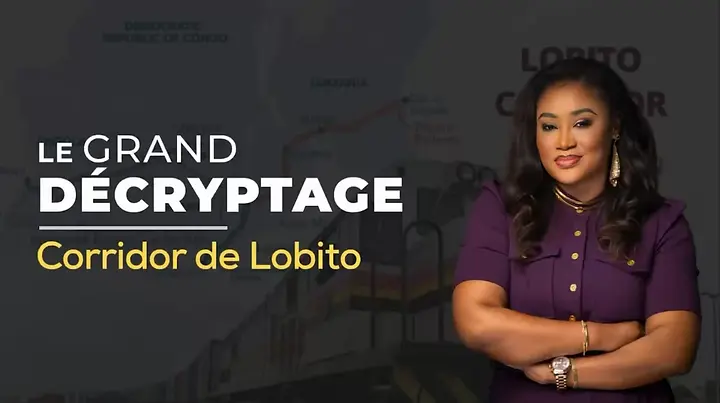
In Here shared Video edition Le GRAND Décryptage, Salama explained that the corridor connects the mineral-rich regions of the DRC and Zambia to Angola’s Atlantic port of Lobito through the Benguela railway system.
Her explanation followed discussions between President Félix Tshisekedi and Angolan President João Lourenço, with the two governments seeking to accelerate implementation of the regional corridor.
According to Salama, the project could significantly reduce the amount of time required to move goods between Central and Southern Africa and international markets.
She said freight moving from Zambia through the DRC toward the ocean can currently take more than a month, while the Lobito route could eventually reduce the journey to approximately one week.
More than a route for exporting minerals
Salama stressed that the Congolese government does not want the Lobito Corridor to become simply another infrastructure system for moving copper, cobalt and other raw materials out of Africa.
Instead, President Tshisekedi wants development along the corridor to generate opportunities for Congolese farmers, small businesses, industrial companies and surrounding communities.
The strategy, she said, places particular emphasis on local employment, women and young people, SMEs, access to electricity and water, agriculture, ecotourism and the development of value chains around the country’s natural resources.
INFRASTRUCTURE
Tina Salama explains how Lobito Corridor could transform DRC’s economy

Sep 10, 2026
Sep 10, 2026
7 min read
Published
Updated:
The presidential spokesperson says the project is designed to go beyond mineral exports by creating jobs, expanding trade and supporting local economic development.
KINSHASA — Presidential spokesperson Tina Salama has outlined the Congolese government’s ambitions for the Lobito Corridor, describing the massive regional infrastructure project as an opportunity to transform the Democratic Republic of Congo’s economy rather than simply provide another route for exporting minerals.
In Here shared Video edition Le GRAND Décryptage, Salama explained that the corridor connects the mineral-rich regions of the DRC and Zambia to Angola’s Atlantic port of Lobito through the Benguela railway system.
Her explanation followed discussions between President Félix Tshisekedi and Angolan President João Lourenço, with the two governments seeking to accelerate implementation of the regional corridor.
According to Salama, the project could significantly reduce the amount of time required to move goods between Central and Southern Africa and international markets.
She said freight moving from Zambia through the DRC toward the ocean can currently take more than a month, while the Lobito route could eventually reduce the journey to approximately one week.
More than a route for exporting minerals
Salama stressed that the Congolese government does not want the Lobito Corridor to become simply another infrastructure system for moving copper, cobalt and other raw materials out of Africa.
Instead, President Tshisekedi wants development along the corridor to generate opportunities for Congolese farmers, small businesses, industrial companies and surrounding communities.
The strategy, she said, places particular emphasis on local employment, women and young people, SMEs, access to electricity and water, agriculture, ecotourism and the development of value chains around the country’s natural resources.
ADVERTISEMENT
For the government, this would allow economic activity generated by the railway to spread into communities located along the corridor.
Salama described Tshisekedi’s vision as one focused on “inclusive and sustainable growth.”
Billions in investment expected around the corridor
Salama said approximately $2 billion is being mobilized, particularly by the United States and European Union, for investments connected to transportation and local economies along the wider Lobito Corridor.
The project has attracted strong international interest because it provides a western transport route connecting some of Africa’s most important copper and cobalt producing regions with the Atlantic Ocean.
Salama argued that faster transportation could increase the volume of Congolese exports while creating additional economic activity around railway stations, special economic zones and intermediate infrastructure.
She also said shifting a greater share of freight from trucks to trains could reduce pressure on the DRC’s urban and national roads.
Dilolo–Sakania railway at heart of DRC section
One of the most important components for the DRC is the planned modernization of the Dilolo–Sakania railway line.
According to Salama, the railway concession covers more than 1,000 kilometres and represents an investment valued at more than $1 billion.
ADVERTISEMENT
The line is expected to improve connections between major economic and mining centres including Kolwezi, Tenke and Lubumbashi and the Angolan transport network leading toward Lobito.
Salama said the DRC would hold a 10% stake under the concession arrangement and receive a royalty equivalent to 7.5% of gross revenue.
She added that the Société Nationale des Chemins de fer du Congo (SNCC) would maintain exclusive responsibility for passenger transportation as well as its rights relating to freight.
According to the framework described by Salama, the renovated infrastructure would ultimately be transferred to the Congolese state when the concession expires.
Government expects greater revenues from trade
The Presidency also sees the corridor as an opportunity to increase government revenues if it succeeds in expanding the volume of goods moving through the DRC.
Salama pointed to institutions including the DGDA, OGEFREM and OCC, arguing that increased exports and commercial activity could broaden the revenue base available to the Congolese Treasury.
Beyond customs revenue, she said new value chains, agricultural production, railway stations, economic zones and other businesses could stimulate development in communities situated along the route.
This is particularly important for the government because the DRC holds enormous reserves of minerals required by global industries and the energy transition.
Trending Now


Popular Today


ADVERTISEMENT
Rather than benefiting primarily from extraction, Salama said the Tshisekedi administration wants the country to capture more value through processing, infrastructure, trade and domestic economic activity.
Tshisekedi: The agreement is only the beginning
Salama ultimately presented the Lobito Corridor as part of a broader effort to reposition the DRC within regional and international trade.
For Tshisekedi, she said, the project should be viewed not merely as transportation infrastructure but as a platform for economic integration and transformation.
Quoting the president on the implementation of the project, Salama concluded:
Tshisekedi: The agreement is only the beginning
Salama ultimately presented the Lobito Corridor as part of a broader effort to reposition the DRC within regional and international trade.
For Tshisekedi, she said, the project should be viewed not merely as transportation infrastructure but as a platform for economic integration and transformation.
Quoting the president on the implementation of the project, Salama concluded:
“The signing that took place today is not an achievement in itself. It marks the beginning of a shared responsibility.”
If the government's ambitions are realized, the Lobito Corridor could therefore become much more than a railway carrying Congolese minerals toward the Atlantic: Kinshasa wants it to generate jobs, investment, industrial activity and new economic opportunities inside the DRC itself.
If the government's ambitions are realized, the Lobito Corridor could therefore become much more than a railway carrying Congolese minerals toward the Atlantic: Kinshasa wants it to generate jobs, investment, industrial activity and new economic opportunities inside the DRC itself.
ADVERTISEMENT
Related Articles


