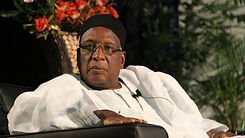
LAMU, Kenya — 1 October 2026: Kenya has formally broken ground on the planned $16 billion Dangote East Africa Petroleum Refinery in Lamu, advancing a project designed to process about 700,000 barrels of crude oil a day and supply fuel to markets across East and Central Africa.
President William Ruto and Dangote Group President Aliko Dangote led the September 30 ceremony, joined by several African leaders. The launch puts one of the continent's biggest planned industrial projects into a new phase, even as a Kenyan court case over the proposed site remains unresolved.
What is the Dangote Lamu refinery project? The Dangote East Africa Petroleum Refinery is a planned $16 billion oil-processing and industrial complex in Lamu, Kenya. It is designed to refine about 700,000 barrels of crude a day, serve regional fuel markets and support related petrochemical, power and manufacturing activity.
Kenya moves the Lamu refinery from proposal to construction stage
Kenya's Ministry of Information, Communications and the Digital Economy confirmed the groundbreaking at Mokowe in Lamu County, describing the project as a major industrial investment linked to the Lamu Port-South Sudan-Ethiopia Transport corridor. The ministry said the planned facility will have capacity for about 700,000 barrels per day and form part of a wider industrial complex that includes power generation and chemical manufacturing. The government's statement was published on September 30.
The Ministry of Roads and Transport separately said more than 110 pieces of equipment were already on site and another 400 were expected within 60 days as construction activity builds. It also said Dangote plans an engineering training school in Lamu to prepare local workers for technical roles connected to the project. The transport ministry's account places the refinery within Kenya's broader strategy for Lamu Port and the LAPSSET corridor.
Associated Press reported that the project is expected to take about 40 months to complete. The ceremony brought together Ruto, Dangote, Uganda's President Yoweri Museveni, Ethiopian Prime Minister Abiy Ahmed and other regional leaders and representatives. AP's report also said the refinery is intended to process crude sourced from African producers rather than depend on a single local supply stream.
For readers following Dangote's wider business expansion, XTRAfrica's Aliko Dangote biography gives the background to his move from trading and manufacturing into large-scale petroleum refining. XTRAfrica has also reported on the Dangote Petroleum Refinery public offer, which is part of a separate financing story centred on the Nigerian refinery.
Why the 700,000-barrel capacity matters for East Africa
The planned output puts Lamu well above the scale of a small domestic refinery. Reuters reported that the project is designed for about 700,000 barrels per day and is aimed at reducing the region's dependence on imported refined fuel while saving foreign currency.
BUSINESS TRENDS
Dangote Lamu Refinery: Kenya Breaks Ground on $16bn Project

Oct 1, 2026
Oct 1, 2026
7 min read

Published
Updated:
LAMU, Kenya — 1 October 2026: Kenya has formally broken ground on the planned $16 billion Dangote East Africa Petroleum Refinery in Lamu, advancing a project designed to process about 700,000 barrels of crude oil a day and supply fuel to markets across East and Central Africa.
President William Ruto and Dangote Group President Aliko Dangote led the September 30 ceremony, joined by several African leaders. The launch puts one of the continent's biggest planned industrial projects into a new phase, even as a Kenyan court case over the proposed site remains unresolved.
What is the Dangote Lamu refinery project? The Dangote East Africa Petroleum Refinery is a planned $16 billion oil-processing and industrial complex in Lamu, Kenya. It is designed to refine about 700,000 barrels of crude a day, serve regional fuel markets and support related petrochemical, power and manufacturing activity.
Kenya moves the Lamu refinery from proposal to construction stage
Kenya's Ministry of Information, Communications and the Digital Economy confirmed the groundbreaking at Mokowe in Lamu County, describing the project as a major industrial investment linked to the Lamu Port-South Sudan-Ethiopia Transport corridor. The ministry said the planned facility will have capacity for about 700,000 barrels per day and form part of a wider industrial complex that includes power generation and chemical manufacturing. The government's statement was published on September 30.
The Ministry of Roads and Transport separately said more than 110 pieces of equipment were already on site and another 400 were expected within 60 days as construction activity builds. It also said Dangote plans an engineering training school in Lamu to prepare local workers for technical roles connected to the project. The transport ministry's account places the refinery within Kenya's broader strategy for Lamu Port and the LAPSSET corridor.
Associated Press reported that the project is expected to take about 40 months to complete. The ceremony brought together Ruto, Dangote, Uganda's President Yoweri Museveni, Ethiopian Prime Minister Abiy Ahmed and other regional leaders and representatives. AP's report also said the refinery is intended to process crude sourced from African producers rather than depend on a single local supply stream.
For readers following Dangote's wider business expansion, XTRAfrica's Aliko Dangote biography gives the background to his move from trading and manufacturing into large-scale petroleum refining. XTRAfrica has also reported on the Dangote Petroleum Refinery public offer, which is part of a separate financing story centred on the Nigerian refinery.
ADVERTISEMENT
Why the 700,000-barrel capacity matters for East Africa
The planned output puts Lamu well above the scale of a small domestic refinery. Reuters reported that the project is designed for about 700,000 barrels per day and is aimed at reducing the region's dependence on imported refined fuel while saving foreign currency.
A Reuters report carried by MarketScreener said the project is slated for completion in 2030 and is also expected to support industries including petrochemicals and bitumen production. Reuters' September 30 report described the project as part of Dangote's attempt to extend the refining model he built in Nigeria into East Africa.
The wider regional logic is straightforward: several East African economies import large volumes of finished petroleum products while also pursuing domestic or regional crude-oil projects. A major refinery at a deep-water port could change trade routes if it is completed, supplied reliably and operated competitively.
That outcome is not guaranteed simply because ground has been broken. Refineries of this scale depend on financing, crude supply agreements, port and pipeline infrastructure, environmental approvals and long-term product markets. The current ceremony therefore marks the start of a construction and investment phase rather than the arrival of finished refining capacity.
Dangote has also offered regional governments a combined stake in the project. AP reported before the ceremony that Kenya and two other East African countries were expected to hold a combined 30% interest, while Dangote said American investors would also participate. That AP report said the refinery could create tens of thousands of jobs if built as planned.
Kenya's government has additionally said it intends to invest through its National Infrastructure Fund. President Ruto said the state would use public assets and the fund to mobilise investment rather than rely only on taxes and debt for large infrastructure. Nairametrics reported that the proposed complex could also include electricity generation, polypropylene and base-oil production.
ADVERTISEMENT
The project still faces an active land dispute
The groundbreaking does not settle the legal questions surrounding the proposed site.
The Financial Times reported that a Kenyan court ordered parties to maintain the status quo after 133 residents filed a petition involving ancestral land claims, compensation concerns and questions around environmental assessment. The case is due back in court in October. The Financial Times report said Dangote Group acknowledged that the dispute could produce short-term delays.
AP likewise reported local opposition and environmental concerns connected to the proposed site. Those issues are distinct from the ceremonial groundbreaking: the event confirmed political and investor backing for the project, but the court process will determine what can legally proceed on disputed land while the case is heard.
That distinction matters because calling the refinery either fully stopped or fully cleared would go beyond the present record. The project has been launched publicly, machinery is reported on site, and government agencies are presenting it as a strategic investment. At the same time, the legal dispute is active and could affect the construction timetable.
Uganda says it will continue with its own refinery plans
The Lamu project has also raised questions about how it fits alongside Uganda's planned refinery. President Museveni attended the Lamu ceremony, but AP reported that Uganda still intends to pursue its own smaller refinery project.
The two projects are therefore not automatically substitutes. A large coastal refinery serving several markets and a smaller refinery closer to Uganda's crude production can play different roles depending on economics, pipeline links and final investment decisions.


POPULAR TODAY


ADVERTISEMENT
XTRAfrica has previously covered the Uganda refinery project's official clarifications, providing useful background on why Uganda's own refinery debate has moved through several financing and development stages.
Lamu could become a wider industrial hub if the project is completed
Kenyan officials are pitching the refinery as more than a fuel-processing plant. The government says it could anchor new manufacturing and logistics activity around Lamu Port, while the planned power, petrochemical and training components would broaden its economic footprint.
Dangote has framed the project around African processing of African raw materials rather than exporting crude and importing finished products. Channels Television, citing his remarks at the ceremony, reported that he described the refinery as part of a wider push for value addition and industrialisation on the continent. Channels Television's report said the facility is intended to reduce reliance on imported refined fuel.
Dangote's growing regional footprint is not limited to Kenya. XTRAfrica previously reported on his investment discussions in Burundi, where talks covered energy, mining, infrastructure and industrial development.
For Lamu, the immediate questions now shift from ceremony to execution: how quickly the land case is resolved, whether the financing structure is finalised, how crude supply will be secured, and whether construction remains on the stated timetable. Those milestones will determine whether the $16 billion project becomes the regional refining hub its backers are promising.
ADVERTISEMENT
RELATED ARTICLE