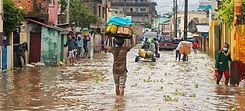
Tropical Cyclone Gezani, which left at least 31 people dead after striking Madagascar’s main port city of Toamasina, is now moving west across the island and weakening inland yet forecasts suggest it could regain strength once it reaches the waters between Madagascar and Africa’s east coast. Authorities have kept multiple regions under red alert, warning of flooding and landslides as the storm’s rain bands spread across central areas, including near the capital, Antananarivo as reported by Associated Press.
What happens next: track, timing, and re-intensification risk
Madagascar’s national weather service said Gezani weakened to a tropical storm as it moved inland on Wednesday, passing roughly 100 kilometers (62 miles) north of Antananarivo. Forecasts cited in the report indicate the system is expected to move into the Mozambique Channel on Thursday. Over warm water, forecasters warned the storm might strengthen into a tropical cyclone again and could curve back toward Madagascar’s southwest coast next week, potentially extending the period of dangerous conditions beyond the initial landfall.
The Mozambique Channel can provide conditions that allow tropical systems to reorganize after weakening over land. That is why authorities in Mozambique have also issued weather alerts, warning that three coastal provinces could feel Gezani’s effects if the storm intensifies again. The concern comes as parts of Mozambique are still recovering from major flooding impacts reported last month, adding urgency to preparedness messaging along low-lying coastal areas.
According to Madagascar’s National Office for Risk and Disaster Management, building collapses contributed to the reported deaths in Toamasina, and dozens of people were seriously injured. Thousands were displaced, with some residents reporting widespread structural damage and power cuts in the city since Tuesday. President Michael Randrianirina visited the affected area, and his office said a large share of the city’s infrastructure was damaged or destroyed.
Wider context: repeated shocks during cyclone season
Gezani is the latest in a series of high-impact storms during Madagascar’s cyclone season, which typically runs from around November to March. The report noted that Cyclone Fytia struck on January 31, killing 14 people and displacing more than 85,000. Ahead of Gezani’s arrival, the United Nations released $3 million from its emergency response fund to support preparedness activities.
NATURAL DISASTERS
Cyclone Gezani moves west across Madagascar

Feb 12, 2026
May 15, 2026
3 min read

Published
Updated:
Tropical Cyclone Gezani, which left at least 31 people dead after striking Madagascar’s main port city of Toamasina, is now moving west across the island and weakening inland yet forecasts suggest it could regain strength once it reaches the waters between Madagascar and Africa’s east coast. Authorities have kept multiple regions under red alert, warning of flooding and landslides as the storm’s rain bands spread across central areas, including near the capital, Antananarivo as reported by Associated Press.
What happens next: track, timing, and re-intensification risk
Madagascar’s national weather service said Gezani weakened to a tropical storm as it moved inland on Wednesday, passing roughly 100 kilometers (62 miles) north of Antananarivo. Forecasts cited in the report indicate the system is expected to move into the Mozambique Channel on Thursday. Over warm water, forecasters warned the storm might strengthen into a tropical cyclone again and could curve back toward Madagascar’s southwest coast next week, potentially extending the period of dangerous conditions beyond the initial landfall.
The Mozambique Channel can provide conditions that allow tropical systems to reorganize after weakening over land. That is why authorities in Mozambique have also issued weather alerts, warning that three coastal provinces could feel Gezani’s effects if the storm intensifies again. The concern comes as parts of Mozambique are still recovering from major flooding impacts reported last month, adding urgency to preparedness messaging along low-lying coastal areas.
ADVERTISEMENT
According to Madagascar’s National Office for Risk and Disaster Management, building collapses contributed to the reported deaths in Toamasina, and dozens of people were seriously injured. Thousands were displaced, with some residents reporting widespread structural damage and power cuts in the city since Tuesday. President Michael Randrianirina visited the affected area, and his office said a large share of the city’s infrastructure was damaged or destroyed.
Wider context: repeated shocks during cyclone season
Gezani is the latest in a series of high-impact storms during Madagascar’s cyclone season, which typically runs from around November to March. The report noted that Cyclone Fytia struck on January 31, killing 14 people and displacing more than 85,000. Ahead of Gezani’s arrival, the United Nations released $3 million from its emergency response fund to support preparedness activities.
ADVERTISEMENT


ADVERTISEMENT
ADVERTISEMENT
RELATED ARTICLE