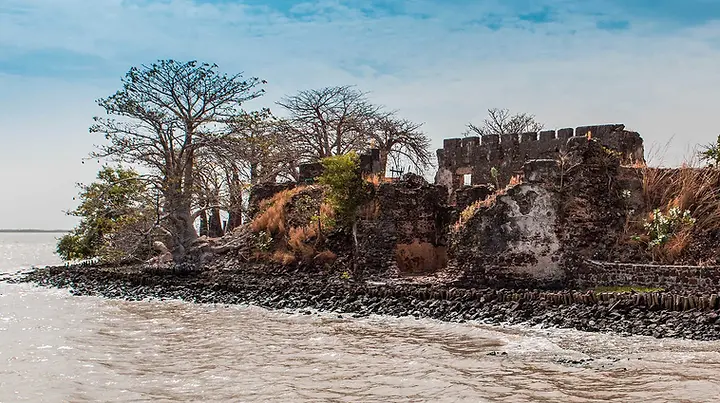
Kunta Kinteh Island is the anchor point for a cluster of experiences that mix harrowing history with Gambia’s relaxed riverside vibe and many movies potraying the story . This UNESCO‑listed island sits in the Gambia River, but its story ties together nearby Albreda, Juffureh, Fort Bullen and beaches along the coast.
Since UNESCO funded the renovation of the small visitor jetty (decision approved Sept 7 2022, completed in 2024), it’s easier than ever to hop on a pirogue or ferry, step off at the new jetty and dive into a day of culture, wildlife and beach‑hopping. Here’s our insider pick of ten spots to check out around the island and the brand‑new landing jetty.
1.Kunta Kinteh Island (James Island) & the New Jetty
This tiny island lies about 30 km upriver and once controlled river trade; the ruined fort (built by Courlanders in 1651, later taken by the British) still shows the governor’s house, cells and centuries‑old baobab trees. UNESCO’s heritage description notes that the island and its related sites (including Fort Bullen and the Six‑Gun Battery) illustrate the African‑European encounter and the shift from slave trading to abolition.
After strong winds damaged the old jetty in 2022, UNESCO funded a new visitor landing jetty (approved amount US$6 997, decision 7 Sept 2022 ), so boats can now dock safely. Take a Roots cruise from Banjul or cross from Albreda; the 30‑minute ride offers mangrove views before you wander the island’s ruins and read about its dark role in the Atlantic slave trade. Locals swear there’s a special energy in the baobab shade, so linger and contemplate before the return crossing.
2. Albreda & the Freedom Flagpole
The French trading post of Albreda sits opposite Kunta Kinteh Island on the north bank of the Gambia River. In 1681 the local Niumi king granted the settlement to French traders, turning it into a bitter rival to British Fort James. Today the highlight is the Slavery Museum, housed in a historic trading‑post building, where shackles, trade goods and poignant narratives chart the slave trade. Outside, look for the legendary Freedom Flagpole .
Locals say enslaved people who touched it gained freedom. Wander through the small market, meet villagers who know the Roots story by heart, and hop on pirogue at the new jetty for the short crossing to Kunta Kinteh Island.
3. Juffureh & the Kinteh Clan Homestead
Linked to Alex Haley’s novel Roots, the village of Juffureh (also spelt Jufureh) is a 10‑minute walk from Albreda. Many visitors come to pay respect at the Kinteh family compound – descendants of the enslaved protagonist Kunta Kinteh still live here and happily share stories with curious travellers.
TRAVEL GUIDE
The 8 Top Attractions in Kunta Kinteh Island & New Jetty Right Now

Sep 29, 2025
May 15, 2026
8 min read
Published
Updated:
Kunta Kinteh Island is the anchor point for a cluster of experiences that mix harrowing history with Gambia’s relaxed riverside vibe and many movies potraying the story . This UNESCO‑listed island sits in the Gambia River, but its story ties together nearby Albreda, Juffureh, Fort Bullen and beaches along the coast.

Since UNESCO funded the renovation of the small visitor jetty (decision approved Sept 7 2022, completed in 2024), it’s easier than ever to hop on a pirogue or ferry, step off at the new jetty and dive into a day of culture, wildlife and beach‑hopping. Here’s our insider pick of ten spots to check out around the island and the brand‑new landing jetty.
1.Kunta Kinteh Island (James Island) & the New Jetty

This tiny island lies about 30 km upriver and once controlled river trade; the ruined fort (built by Courlanders in 1651, later taken by the British) still shows the governor’s house, cells and centuries‑old baobab trees. UNESCO’s heritage description notes that the island and its related sites (including Fort Bullen and the Six‑Gun Battery) illustrate the African‑European encounter and the shift from slave trading to abolition.
After strong winds damaged the old jetty in 2022, UNESCO funded a new visitor landing jetty (approved amount US$6 997, decision 7 Sept 2022 ), so boats can now dock safely. Take a Roots cruise from Banjul or cross from Albreda; the 30‑minute ride offers mangrove views before you wander the island’s ruins and read about its dark role in the Atlantic slave trade. Locals swear there’s a special energy in the baobab shade, so linger and contemplate before the return crossing.
2. Albreda & the Freedom Flagpole

The French trading post of Albreda sits opposite Kunta Kinteh Island on the north bank of the Gambia River. In 1681 the local Niumi king granted the settlement to French traders, turning it into a bitter rival to British Fort James. Today the highlight is the Slavery Museum, housed in a historic trading‑post building, where shackles, trade goods and poignant narratives chart the slave trade. Outside, look for the legendary Freedom Flagpole .
ADVERTISEMENT
Locals say enslaved people who touched it gained freedom. Wander through the small market, meet villagers who know the Roots story by heart, and hop on pirogue at the new jetty for the short crossing to Kunta Kinteh Island.
3. Juffureh & the Kinteh Clan Homestead

Linked to Alex Haley’s novel Roots, the village of Juffureh (also spelt Jufureh) is a 10‑minute walk from Albreda. Many visitors come to pay respect at the Kinteh family compound – descendants of the enslaved protagonist Kunta Kinteh still live here and happily share stories with curious travellers.
A small museum displays household objects and oral histories, and there’s a lively market where you can bargain for woven baskets and batik. Improved roads mean you can reach Juffureh via the Banjul–Barra ferry and a dirt track, but most people arrive by boat on the Roots Homecoming Tour (held annually since 1986). Trust us – chatting with the Kinteh clan over attaya (sweet green tea) brings history alive.
4. Fort Bullen & the Six‑Gun Battery

When Britain abolished the slave trade in 1807, it built Fort Bullen at the river mouth (near Barra) and a six‑gun battery in Banjul to stop illegal slavers. Fort Bullen, completed in the 1830s, is a rectangular courtyard with thick walls, circular bastions and rusting cannons.
There’s also a WWII‑era anti‑aircraft gun and a derelict colonial rest house surrounded by baobab trees. Bird‑watchers love this spot: from the ramparts you can see whimbrels, African darters and royal terns, and at low tide you can walk across the estuary to Jinack Island. Reach Fort Bullen by ferry from Banjul to Barra; pick up an information leaflet at the National Museum before you go.
ADVERTISEMENT
5. Abuko Nature Reserve

Just 25 minutes from the coast, Abuko Nature Reserve was Gambia’s first protected area – its source spring was fenced in 1916 and the reserve officially established in 1968. Covering 259 acres (105 ha), it includes evergreen forest along the Lamin Stream, bush trails, bird hides, an animal orphanage and the Bamboo Pool where Nile crocodiles bask.
More than 290 bird species have been recorded here, from pied kingfishers and palm‑nut vultures to violet turacos, and you might spot monkeys such as vervets, red colobus or red patas plus duiker and bushbuck. Entry fees support the Department of Parks and Wildlife Management; arrive early for cooler temperatures and bring binoculars. Locals swear by the fresh fruit juice stall near the entrance, perfect after a humid hike.
6.Arch 22

The 35‑metre‑tall Arch 22 towers over Banjul’s Independence Drive. Built between 1994 and 1996 to mark the July 22nd coup, the monument features lifts and stairs hidden in classical columns and cost around £720 000 to construct.
The top floor terrace offers panoramic views of Banjul, the mangrove‑lined river and the distant North Bank, and there’s a café plus an ethnographic museum displaying traditional tools, textiles and even the handwritten takeover speech. Outside stands a statue of a soldier holding a baby and two drummers – perfect for playful selfies. The D200 entry fee (around US$3.50) includes elevator access; go early morning to avoid the midday heat.
7. National Museum of The Gambia

Housed in the former colonial Bathurst Club, the National Museum opened in 1985 and spreads across three floors. The ground floor explores Banjul’s pre‑colonial, colonial and post‑colonial history and displays Mesolithic and Neolithic artefacts; upstairs you’ll find ethnographic collections, musical instruments and textiles plus a programme transcribing oral histories.


POPULAR TODAY


ADVERTISEMENT
Admission costs
50 Dalasi or 1 Euro, and the museum is open Monday–Thursday from 9 am – 6 pm and Friday 9 am – 5 pm (closed Sundays). It’s centrally located on Independence Drive near Arch 22, so pair it with a stroll through Albert Market. Trust us – the display on Gambia’s stone circles is unexpectedly fascinating.
8. Kachikally Crocodile Pool

In the coastal town of Bakau lies Kachikally, a sacred crocodile pool linked to traditional fertility rituals. A small museum introduces visitors to Gambia’s history, Kankurang initiation rites and local talismans. A five‑minute trail leads to the pool where dozens of docile Nile crocodiles lounge; under guides’ supervision you can even stroke one of the tame crocs.
Entrance costs around 100 Dalasi and the site opens daily from 8 am until sundown. Catch a gelly‑gelly (shared minibus) from Kololi or walk from Bakau’s craft market; after your visit, reward yourself with fresh fish at the town’s ocean‑front restaurants.
Thanks to a brand‑new visitor jetty, exploring Kunta Kinteh Island and its neighbours has never been easier. Whether you’re tracing the footsteps of enslaved ancestors at Juffureh, climbing Arch 22, or lazing on Paradise Beach, this corner of The Gambia packs a serious punch for such a small geographic area. So grab your sunhat, practise your Wolof greetings, and dive into the cultural riches, wildlife and river breezes that make this region unforgettable.
ADVERTISEMENT
RELATED ARTICLE