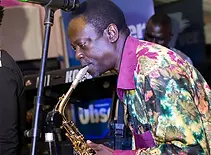
Bebe Cool is a Ugandan singer, songwriter and bandleader whose grainy voice helped connect reggae and dancehall to East Africa’s modern urban-pop era. Born Moses Ssali, he began recording professionally in Nairobi in 1997, became an early Ogopa Deejays affiliate and later built Gagamel International in Kampala.
His catalogue stretches from regional staples such as “Fitina,” “Mambo Mingi” and “Love You Everyday” to the 2025 album Break the Chains. He also shares music and public commentary through his official X account. Nearly three decades into his career, his defining achievement is sustained reinvention across Ugandan, Kenyan and pan-African music spaces.
Who is Bebe Cool? Bebe Cool is Moses Ssali, a Ugandan reggae, dancehall and Afropop artist who began his career in Nairobi in 1997. He helped popularise East African bashment, won the 2018 AFRIMA for Best Male Artiste in Eastern Africa and remains active through Gagamel International.
Heritage and Kampala Voice: Reggae, Dancehall and Regional Identity
Bebe Cool’s music has always travelled between languages and scenes. His official biography describes him as a reggae, dancehall and Afrobeats artist, while his earlier catalogue used Luganda, Swahili and English to reach listeners across Uganda and Kenya. The result is a style that can move from reggae’s steady pulse to ragga phrasing, dancehall urgency and polished Afropop hooks without losing his unmistakably rough-edged vocal tone.
That flexibility places him inside a wider XTRAfrica dancehall catalogue, but his work is not simply an East African imitation of Jamaican music. “Fitina” and “Mambo Mingi” localised the form through regional languages and Kampala showmanship, while “Born in Africa” made African identity part of his performance vocabulary.
The clearest late-career statement of this instinct is Break the Chains. In a 2025 OkayAfrica interview about the album, he explained why he allowed a younger creative team to challenge his habits:
“I would rather lose my ego than lose my fame, my name, my business.”
The quote captures a career principle visible across his catalogue: survival depends on adjusting the sound without abandoning the personality behind it.
Formative Life: Kanyanya, Science Classes and a Promise to His Mother
AFRICAN CULTURE
Bebe Cool Biography: Age, Family, Songs & Ugandan Music Legacy

Aug 7, 2026
Aug 7, 2026
12 min read

Published
Updated:
Bebe Cool is a Ugandan singer, songwriter and bandleader whose grainy voice helped connect reggae and dancehall to East Africa’s modern urban-pop era. Born Moses Ssali, he began recording professionally in Nairobi in 1997, became an early Ogopa Deejays affiliate and later built Gagamel International in Kampala.
His catalogue stretches from regional staples such as “Fitina,” “Mambo Mingi” and “Love You Everyday” to the 2025 album Break the Chains. He also shares music and public commentary through his official X account. Nearly three decades into his career, his defining achievement is sustained reinvention across Ugandan, Kenyan and pan-African music spaces.
Who is Bebe Cool? Bebe Cool is Moses Ssali, a Ugandan reggae, dancehall and Afropop artist who began his career in Nairobi in 1997. He helped popularise East African bashment, won the 2018 AFRIMA for Best Male Artiste in Eastern Africa and remains active through Gagamel International.
Heritage and Kampala Voice: Reggae, Dancehall and Regional Identity
Bebe Cool’s music has always travelled between languages and scenes. His official biography describes him as a reggae, dancehall and Afrobeats artist, while his earlier catalogue used Luganda, Swahili and English to reach listeners across Uganda and Kenya. The result is a style that can move from reggae’s steady pulse to ragga phrasing, dancehall urgency and polished Afropop hooks without losing his unmistakably rough-edged vocal tone.
That flexibility places him inside a wider XTRAfrica dancehall catalogue, but his work is not simply an East African imitation of Jamaican music. “Fitina” and “Mambo Mingi” localised the form through regional languages and Kampala showmanship, while “Born in Africa” made African identity part of his performance vocabulary.
The clearest late-career statement of this instinct is Break the Chains. In a 2025 OkayAfrica interview about the album, he explained why he allowed a younger creative team to challenge his habits:
“I would rather lose my ego than lose my fame, my name, my business.”
The quote captures a career principle visible across his catalogue: survival depends on adjusting the sound without abandoning the personality behind it.
Formative Life: Kanyanya, Science Classes and a Promise to His Mother
Moses Ssali was born at Mulago Hospital in Kampala on 1 September 1977 and grew up in Kanyanya. He is 48 years old as of 6 August 2026. His father was Jaberi Bidandi Ssali, a prominent Ugandan politician and sports administrator. Bebe Cool has described growing up mainly under the care of his mother after his parents separated.
He attended Aga Khan Primary School, Kitante Hill School and Makerere College School. At A-Level he studied Physics, Chemistry and Mathematics. A teacher’s lessons about self-employment made him consider music as work, while his family’s finances made earning feel urgent.
In a detailed Pulse Uganda account of his school years, he said that wanting to support his mother pushed him toward professional music. He left before completing A-Level, presenting the decision as a plan with responsibilities rather than an escape from discipline.
Breakthrough: Nairobi, Ogopa and the East African Bashment Idea
In 1997, Bebe Cool took a bus from Kampala to Nairobi to pursue recording opportunities. The move placed him inside a Kenyan industry that was building new radio-friendly identities around urban East African music. He struggled at first and later recalled staying with a security guard while trying to find a studio. A meeting with producer Lucas Bikedo eventually connected him to Ogopa Deejays, the label and production house associated with the region’s turn-of-the-century pop boom.
ADVERTISEMENT
Nairobi expanded his network and audience. He worked near artists such as Redsan and Jose Chameleone and developed material that could cross the Uganda–Kenya border. “Fitina” and “Mambo Mingi” made his solo voice recognisable, while collaborations showed that East African artists could build a regional market.
That idea became literal in 2004 when Bebe Cool joined Kenyan duo Necessary Noize Nazizi Hirji and Wyre to form the East African Bashment Crew. Records such as “Africa Unite,” “Kube” and “Fire Anthem” fused reggae and dancehall language with a regional identity. The group earned continental nominations and strengthened a collaborative model that later East African pop acts would take for granted.
Achievements and Artistic Craft: From “Fitina” to Break the Chains
Bebe Cool’s solo catalogue developed through Maisha, Sente, Nkolera Banabange and Go Mama. Early hits established his reggae and ragga command; later songs such as “Love You Everyday,” “Coccidiosis,” “Wire Wire” and “Feeling” moved further into polished pop and cross-border collaboration.
His XTRAfrica songs page now provides a direct route into that evolving catalogue. The 2025 single “Motivation” on XTRAfrica introduced the energy and resilience themes that shaped Break the Chains. Released on 30 May 2025, the 16-track album documented by Apple Music blended Afropop, Afrotech and Afro-house with Bebe Cool’s established voice.
The guest list widened the generational conversation. Joshua Baraka appeared on “Cheque,” while Nigerian star Yemi Alade joined “Games.” For Bebe Cool, these were more than fashionable features: they placed a veteran from East Africa’s first modern urban-pop wave beside artists shaped by streaming, short-form video and today’s borderless Afropop economy.
Selected achievements
Began his professional career in Nairobi in 1997 and became an early Ogopa Deejays affiliate.
Co-founded the East African Bashment Crew with Necessary Noize in 2004.
Performed at the 46664 concert celebrating Nelson Mandela’s 90th birthday in London in 2008.
Won the 2018 AFRIMA for Best Male Artiste in Eastern Africa.
Released the 16-track Break the Chains album in 2025 and the seven-track No Risk EP in 2026.
Bebe Cool Career Timeline
Year | Event | Significance |
1997 | Moved from Kampala to Nairobi and began working in the Ogopa Deejays orbit | Opened a regional route for his career and exposed him to Kenya’s developing urban-pop industry. |
2004 | Formed the East African Bashment Crew with Necessary Noize | Turned cross-border collaboration into a defining part of his musical identity. |
2008 | Performed at the 46664 Mandela birthday concert in Hyde Park | Put a Ugandan artist on a major global benefit stage and connected his music to public advocacy. |
2010 | Survived a police shooting and later the Kampala World Cup bombings | Marked a traumatic period that shaped his public language about resilience. |
2018 | Won Best Male Artiste in Eastern Africa at AFRIMA | Delivered one of the clearest independently documented continental honours of his solo career. |
2025 | Released Break the Chains | Reframed his sound for Afropop’s digital era through younger collaborators and new production styles. |
2026 | Released the No Risk EP | Extended his reinvention with Afrobeat, dancehall, reggaeton and R&B across seven tracks. |
Personal Journey: Survival, Family and a Public Life
Bebe Cool has sometimes been polarising where music, celebrity competition and politics overlap. Yet his most consequential personal challenges extend beyond entertainment rivalry. In January 2010, Daily Monitor reported that he underwent surgery after being shot in both legs. Months later, he was present at Kyadondo Rugby Club during the July 2010 bombings.
Reflecting on those events during a BBC interview later reported by Pulse Uganda, he described the mindset he used to continue:
“I said, let me use this and become a stronger person.”
His family life is unusually visible for a long-running East African celebrity marriage. Bebe Cool and Zuena Kirema formalised their union in 2003 and have remained together for more than two decades. New Vision’s reporting describes Zuena as more private than her husband. Reports about their number of children vary, so a permanent count requires caution.
ADVERTISEMENT
Legacy and Impact: Music as Service and Industry Influence
Bebe Cool’s public work has extended beyond concerts. His 2008 appearance at Hyde Park formed part of the Nelson Mandela Foundation’s 46664 HIV/AIDS-awareness concert. In Uganda, he later worked as a tuberculosis ambassador through the Amber Heart Foundation. In 2020, Health Minister Jane Ruth Aceng publicly encouraged him to focus that campaign on young concert audiences, according to ChimpReports’ report on the meeting.
His industry influence also appears in institution-building. He has led Gagamel International, supported younger performers and served in the Uganda National Musicians Federation under Eddy Kenzo’s leadership. He belongs to the generation that professionalised Uganda’s post-1990s pop scene while learning to work across borders with limited infrastructure.
His legacy is therefore double-sided: a catalogue of enduring songs and a model of the artist as manager, bandleader, campaigner and cultural entrepreneur. Not every public position has been universally accepted, but longevity at his level has required more than fame. It has required a working organisation, a recognisable artistic identity and the ability to keep finding an audience as media systems change.
Looking Ahead: No Risk and the Refusal to Retire Creatively
The next chapter arrived on 12 June 2026 with No Risk. The seven-track EP on Apple Music moves through Afrobeat, dancehall, reggaeton and R&B, with songs including “Kakebere,” “Bundle,” “Melodies,” “Target” and “Joromai.” It is not a new studio album, but it confirms that Break the Chains was a reset rather than a one-off experiment.
In his 2025 Buzz Central interview, Bebe Cool rejected the assumption that experience should end in creative withdrawal:
“You take 20-30 years to build social capital, then the world tells you to retire.”
That argument explains his present direction: collaboration, digital releases and new genre combinations. No promised album or retirement plan is documented; his future is visible in an active release cycle testing how a foundational Ugandan pop voice can operate in a younger market.
Bebe Cool FAQs
What is Bebe Cool’s real name?
Bebe Cool’s real name is Moses Ssali. He was previously also known as Bebe Bunton early in his career.
How old is Bebe Cool?
Bebe Cool is 48 years old as of 6 August 2026. He was born on 1 September 1977 and will turn 49 on 1 September 2026.
Where was Bebe Cool born?
He was born at Mulago Hospital in Kampala, Uganda, and grew up in Kanyanya.
TRENDING NOW


POPULAR TODAY


ADVERTISEMENT
Who are Bebe Cool’s parents?
His father was Jaberi Bidandi Ssali, a Ugandan politician and sports administrator. Bebe Cool has spoken publicly about being raised mainly by his mother after his parents separated, but he generally keeps further family details outside his music narrative.
What schools did Bebe Cool attend?
He attended Aga Khan Primary School, Kitante Hill School and Makerere College School. He studied Physics, Chemistry and Mathematics at A-Level but left formal education before completion to pursue music.
Who is Bebe Cool’s wife?
His wife is Zuena Kirema. The couple formalised their marriage in a civil ceremony in 2003 and have been together for more than two decades.
How many children does Bebe Cool have?
Published counts have changed over time. Bebe Cool said he had five children in a 2020 interview, while later reporting has described a family of six children including his older son Allan Hendrick Ssali. The exact current count is therefore best treated cautiously.
How did Bebe Cool become famous?
He built his career in Nairobi after moving there in 1997, joined the early Ogopa Deejays circle and gained regional recognition through solo songs and the East African Bashment Crew.
What are Bebe Cool’s best-known songs?
His best-known records include “Fitina,” “Mambo Mingi,” “Love You Everyday,” “Coccidiosis,” “Wire Wire,” “Feeling,” “Circumference” and “Motivation,” alongside East African Bashment Crew songs such as “Africa Unite” and “Fire Anthem.”
What is Bebe Cool’s latest album?
His latest studio album is Break the Chains, released on 30 May 2025. His newest major project is the seven-track No Risk EP, released on 12 June 2026.
What major award has Bebe Cool won?
He won Best Male Artiste in Eastern Africa at the 2018 All Africa Music Awards. The published AFRIMA winners list confirms the regional category and result.
What are Bebe Cool’s official social-media accounts?
His official Instagram is @bebecool_ug, while his official X account is @BebeCoolUG.
ADVERTISEMENT
RELATED ARTICLE