Efforts to improve the Democratic Republic of Congo’s business environment are gaining renewed attention after diplomats called for greater stability and clarity during talks with Prime Minister Judith Suminwa, according to 7sur7 .
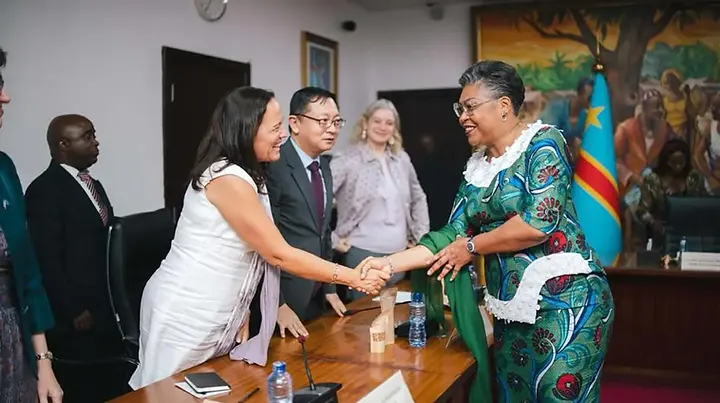
During a meeting held on April 7 in Kinshasa, Suminwa reaffirmed the government’s commitment to strengthening the country’s economic framework, emphasizing the importance of public-private dialogue, job creation, and protecting household purchasing power. The discussions brought together ambassadors from Africa, Europe, Asia, and the Americas, reflecting broad international interest in the country’s economic direction.
At the center of the exchange was a shared concern: the need for a more predictable and investor-friendly environment. Diplomats highlighted persistent challenges, including a complex tax system, legal uncertainty, and issues surrounding subcontracting regulations and the guaranteed minimum wage (SMIG). These factors, they noted, continue to shape investor confidence in the Congolese market.
The call for reform aligns with wider assessments from institutions such as the World Bank, which have repeatedly pointed to regulatory barriers and governance challenges as key constraints on investment in the DRC. At the same time, the country’s vast natural resources and strategic position continue to attract global interest.
Despite these challenges, diplomats expressed strong interest in key sectors such as agriculture, mining, and logistics areas seen as critical to unlocking long-term growth. Their engagement signals that, while risks remain, the DRC is still viewed as a high-potential investment destination if reforms are effectively implemented.
Suminwa’s government now faces the task of translating these discussions into concrete policy steps. The success of these efforts could determine whether the country can convert diplomatic goodwill into sustained economic investment.
ECONOMIC POLICIES
WHY DRC business climate reforms matter for investors

Apr 8, 2026
May 15, 2026
2 min read
Published
Updated:
Efforts to improve the Democratic Republic of Congo’s business environment are gaining renewed attention after diplomats called for greater stability and clarity during talks with Prime Minister Judith Suminwa, according to 7sur7 .
During a meeting held on April 7 in Kinshasa, Suminwa reaffirmed the government’s commitment to strengthening the country’s economic framework, emphasizing the importance of public-private dialogue, job creation, and protecting household purchasing power. The discussions brought together ambassadors from Africa, Europe, Asia, and the Americas, reflecting broad international interest in the country’s economic direction.
At the center of the exchange was a shared concern: the need for a more predictable and investor-friendly environment. Diplomats highlighted persistent challenges, including a complex tax system, legal uncertainty, and issues surrounding subcontracting regulations and the guaranteed minimum wage (SMIG). These factors, they noted, continue to shape investor confidence in the Congolese market.
ADVERTISEMENT
The call for reform aligns with wider assessments from institutions such as the World Bank, which have repeatedly pointed to regulatory barriers and governance challenges as key constraints on investment in the DRC. At the same time, the country’s vast natural resources and strategic position continue to attract global interest.
Despite these challenges, diplomats expressed strong interest in key sectors such as agriculture, mining, and logistics areas seen as critical to unlocking long-term growth. Their engagement signals that, while risks remain, the DRC is still viewed as a high-potential investment destination if reforms are effectively implemented.
ADVERTISEMENT
Suminwa’s government now faces the task of translating these discussions into concrete policy steps. The success of these efforts could determine whether the country can convert diplomatic goodwill into sustained economic investment.


POPULAR TODAY


ADVERTISEMENT
ADVERTISEMENT
RELATED ARTICLE


