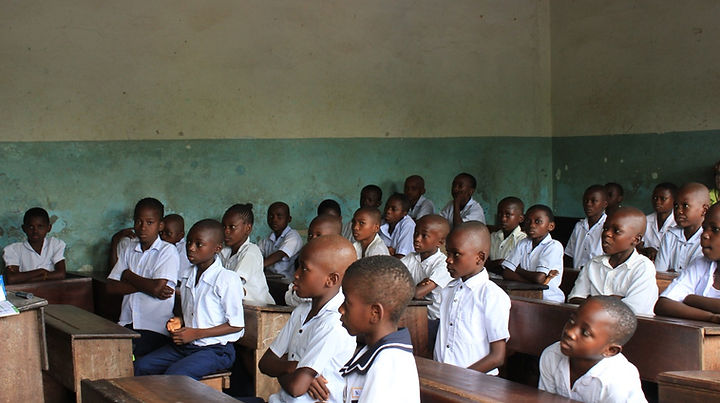
Seventeen schools in the Badengaido area of Mambasa territory have been relocated to the town of Nia-Nia after a wave of attacks by the Allied Democratic Forces (ADF), disrupting education for hundreds of displaced students. The decision aims to allow classes to resume despite ongoing insecurity in Ituri province as cited by local report.
Local education authorities confirmed that students and teachers fled recent violence and are now living as displaced persons in Nia-Nia. To prevent the academic year from collapsing, officials authorized the temporary transfer of 17 schools to safer locations within the town.
Under the arrangement, seven host schools will provide classrooms to accommodate the incoming students. Classes were scheduled to resume on April 15 for those ready to return, according to the Mambasa 3 education subdivision. However, concerns remain about overcrowding, as some institutions including Institut Nia-Nia and EP Radjabu are expected to host multiple displaced schools.
The situation reflects a broader trend in eastern Democratic Republic of Congo, where repeated ADF attacks have not only caused civilian casualties but also disrupted basic services such as education. Recent reporting indicates that insecurity in Mambasa has already forced thousands of children out of school, highlighting the scale of the disruption across the region.
Beyond the immediate relocation, the crisis underscores how armed violence is reshaping daily life for communities. Villages attacked in March remain largely deserted, with displaced families concentrated in Nia-Nia and nearby areas, often lacking essential resources.
As authorities attempt to maintain schooling under emergency conditions, the situation illustrates the growing intersection between conflict and education where access to classrooms increasingly depends on security conditions.
ADF REBELS
Mambasa moves 17 schools to Nia-Nia after ADF attacks

Apr 15, 2026
May 15, 2026
2 min read
Published
Updated:
Seventeen schools in the Badengaido area of Mambasa territory have been relocated to the town of Nia-Nia after a wave of attacks by the Allied Democratic Forces (ADF), disrupting education for hundreds of displaced students. The decision aims to allow classes to resume despite ongoing insecurity in Ituri province as cited by local report.
Local education authorities confirmed that students and teachers fled recent violence and are now living as displaced persons in Nia-Nia. To prevent the academic year from collapsing, officials authorized the temporary transfer of 17 schools to safer locations within the town.
Under the arrangement, seven host schools will provide classrooms to accommodate the incoming students. Classes were scheduled to resume on April 15 for those ready to return, according to the Mambasa 3 education subdivision. However, concerns remain about overcrowding, as some institutions including Institut Nia-Nia and EP Radjabu are expected to host multiple displaced schools.
ADVERTISEMENT
The situation reflects a broader trend in eastern Democratic Republic of Congo, where repeated ADF attacks have not only caused civilian casualties but also disrupted basic services such as education. Recent reporting indicates that insecurity in Mambasa has already forced thousands of children out of school, highlighting the scale of the disruption across the region.
Beyond the immediate relocation, the crisis underscores how armed violence is reshaping daily life for communities. Villages attacked in March remain largely deserted, with displaced families concentrated in Nia-Nia and nearby areas, often lacking essential resources.
ADVERTISEMENT
As authorities attempt to maintain schooling under emergency conditions, the situation illustrates the growing intersection between conflict and education where access to classrooms increasingly depends on security conditions.


POPULAR TODAY


ADVERTISEMENT
ADVERTISEMENT
RELATED ARTICLE