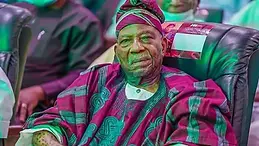
Reuben Famuyide Fasoranti was a Nigerian educator, former Ondo State finance commissioner and prominent Afenifere leader whose public life connected school administration with Yoruba politics. He died in Akure on 20 October 2026, aged 100. His death was confirmed in a presidential tribute, while his son Taiwo spoke directly to reporters about the family’s loss.
Who was Reuben Fasoranti? Reuben Fasoranti was a Nigerian teacher, school founder and political elder associated with Afenifere. Born in Uso in 1926, he served as finance commissioner under Ondo governor Adekunle Ajasin from 1979 to 1983. He died on 20 October 2026 at the age of 100.
From Uso to the classroom
Fasoranti was born on 11 May 1926 in Uso, in present-day Ondo State. He studied at University College Ibadan, now the University of Ibadan, before building a career in education. The Guardian’s account of his life records his work at Ondo Boys’ High School and his wider involvement in schools and politics.
Teaching was central to his public identity. He became principal of Oyemekun Grammar School in Akure, a position that placed him in the daily business of running a school, supervising learning and dealing with families. His later political prominence did not erase that earlier identity as a teacher.
His work also extended beyond established schools. A presidential tribute for his centenary, issued in May 2026, listed Omolere Nursery/Primary School, Akure High School and St Frances’ Academy in Igoba among the institutions he founded. It described St Frances’ Academy as a memorial to his late wife.
Public office and the Afenifere years
Fasoranti served as commissioner for finance in the administration of Adekunle Ajasin between 1979 and 1983, when Ondo State covered a larger territory than it does today. His political background included the Action Group and the Unity Party of Nigeria, linking him to the political tradition associated with Obafemi Awolowo.
That history helps explain why tributes to Fasoranti discuss education alongside politics. His career combined the practical work of building schools with service in an elected state administration. It also made him a familiar reference point in debates about the direction of Yoruba political organisations.
He became a prominent leader of Afenifere, the Yoruba sociopolitical organisation. However, the organisation’s recent history includes disagreements among its senior figures, and Fasoranti’s position should be understood within that divided political setting.
EDUCATION
Reuben Fasoranti Biography: Afenifere Leader and Educator

Oct 21, 2026
Oct 21, 2026
6 min read

Published
Updated:
Reuben Famuyide Fasoranti was a Nigerian educator, former Ondo State finance commissioner and prominent Afenifere leader whose public life connected school administration with Yoruba politics. He died in Akure on 20 October 2026, aged 100. His death was confirmed in a presidential tribute, while his son Taiwo spoke directly to reporters about the family’s loss.
Who was Reuben Fasoranti? Reuben Fasoranti was a Nigerian teacher, school founder and political elder associated with Afenifere. Born in Uso in 1926, he served as finance commissioner under Ondo governor Adekunle Ajasin from 1979 to 1983. He died on 20 October 2026 at the age of 100.
From Uso to the classroom
Fasoranti was born on 11 May 1926 in Uso, in present-day Ondo State. He studied at University College Ibadan, now the University of Ibadan, before building a career in education. The Guardian’s account of his life records his work at Ondo Boys’ High School and his wider involvement in schools and politics.
Teaching was central to his public identity. He became principal of Oyemekun Grammar School in Akure, a position that placed him in the daily business of running a school, supervising learning and dealing with families. His later political prominence did not erase that earlier identity as a teacher.
His work also extended beyond established schools. A presidential tribute for his centenary, issued in May 2026, listed Omolere Nursery/Primary School, Akure High School and St Frances’ Academy in Igoba among the institutions he founded. It described St Frances’ Academy as a memorial to his late wife.
ADVERTISEMENT
Public office and the Afenifere years
Fasoranti served as commissioner for finance in the administration of Adekunle Ajasin between 1979 and 1983, when Ondo State covered a larger territory than it does today. His political background included the Action Group and the Unity Party of Nigeria, linking him to the political tradition associated with Obafemi Awolowo.
That history helps explain why tributes to Fasoranti discuss education alongside politics. His career combined the practical work of building schools with service in an elected state administration. It also made him a familiar reference point in debates about the direction of Yoruba political organisations.
He became a prominent leader of Afenifere, the Yoruba sociopolitical organisation. However, the organisation’s recent history includes disagreements among its senior figures, and Fasoranti’s position should be understood within that divided political setting.
In the 2023 presidential election, Fasoranti supported Bola Tinubu, while Ayo Adebanjo supported Peter Obi. A July 2023 report by TheCable documented those differences and Governor Seyi Makinde’s appeal for reconciliation. Fasoranti’s support for a candidate therefore did not represent an uncontested position shared by every Afenifere figure.
Key dates in his life
Year | Event | Significance |
1926 | Born in Uso on 11 May | Beginning of his connection with present-day Ondo State |
1979–1983 | Served as finance commissioner under Ajasin | His principal period in state government |
2023 | Supported Tinubu during the presidential election | A visible point of disagreement within Afenifere |
May 2026 | Marked his 100th birthday | His education and public-service career received national tributes |
October 2026 | Died in Akure | Family and public figures reflected on his century-long life |
ADVERTISEMENT
Family life and the value he placed on education
Personal & Family Status | Details |
Marital status | Married during his lifetime; his wife died in 1991. |
Spouse or partner | His late wife, who died in 1991. |
Children | His children include Taiwo Fasoranti, who spoke for the family after his death. |
The loss of his wife in 1991 is recorded in both the centenary tribute and a 2018 interview with his daughter Olufunmilayo. Her account presented a father whose family life and political commitments were closely connected, while also recalling the discipline of their upbringing.
After his death, Taiwo again placed education at the centre of his father’s legacy. In the Guardian’s direct family reporting, he encouraged people to honour Fasoranti by educating their children. Former finance minister Olu Falae also recalled Fasoranti allowing pupils to continue schooling on credit when their families faced financial difficulty.
Those are personal recollections, but they explain why the teacher features so strongly in accounts of the political elder. A Punch report following his death also reported Taiwo’s intention to sustain the Reuben Fasoranti Foundation. For the family, continuing his work in education was a practical way of remembering him.
Frequently asked questions
What was Reuben Fasoranti’s full name?
His full name was Reuben Famuyide Fasoranti. He was widely addressed as Pa Fasoranti, reflecting his standing as an elder in Nigerian public life and Yoruba politics.
How old was Fasoranti when he died?
He was 100. He was born on 11 May 1926 and died on 20 October 2026, just over five months after his centenary birthday.


Popular Today


ADVERTISEMENT
Where was Reuben Fasoranti from?
He was from Uso in present-day Ondo State, Nigeria. Akure was another important centre of his life, including his school work and the family home where relatives received visitors after his death.
What government position did he hold?
He served as commissioner for finance under Governor Adekunle Ajasin from 1979 to 1983. This was separate from his later prominence as an Afenifere leader.
Was Fasoranti a teacher?
Yes. He taught at Ondo Boys’ High School, led Oyemekun Grammar School as principal and founded schools. Education remained a major theme in family accounts and public tributes to him.
Who confirmed his death?
His son Taiwo spoke directly to reporters after his death. A presidential statement also confirmed the news, and subsequent reporting carried responses from Ondo State officials and other public figures.
ADVERTISEMENT
Related Articles